Why Jewelry Tarnishes So Quickly—and Why Customers Notice
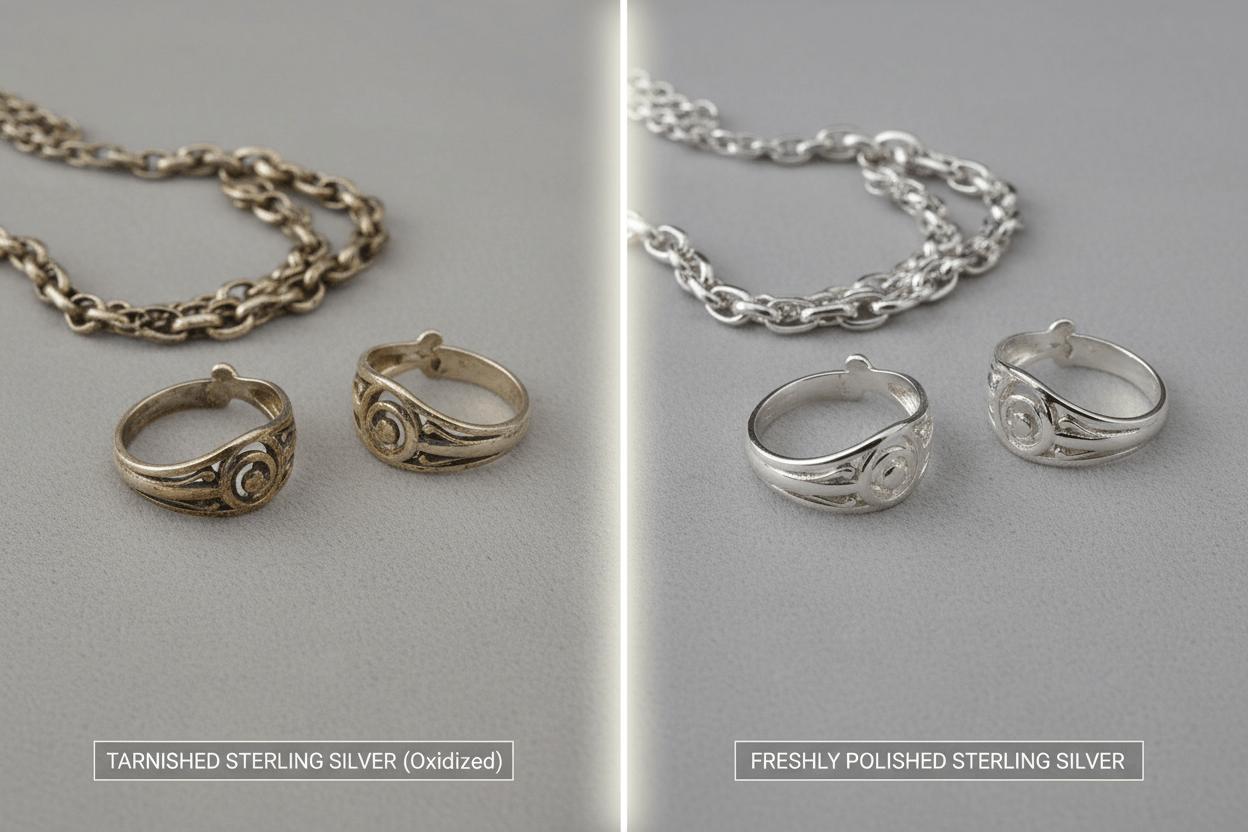
One of the most common complaints in jewelry retail is fading. A piece looks perfect at purchase, but within weeks, the color dulls or changes. For customers, this is not just a quality issue—it’s a trust issue.
Tarnishing usually comes from oxidation, moisture exposure, or poor plating. Sweat, air, and daily friction all accelerate the process.
At Lonceen Jewelry, we approach anti tarnish jewelry as a system problem rather than a single feature. By controlling materials, plating thickness, and finishing processes, we significantly extend product lifespan and reduce complaints.
Material Choice: The First Line of Defense Against Tarnish
Not all materials react the same way to environmental exposure.
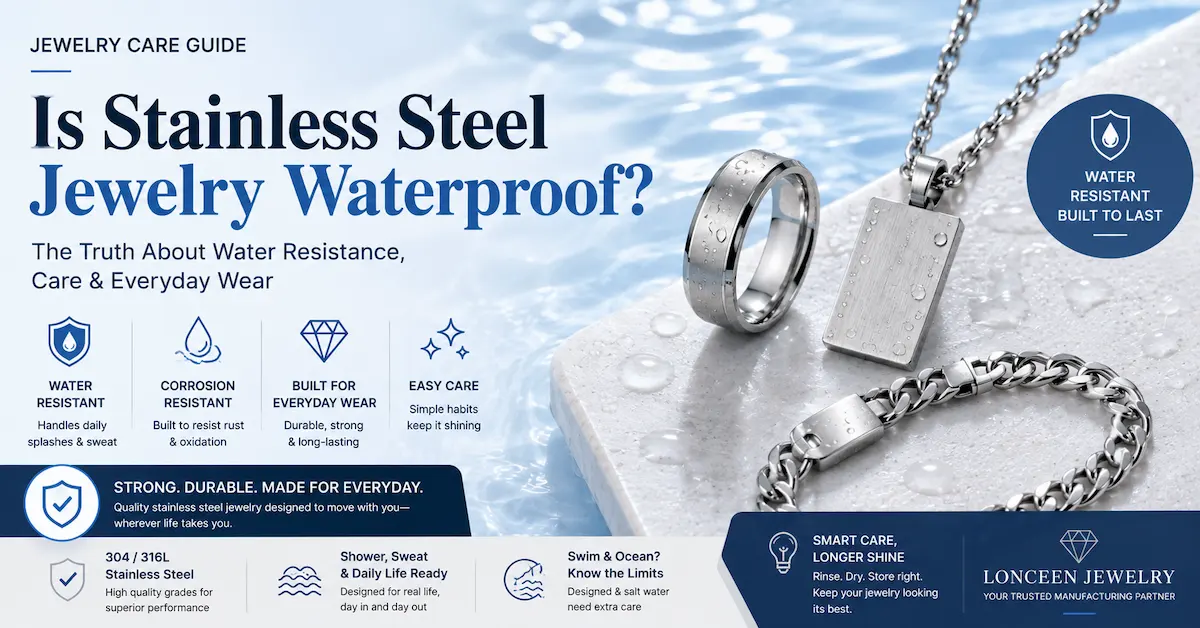
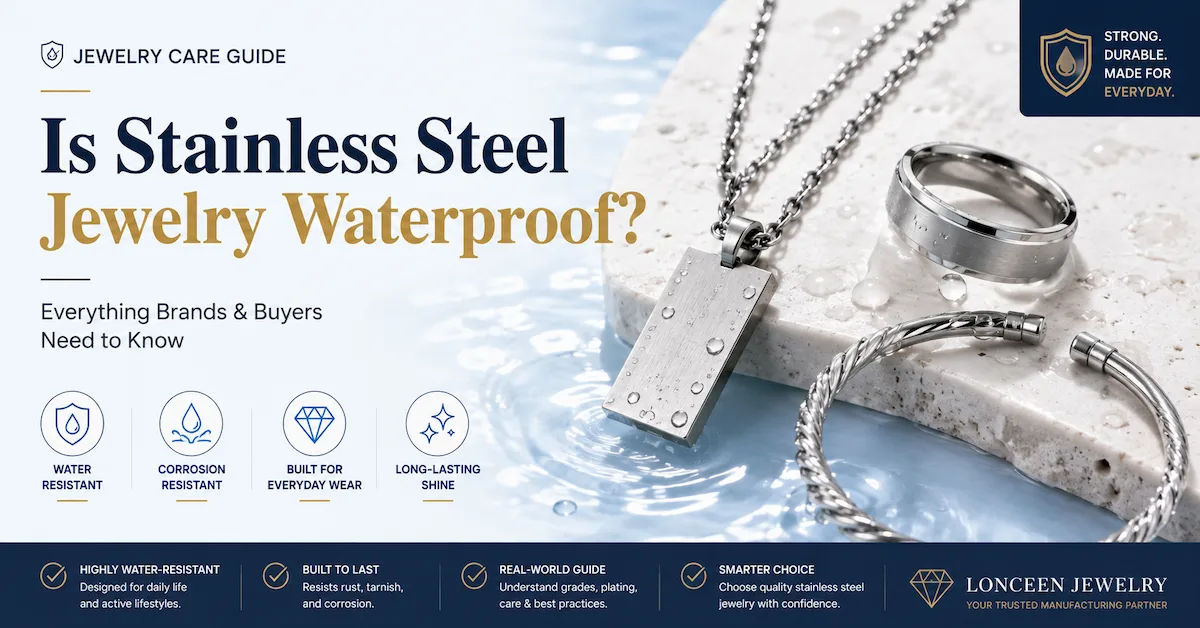
Stainless steel (especially 304/316) is widely used for anti tarnish jewelry because:
- It resists oxidation
- It maintains surface stability
- It requires minimal maintenance
Compared to copper or alloy-based jewelry, stainless steel does not react as quickly with moisture or air.
According to consumer research from Statista, durability and low maintenance are among the top purchase drivers in accessories.
👉 https://www.statista.com/
This is why material selection is the foundation of anti tarnish performance.
Plating Thickness: The Real Factor Behind Color Longevity
Many products are labeled “anti tarnish,” but actual performance depends on plating thickness.
Typical ranges in real production:
- 0.02–0.05μm → fades within 2–4 weeks
- 0.08–0.15μm → moderate durability (2–6 months)
- 0.15–0.30μm → long-lasting (6–12 months)
Thicker plating creates a stronger barrier against air and moisture.
However, plating alone is not enough—it must be applied evenly and supported by proper surface preparation.
Why Finishing and Process Control Matter More Than Labels
The term “anti tarnish” is often used as a marketing label, but performance depends on real production control.
Common issues caused by poor processes:
- Uneven plating → faster wear in certain areas
- Rough surfaces → increased friction and oxidation
- Contamination before plating → weak adhesion
At Lonceen Jewelry, we use:
- Multi-stage polishing for smooth surfaces
- Controlled electroplating conditions
- Batch inspection for consistency
These steps ensure that anti tarnish performance is not just claimed—but achieved.
Where Anti Tarnish Jewelry Creates the Most Value
Anti tarnish jewelry is not just about durability—it directly impacts business performance.
For e-commerce sellers, it reduces returns and negative reviews.
In the gift market, it ensures that products maintain appearance over time, increasing perceived value.
For brands, it builds long-term trust, which is critical for repeat purchases.
Balancing Durability and Production Efficiency
Anti tarnish performance must also be balanced with production cost.
Typical production benchmarks:
- MOQ: 50–300 pieces
- Sample lead time: 3–7 days
- Bulk production: 10–20 days
According to McKinsey & Company, optimizing production processes improves both efficiency and consistency.
👉 https://www.mckinsey.com/
The goal is not just durability—but scalable quality.
Data Comparison: Standard Jewelry vs Anti Tarnish Jewelry
| Metric | Standard Jewelry | Anti Tarnish Jewelry |
|---|---|---|
| Color Retention | 2–6 weeks | 6–12 months |
| Oxidation Resistance | Low | High |
| Return Rate | 6%–10% | <3% |
| Maintenance Required | High | Low |
| Customer Satisfaction | Medium | High |
| Product Lifespan | Short | Extended |
These differences directly influence profitability.
Case Insight: Reducing Returns Through Anti Tarnish Solutions
A jewelry brand approached us after facing high return rates due to fading products.
We implemented:
- Stainless steel base materials
- Increased plating thickness to 0.15μm
- Improved polishing before plating
Within two months:
- Return rate dropped significantly
- Customer complaints decreased
- Product lifespan improved
The result was a more stable product line and better brand reputation.
Frequently Asked Questions About Anti Tarnish Jewelry
Q: Can jewelry be completely tarnish-proof?
A: No material is 100% immune, but proper materials and plating can greatly reduce tarnishing.
Q: Does stainless steel jewelry tarnish?
A: It is highly resistant and performs much better than alloy or copper.
Q: How can plating last longer?
A: Thicker plating and proper finishing are key factors.
Building a Jewelry Line That Lasts Longer
Anti tarnish jewelry is not a single feature—it is the result of multiple controlled processes.
At Lonceen Jewelry, we focus on combining material stability, plating precision, and finishing quality to deliver products that maintain their appearance over time.
If you want to explore our anti tarnish jewelry collection, you can visit our product page here:
👉 https://www.lonceenjewelry.com/en/products
And if you are planning a jewelry project, feel free to contact our team:
👉 https://www.lonceenjewelry.com/contact-us