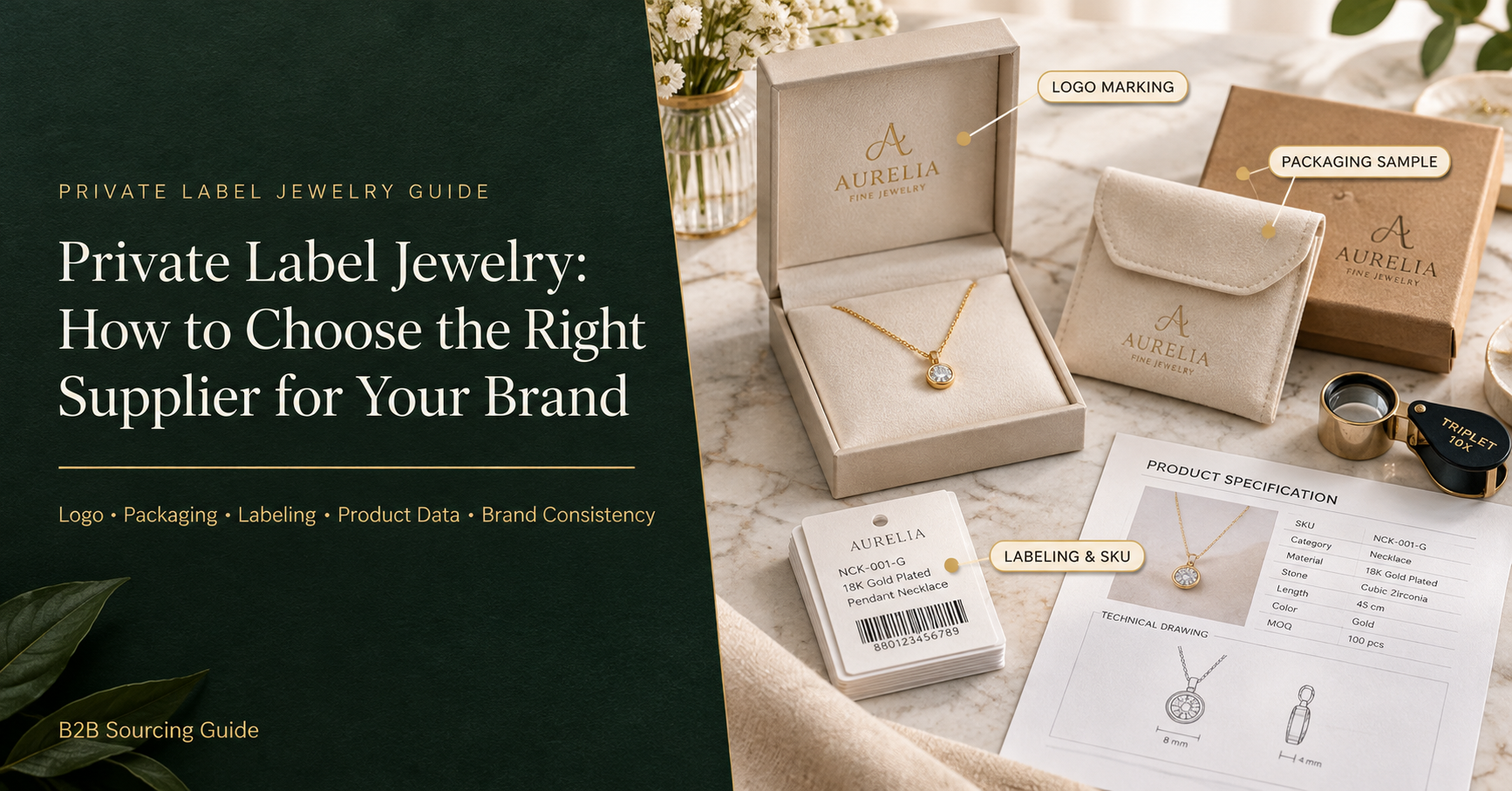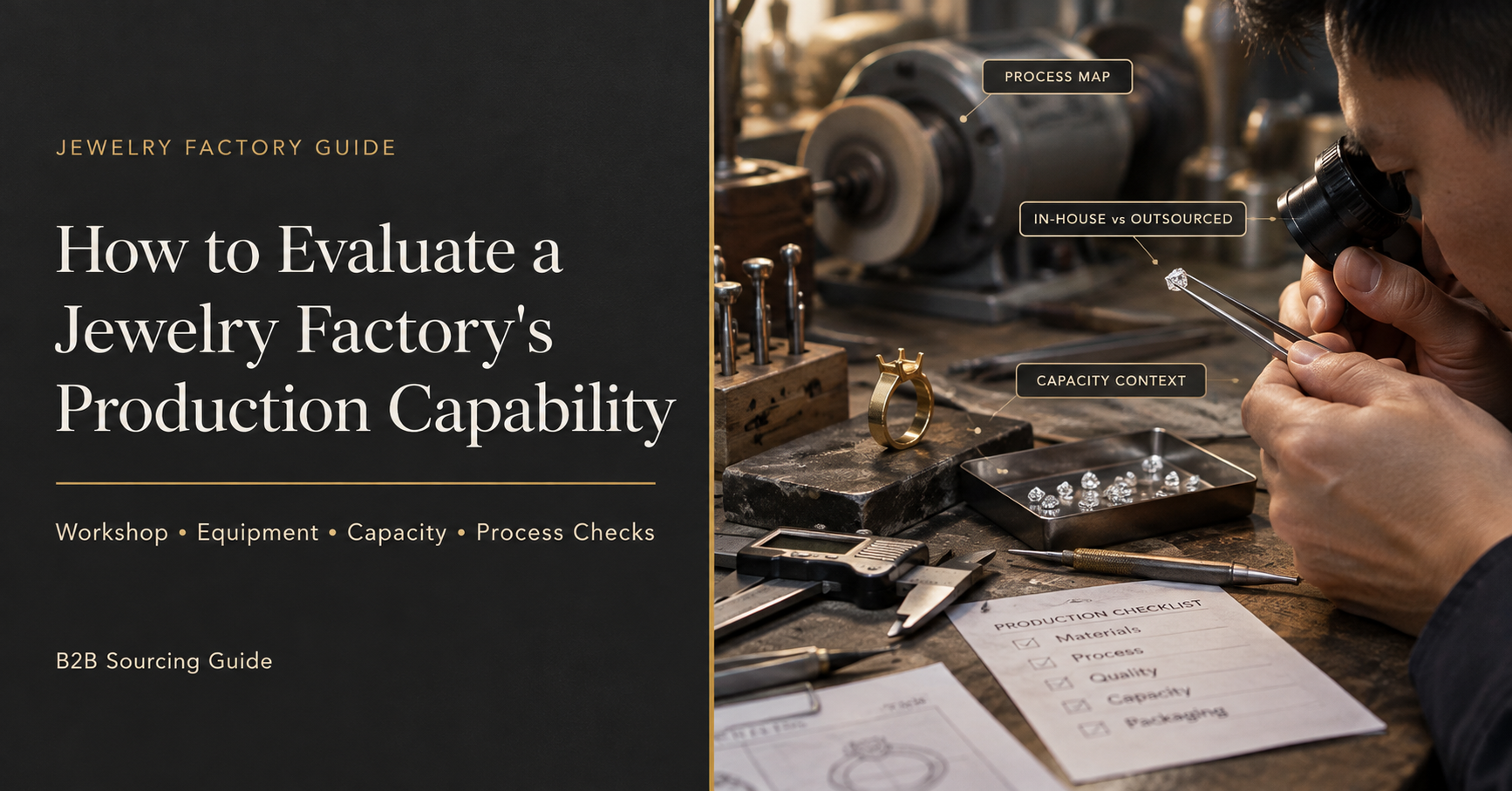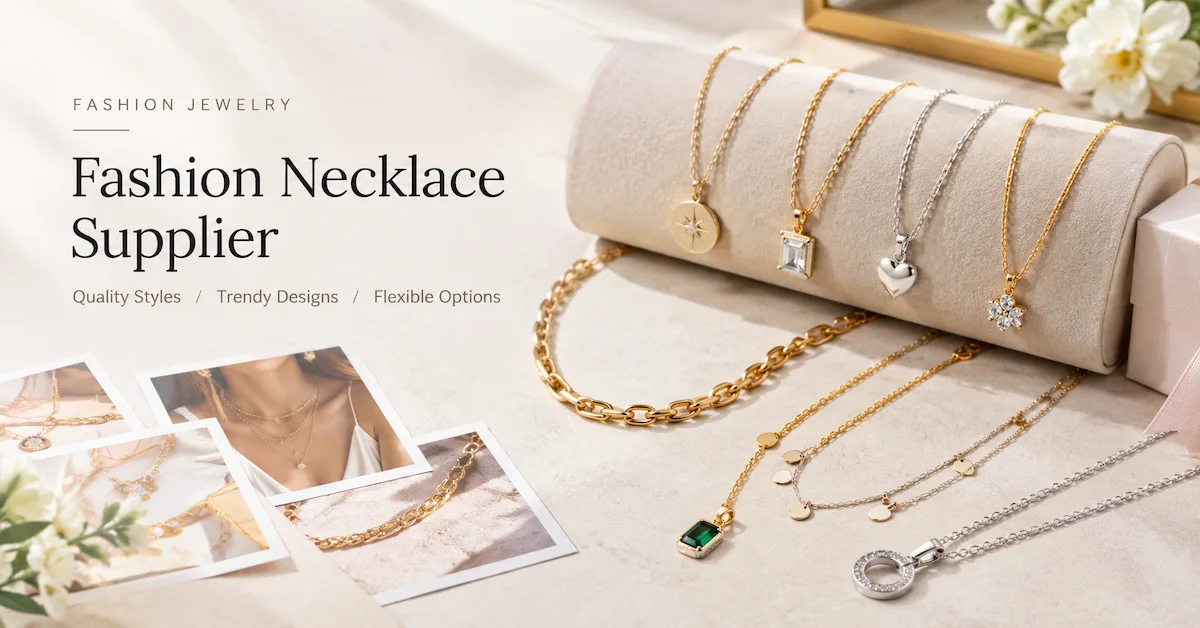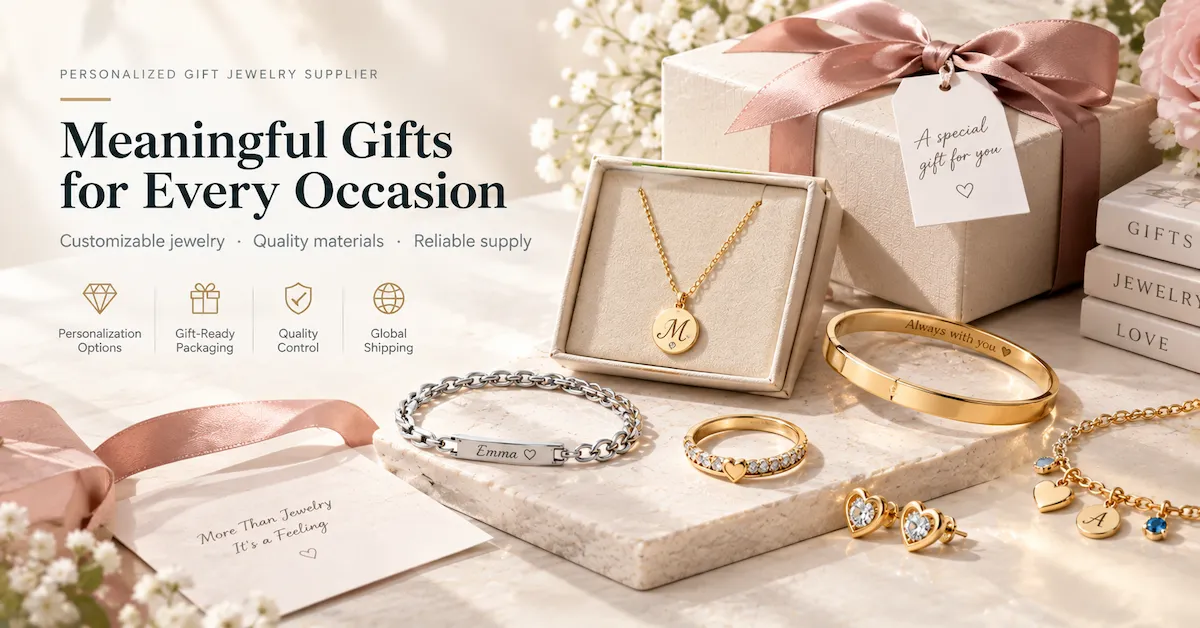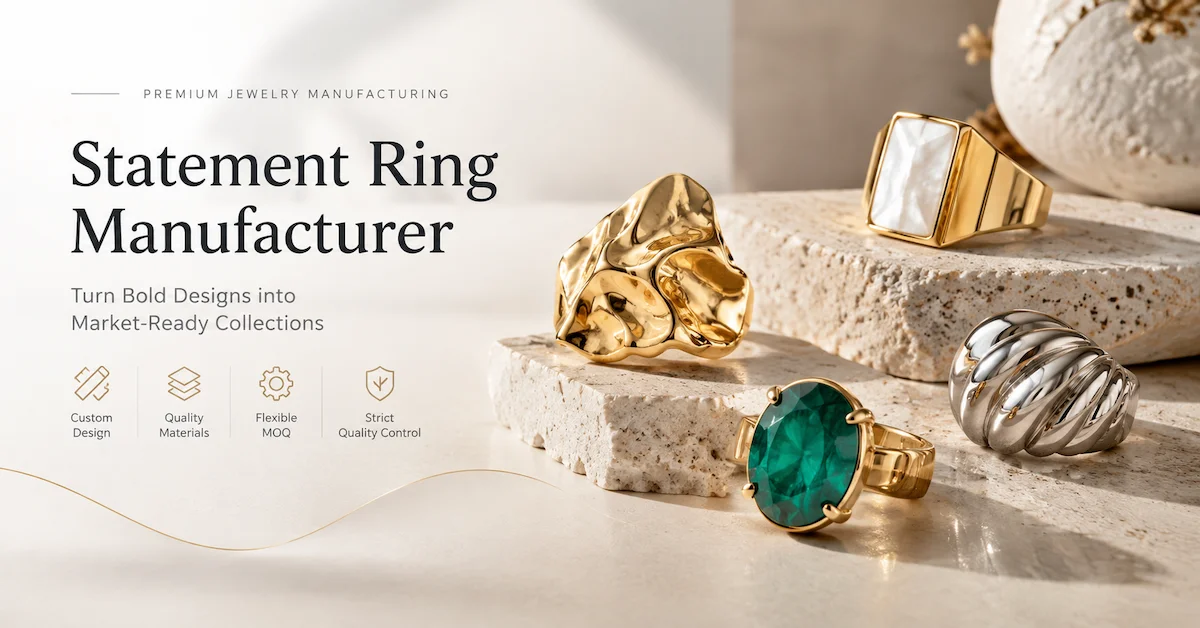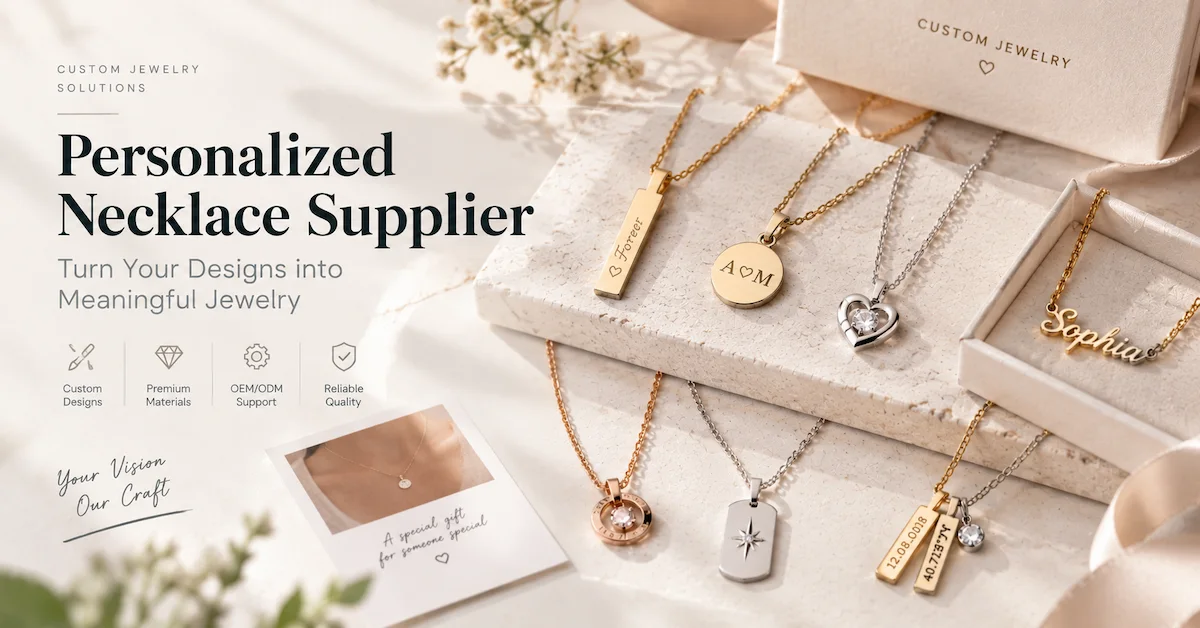


Finding a custom jewelry supplier is an important step for brands that want to turn original ideas into sellable jewelry products.
Unlike buying ready-made wholesale jewelry, custom sourcing requires a supplier to understand your design requirements, product positioning and customization expectations.
The right partner should do more than provide jewelry.
It should help you connect:
Design Idea → Product Solution → Custom Details → Finished Jewelry
For jewelry brands, retailers and designers, choosing the right supplier can directly affect product quality, development efficiency and the consistency of the final collection.
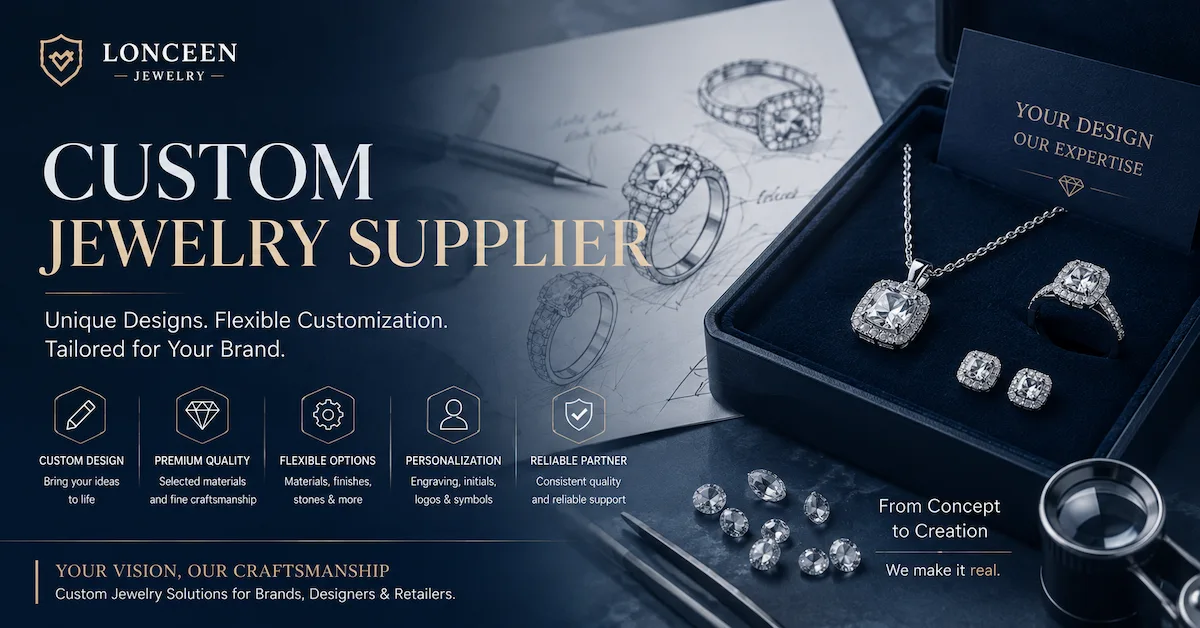
1. What Is a Custom Jewelry Supplier?
A custom jewelry supplier provides jewelry products that can be adapted or developed according to a buyer's requirements.
Customization may involve:
- Product design
- Shape and structure
- Materials
- Colors
- Plating
- Engraving
- Logos
- Stones
- Product dimensions
- Personalized details
This makes custom jewelry sourcing different from simply selecting products from a wholesale catalog.
A supplier needs to understand what the buyer wants to achieve and determine how that idea can become a practical jewelry product.
2. Custom Jewelry Supplier vs. Regular Jewelry Supplier
The biggest difference is the level of product flexibility.
| Regular Jewelry Supplier | Custom Jewelry Supplier |
|---|---|
| Mainly provides existing products | Supports customized products |
| Focuses on catalog selection | Focuses on product requirements |
| Limited design changes | More customization possibilities |
| Suitable for ready-to-sell products | Suitable for brand-specific products |
| Faster product selection | More product development involvement |
Regular wholesale sourcing can be useful when a business needs products quickly.
Custom sourcing becomes more valuable when the product itself needs to support brand differentiation.
3. When Should a Brand Choose Custom Jewelry?
Not every jewelry project needs customization.
Custom sourcing makes more sense when a brand wants to:
Create a Distinctive Product
If similar products are already widely available, custom details can help a brand create a more recognizable product.
Develop a New Collection
Brands can create several products around one visual direction rather than purchasing unrelated designs.
Add Personalization
Names, initials, dates, symbols and other details can make jewelry more relevant to specific customers.
Match Brand Identity
A jewelry collection can be designed around the colors, symbols and visual language already used by a fashion or lifestyle brand.
Create Limited Editions
Custom jewelry can also be used for seasonal launches, special campaigns and exclusive collections.
4. What Can Be Customized?
The level of customization depends on the supplier and the product.
Common customization areas include:
Design
Brands can provide an original concept, sketch or reference and develop it into a jewelry product.
Material
Material selection can affect appearance, positioning and product performance.
Lonceen's current product range includes stainless steel, 316L stainless steel, 925 silver, alloy and other jewelry materials. Its website also lists PVD-coated products and personalized jewelry examples.
Surface Finish
Depending on the product, customization may involve:
- Gold plating
- PVD finishing
- Polished surfaces
- Different color finishes
- Textured surfaces
Personalization
Common options include:
- Names
- Initials
- Dates
- Symbols
- Engraving
- Custom motifs
Product Structure
Some projects require changes to:
- Pendant shape
- Chain length
- Ring structure
- Earring proportions
- Bracelet dimensions
The important point is that customization should be evaluated according to the actual product rather than treated as a single standard service.
5. How to Choose a Custom Jewelry Supplier
A supplier may offer customization, but that does not automatically mean it is the right partner for your project.
Consider these factors before making a decision.
1. Customization Range
First determine what the supplier can actually customize.
Ask whether they support:
- Design modification
- New product development
- Engraving
- Logo customization
- Material changes
- Surface finishes
- Personalized products
The supplier should match the requirements of your specific project.
2. Product Category Experience
A supplier may be strong in one category but less experienced in another.
For example, a project may involve:
- Rings
- Necklaces
- Earrings
- Bracelets
- Pendants
A supplier with experience across multiple categories can make it easier to develop a complete collection.
Lonceen's product catalog currently covers fashion jewelry, men's jewelry, high-end jewelry and fine jewelry, with necklaces, rings, earrings, bracelets and pendants represented across its product range.
You can explore the current product range through Lonceen Jewelry Products.
3. Design & Development Capability
Custom jewelry often begins with an idea rather than a finished product.
This means a useful supplier should be able to understand:
Concept → Design → Product Details
Your source materials also emphasize design and development as a distinct B2B capability rather than treating manufacturing as the only service. The keyword plan separately identifies jewelry design and manufacturing and jewelry development company as commercial keywords for brands.
Lonceen's current website likewise describes a professional jewelry design and development team and says it supports structure, materials and processes to turn ideas into products.
6. Custom Jewelry Supplier for Different Business Types
The best supplier is not necessarily the one with the largest catalog.
It is the one that matches the buyer's business model.
Jewelry Brands
Brands usually need products that support a consistent design language and collection identity.
Jewelry Designers
Designers may need help translating sketches or concepts into practical jewelry products.
Retailers
Retailers may combine ready-made jewelry with selected custom products to differentiate their assortment.
Fashion Brands
Fashion companies can use jewelry to extend their existing visual identity into accessories.
Gift Businesses
Personalized jewelry can be developed around names, dates, symbols or special occasions.
This is why the first sourcing question should be:
What does the business need the jewelry to accomplish?
rather than simply:
What jewelry can the supplier sell?
7. Custom Jewelry Supplier vs. Private Label Jewelry Manufacturer
These two terms can overlap, but the search intent is different.
| Custom Jewelry Supplier | Private Label Jewelry Manufacturer |
|---|---|
| Focuses on customized products | Focuses on branded product lines |
| Can support individual products | Often focuses on broader collections |
| Suitable for specific customization needs | Suitable for building a private-label range |
| Product requirement is the starting point | Brand identity is the starting point |
| Useful for designers and retailers | Useful for brand owners |
If your main requirement is changing or developing a specific jewelry product, a custom jewelry supplier may be the more relevant search.
If your objective is building a complete branded jewelry line, a private label jewelry manufacturer may be a better fit.
This distinction keeps the two topics separate within your SEO content cluster.
8. Custom Jewelry Supplier Selection Checklist
Before contacting a supplier, prepare a basic project brief.
| Requirement | What to Define |
|---|---|
| Product | Ring, necklace, bracelet, earring, pendant |
| Design | Existing drawing or reference |
| Material | Preferred material |
| Finish | Gold, silver, PVD, polished, etc. |
| Personalization | Engraving, logo, initials, dates |
| Target Customer | Who will buy the product |
| Positioning | Fashion, premium, gift, everyday |
| Collection | Single product or product series |
| Packaging | Standard or customized |
| Sales Market | Target country or region |
A clear brief makes supplier communication much more efficient.
It also allows the supplier to determine whether the requested customization is suitable for the product.
9. What Makes a Custom Jewelry Supplier Valuable?
A strong supplier should contribute more than product availability.
Product Understanding
The supplier should understand the relationship between design, material and finished appearance.
Customization Flexibility
Different projects require different levels of customization.
Design Support
Design development can help turn an initial concept into a practical product.
Product Range
A broader category range can make it easier to expand from one custom product into a collection.
Business Support
For B2B buyers, communication, after-sales support and long-term cooperation also matter.
Lonceen states that it provides full-range support covering structure, materials and processes, while its website highlights design and development, manufacturing capability and after-sales support.
10. Common Mistakes When Choosing a Custom Jewelry Supplier
Choosing Only by Price
A low product price does not necessarily mean the best overall sourcing result.
The supplier should also match the required customization level and product positioning.
Not Explaining the Design Clearly
A vague reference can create misunderstandings.
Provide sketches, dimensions, materials, colors or examples whenever possible.
Choosing a Supplier Without Category Experience
A supplier that specializes in necklaces may not necessarily be the ideal choice for a highly complex ring project.
Customizing Everything
Not every element needs to be customized.
A better strategy is to identify the details that actually contribute to differentiation.
Confusing Custom Sourcing with Private Label
Custom jewelry focuses on product customization.
Private label focuses more broadly on brand-owned collections.
Keeping these objectives separate makes sourcing decisions clearer.
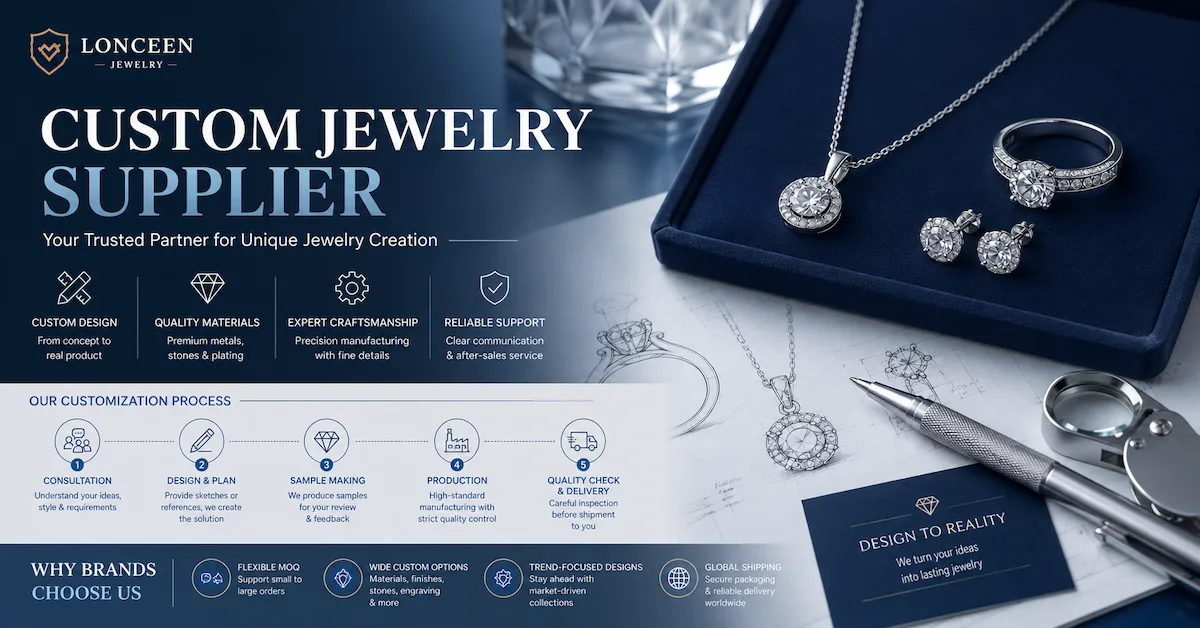
11. A Better Way to Start a Custom Jewelry Project
Instead of immediately asking a supplier for a quotation, start with the product concept.
Step 1: Define the Customer
Who is the product for?
Step 2: Define the Product Role
Is it a hero product, everyday accessory, gift item or seasonal piece?
Step 3: Define the Custom Elements
Decide which parts need to be unique.
Step 4: Prepare References
Provide sketches, images, dimensions or examples.
Step 5: Discuss Feasibility
Ask the supplier which customization options are practical.
Step 6: Develop the Product
Move from concept to a clear product specification.
Step 7: Build the Collection
Once the first product direction is established, related pieces can be developed around the same design language.
This approach helps prevent customization from becoming unnecessary complexity.
12. Why Custom Jewelry Sourcing Matters for Brands
The purpose of custom jewelry is not simply to make a product different.
It is to make the product more relevant to the brand and its customers.
A successful custom product can support:
- Brand differentiation
- Collection consistency
- Product storytelling
- Customer personalization
- Exclusive product launches
- Long-term product development
That makes the supplier an important part of the product strategy.
FAQ
What is a custom jewelry supplier?
A custom jewelry supplier provides jewelry products that can be adapted or developed according to a buyer's design, material, finish, personalization or product requirements.
What can a custom jewelry supplier customize?
Depending on capabilities, customization can include design, materials, finishes, engraving, logos, dimensions and personalized details.
Is a custom jewelry supplier the same as a manufacturer?
Not necessarily. A supplier can provide customized products through its own manufacturing resources or production network, while “manufacturer” focuses more specifically on production capability.
Is custom jewelry suitable for small brands?
Yes. Custom sourcing can help smaller brands create differentiated products instead of relying entirely on widely available designs. The appropriate development scope should match the brand's resources and goals.
Can suppliers customize jewelry with logos?
Yes, depending on the supplier and product. Logo, initials and other brand-specific elements can be incorporated into suitable jewelry designs.
Should I choose custom jewelry or private label?
Choose custom jewelry when the main requirement is developing or modifying specific products. Consider private label when the objective is building a broader collection under your own brand.
Can a custom jewelry supplier develop a complete collection?
Yes, when the supplier has suitable design and product-development capabilities across multiple jewelry categories.
Conclusion
Choosing the right custom jewelry supplier is less about finding the largest product catalog and more about finding a partner whose capabilities match your product requirements.
For brands, designers and retailers, the ideal supplier should provide a combination of:
- Customization flexibility
- Product category experience
- Design and development support
- Material and finishing options
- Personalization capabilities
- Reliable B2B communication
Lonceen's current platform combines wholesale jewelry resources with its own design and manufacturing capabilities, and its website states that it integrates hundreds of professional jewelry factories while operating its own factory.
For businesses looking to explore available jewelry products or discuss a customized product direction, visit Lonceen Jewelry Products or learn more about the company through Lonceen Jewelry About Us.