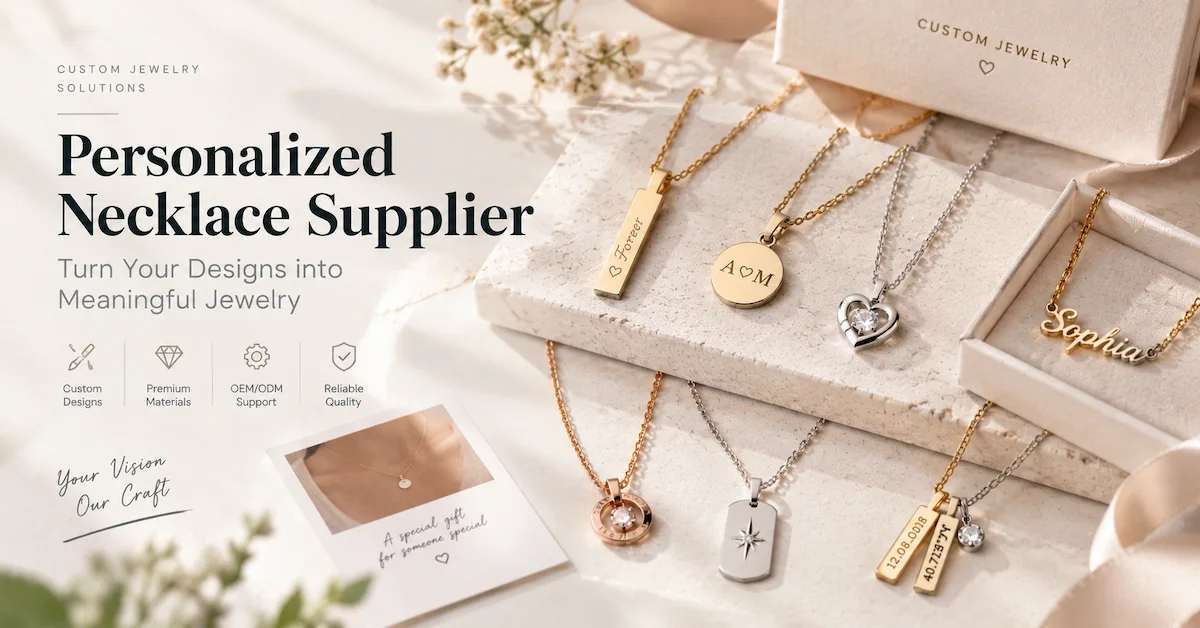


A fashion necklace supplier is more than a source of individual necklace designs. For jewelry brands, boutiques, and online retailers, the right supplier should help create a balanced product assortment that reflects current fashion preferences, different price levels, and changing customer demand.
Necklaces are particularly important in a fashion jewelry collection because they can quickly change the visual character of an outfit. Chain necklaces, pendant styles, layered designs, chokers, and statement pieces can all target different customers and occasions.
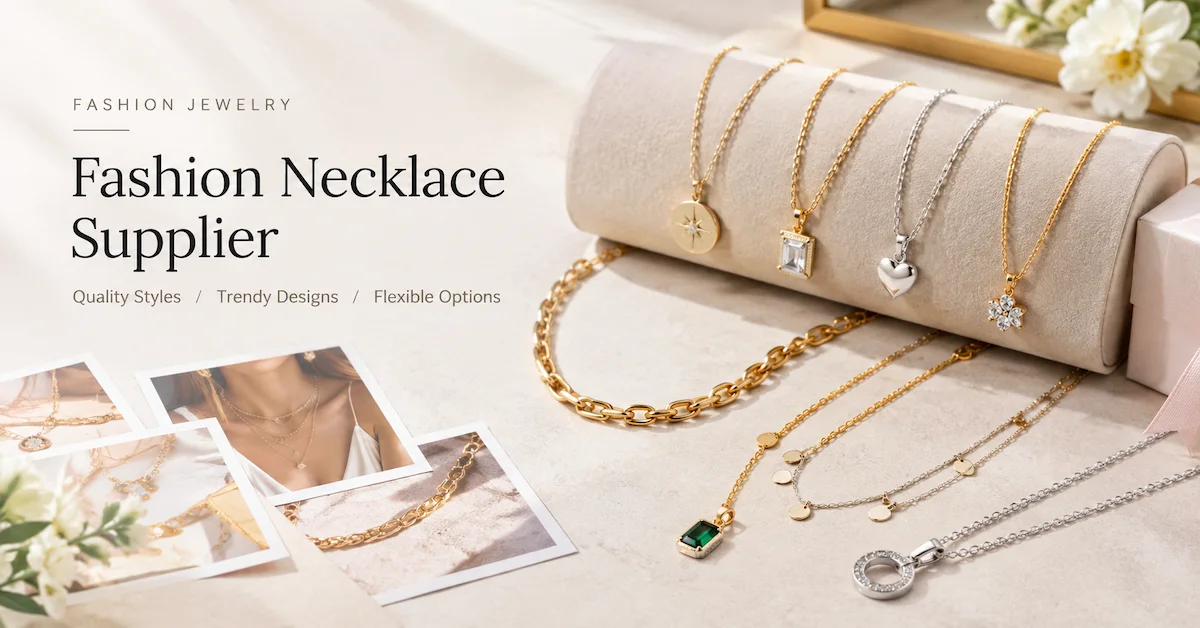
For buyers, the key is not simply finding a supplier with many necklaces. It is finding a supplier that can provide the right mix of styles, materials, finishes, and new designs while keeping the collection commercially practical.
What Makes a Necklace Supplier Suitable for Fashion Jewelry?
Fashion jewelry moves faster than many traditional jewelry categories. A supplier needs to support variety without making the buyer manage dozens of disconnected product sources.
A suitable fashion necklace supplier should offer several useful capabilities:
- Multiple necklace styles within one product category
- Different chain structures and pendant concepts
- Flexible material and finish choices
- Regular access to new designs
- Consistent product specifications
- Options for ready-to-sell and customized collections
- Clear communication for product selection and development
The goal is to build a collection rather than simply purchase individual SKUs.
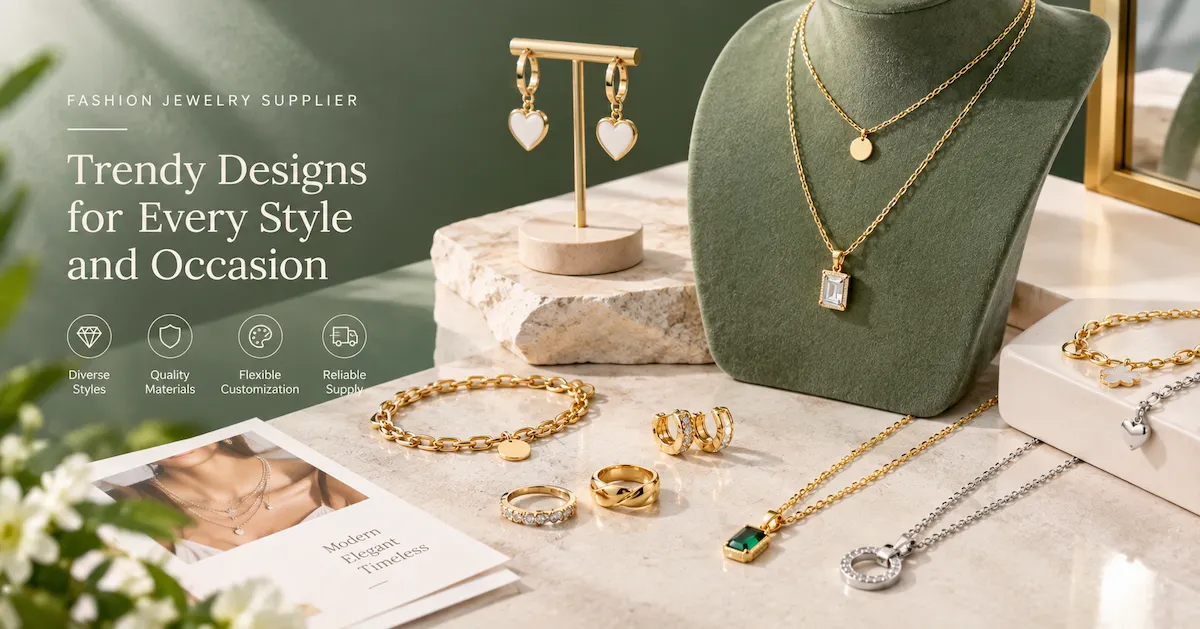
For brands looking for a broader product range, a fashion jewelry supplier can also provide access to related categories such as bracelets, earrings, rings, and pendants.
Start With the Collection, Not a Single Necklace
One common purchasing mistake is evaluating a supplier from one attractive necklace.
A better approach is to examine how the supplier can support an entire necklace assortment.
A practical fashion collection may include:
| Collection Role | Typical Necklace Direction | Commercial Purpose |
|---|---|---|
| Everyday | Fine chains, simple pendants | Frequent daily wear |
| Layering | Slim chains, small charms | Multi-piece styling |
| Trend | Fashion-forward shapes | Seasonal demand |
| Statement | Larger pendants or bold chains | Visual impact |
| Giftable | Symbolic or decorative pendants | Gift purchases |
This structure allows buyers to create different price points and styling options without making the collection feel repetitive.
The supplier therefore needs enough design breadth to support several roles at the same time.
What Necklace Styles Should a Fashion Supplier Cover?
A fashion necklace supplier does not necessarily need every possible design. More importantly, its collection should cover different visual directions.
1. Chain Necklaces
Chain construction has a major influence on the appearance of a necklace.
Common directions include:
- Cable chains
- Curb chains
- Figaro-style chains
- Rope chains
- Box chains
- Paperclip-style chains
- Snake chains
Different link proportions can create completely different visual effects, even when the base material is similar.
2. Pendant Necklaces
Pendant necklaces give brands more opportunities to introduce themes and recognizable visual elements.
Potential directions include:
- Geometric pendants
- Initial designs
- Symbolic motifs
- Natural-inspired shapes
- Minimal discs
- Heart and star motifs
- Decorative gemstone pendants
For seasonal or campaign-based collections, pendant designs can also be updated without completely changing the necklace structure.
3. Layering Necklaces
Layering has a different commercial function from a single statement necklace.
A supplier supporting layering collections should provide:
- Different chain lengths
- Different chain thicknesses
- Compatible pendant sizes
- Simple and decorative options
- Coordinated finishes
This makes it easier for retailers to merchandise several pieces together.
4. Statement Necklaces
Statement pieces can create visual contrast within an otherwise minimal assortment.
These may use:
- Larger links
- Oversized pendants
- Mixed textures
- Strong geometric shapes
- Multiple decorative elements
They should be balanced with simpler pieces so the collection does not become visually repetitive.
Compare Materials Based on Product Positioning
Material selection should follow the intended retail position rather than being treated as a separate technical decision.
Different materials can support different collection strategies.
Stainless Steel
Stainless steel is widely used for fashion jewelry because it combines a practical price level with durability and a modern appearance.
It can work well for:
- Everyday necklaces
- Minimal chains
- Trend-driven designs
- Men's and unisex collections
- Higher-volume fashion lines
925 Sterling Silver
Sterling silver is suitable when a brand wants to create a more premium product perception.
It can be considered for:
- Fine-looking pendant necklaces
- Delicate designs
- Gift-oriented collections
- Premium fashion jewelry
Copper and Other Base Metals
Copper and other base metals can provide additional flexibility for decorative designs and accessible price points.
The important consideration is not simply the base metal but also the finish, plating, color consistency, and intended use of the finished necklace.
For buyers comparing several suppliers, ask for the exact material specification instead of relying only on terms such as “gold necklace” or “silver necklace.”
Product Details That Deserve Close Attention
When comparing fashion necklace suppliers, several small specifications can have a large impact on the finished product.
Chain Length
Length affects both styling and customer positioning.
Consider offering different lengths for:
- Choker-style wear
- Short everyday necklaces
- Mid-length pendant necklaces
- Longer layering pieces
Chain Thickness
Thickness changes the perceived weight and visual character of a necklace.
A thin chain can create a delicate appearance, while a wider chain may support a stronger fashion statement.
Clasp Design
The clasp should match the overall product concept.
Common options include:
- Lobster clasps
- Spring-ring clasps
- Toggle closures
- Magnetic closures
- Adjustable extension chains
For retail collections, the clasp should also be practical enough for the intended customer.
Pendant Proportion
The pendant should be evaluated together with the chain.
A large pendant on an overly thin chain can create an unbalanced appearance, while a small pendant may disappear when paired with a heavy chain.
This is why reviewing the complete necklace configuration is more useful than comparing isolated components.
Look at How Quickly a Supplier Can Refresh Its Collection
Fashion buyers are often working with changing demand.
A supplier may have thousands of products but still be difficult to work with if the collection is rarely refreshed.
When evaluating a supplier, ask:
- How frequently are new necklace styles introduced?
- Are new designs organized by trend or product category?
- Can buyers easily identify recent additions?
- Are popular styles available for replenishment?
- Can the supplier support seasonal collection updates?
A supplier with a strong new-product pipeline can make collection planning easier because buyers have more opportunities to test new designs.
Lonceen states that it develops hundreds of new designs and maintains a large fashion jewelry inventory, which can be relevant for buyers looking for frequent assortment updates.
Ready-Made Styles vs. Custom Necklace Development
Not every fashion brand needs a fully custom necklace.
The right purchasing model depends on the stage of the collection.
Ready-Made Necklaces
Ready-made products can be useful when:
- Testing a new category
- Building an initial collection
- Responding quickly to trends
- Reducing development time
- Testing customer reactions
Customized Necklaces
Customization becomes more relevant when:
- A brand has an established visual identity
- The collection needs exclusive motifs
- Existing products require modifications
- Branding elements need to be incorporated
- The buyer wants a more distinctive product line
A supplier that supports both approaches gives buyers more flexibility.
For brands that already have sketches or product concepts, Lonceen's customization service supports customized jewelry development and different material, plating, and style options.
How to Compare Fashion Necklace Suppliers
Instead of choosing a supplier based only on unit price, create a simple comparison around the factors that influence the entire collection.
| Factor | What to Check |
|---|---|
| Design Range | Variety of chain, pendant, and statement styles |
| Newness | Frequency of new fashion designs |
| Materials | Available metals and material specifications |
| Finishes | Plating colors and surface treatments |
| Product Consistency | Whether repeat orders match approved products |
| Customization | Ability to modify or develop designs |
| Collection Depth | Ability to build coordinated assortments |
| Inventory | Availability of ready-to-sell styles |
| Communication | Speed and clarity of product information |
| Replenishment | Ability to reorder successful styles |
This approach shifts the evaluation from “Who has the lowest necklace price?” to “Who can support my collection over time?”
A Practical Buying Brief for Your Supplier
Before contacting a fashion necklace supplier, prepare a short product brief.
Include:
- Target customer
- Preferred necklace styles
- Target retail price
- Preferred materials
- Plating colors
- Approximate chain lengths
- Expected order volume
- Target launch date
- Reference images
- Required packaging or branding
- Whether products are ready-made or customized
A clear brief reduces unnecessary communication and makes supplier comparisons more meaningful.
For example, instead of asking:
“Can you supply fashion necklaces?”
A stronger inquiry would specify:
“We are developing a women's fashion necklace collection focused on lightweight layering pieces, gold and silver finishes, and mid-range retail pricing. Please recommend suitable styles and provide material, dimensions, MOQ, pricing, and sample information.”
The second approach gives the supplier enough information to recommend products that fit the actual collection.
Questions to Ask Before Choosing a Supplier
Before placing an order, buyers should confirm the following:
Product Questions
- What necklace styles are currently available?
- What materials are used?
- What chain lengths and thicknesses are available?
- Which finishes are available?
- Can matching earrings or bracelets be supplied?
Commercial Questions
- What is the MOQ?
- Are mixed styles allowed within an order?
- What pricing applies to larger quantities?
- Are samples available?
- What are the payment terms?
Supply Questions
- Which products are regularly replenished?
- How quickly can successful styles be reordered?
- How often are new designs added?
- Can the supplier support seasonal collection updates?
Customization Questions
- Can existing designs be modified?
- Can the supplier develop a new necklace from a reference?
- Can branding elements be incorporated?
- What information is required to start development?
FAQ
What is a fashion necklace supplier?
A fashion necklace supplier provides necklaces designed for trend-driven retail and commercial collections. Depending on the supplier, buyers may source ready-made styles, develop customized products, or combine both approaches.
What necklace styles sell well in fashion jewelry?
Demand changes by market and season. A balanced collection commonly combines everyday chains, pendant necklaces, layering pieces, and statement designs rather than relying on one style.
Which material is suitable for fashion necklaces?
Stainless steel, sterling silver, copper, and other materials can all be used. The appropriate choice depends on target price, product positioning, finish, durability requirements, and customer expectations.
Should I choose ready-made or custom necklaces?
Ready-made necklaces are useful for fast collection testing, while customization can help established brands create more distinctive products.
How do I compare necklace suppliers?
Compare design range, material choices, new-product frequency, product consistency, customization capability, inventory, MOQ, pricing, and replenishment support rather than looking at unit price alone.
Can one supplier provide other jewelry categories?
Many jewelry suppliers also provide rings, earrings, bracelets, pendants, and other accessories. Using related categories from one supplier can simplify collection coordination.
Why is product variety important for fashion necklace buyers?
Fashion collections need visual variety. A broader assortment allows buyers to combine different lengths, chain structures, pendant sizes, and styling directions.
How often should a fashion jewelry collection be updated?
There is no universal schedule. Update frequency should depend on the target market, sales data, seasonal campaigns, and the speed of changing fashion demand.
Build a Necklace Collection That Can Keep Evolving
The right fashion necklace supplier should contribute more than individual products.
For buyers, the real value comes from having access to:
- A commercially balanced necklace assortment
- Multiple chain and pendant directions
- Suitable material and finish choices
- Regular new-product development
- Ready-made and customized options
- Clear product specifications
- Reliable replenishment support
This creates a more flexible way to build and refresh a fashion jewelry collection.
If you are looking for a supplier that combines fashion necklace sourcing with broader jewelry categories and customization capabilities, Lonceen Jewelry provides fashion jewelry products, custom development, and wholesale supply options for international buyers.