Is stainless steel jewelry waterproof?
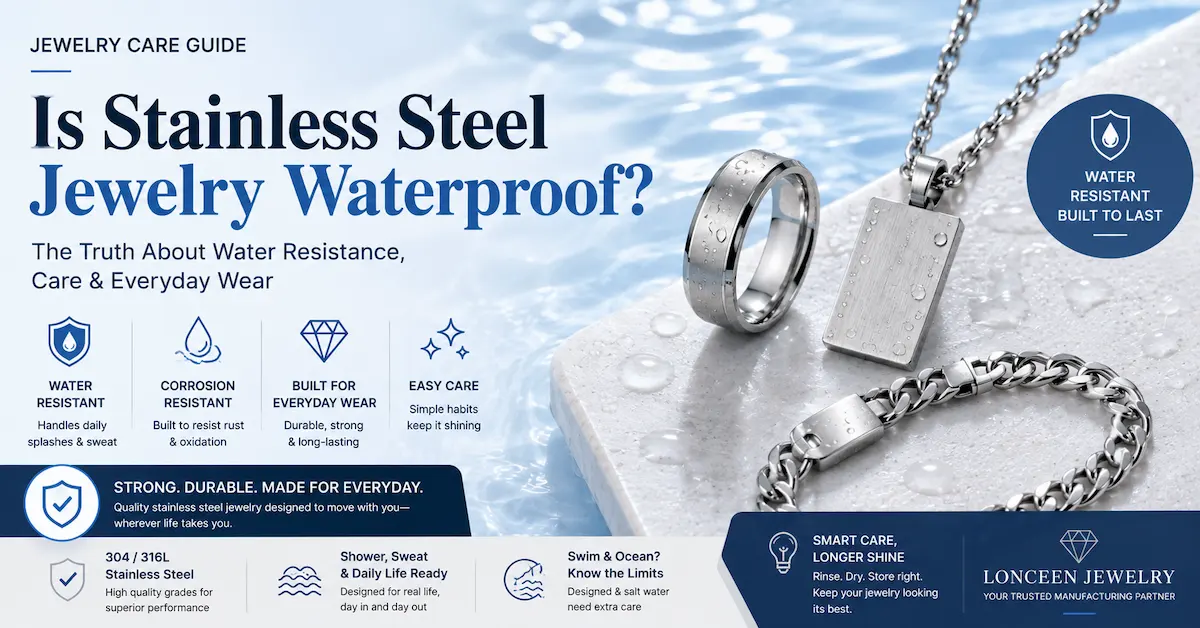
Yes, stainless steel jewelry is generally highly water-resistant and corrosion-resistant, which makes it one of the most practical materials for everyday jewelry. However, calling every stainless steel jewelry piece completely “waterproof” would be too broad.
The actual performance depends on the stainless steel grade, surface finish, plating, construction, and the type of water or chemicals the jewelry is exposed to.
For jewelry brands, this distinction matters. A product described as “waterproof” should have a clear material and finishing specification behind that claim.
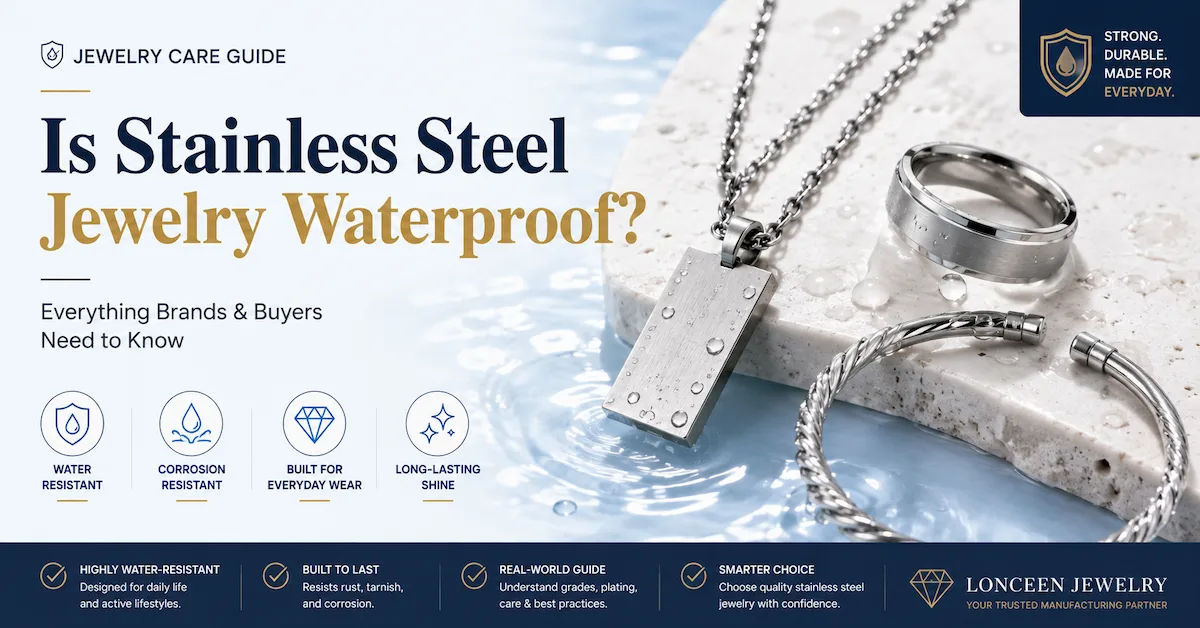
Stainless steel naturally develops a thin chromium-rich passive layer that helps protect the surface from corrosion. This layer can regenerate when exposed to oxygen, which is one of the main reasons stainless steel performs well in normal water-based environments.
For brands looking for durable materials for everyday collections, you can explore Lonceen Jewelry's Products page to review available jewelry categories.
Is Stainless Steel Jewelry Actually Waterproof?
The short answer is:
Stainless steel jewelry is highly water-resistant, but it is not absolutely immune to corrosion or surface changes in every environment.
This distinction is important because “waterproof” is often used as a marketing term, while stainless steel's actual technical advantage is its corrosion resistance.
Under normal conditions, stainless steel can tolerate regular exposure to:
- Fresh water
- Hand washing
- Rain
- Sweat
- Everyday humidity
- Occasional splashes
However, prolonged exposure to aggressive environments can still affect stainless steel.
Chlorides, acids, strong chemicals, and certain cleaning agents can create conditions where localized corrosion becomes possible.
Therefore, the better question for jewelry brands is not simply:
“Is stainless steel waterproof?”
It is:
“How water-resistant is this specific stainless steel jewelry construction under real-world use?”
Why Is Stainless Steel Resistant to Water?
The key lies in the material's chromium content.
Stainless steel contains at least 10.5% chromium, which allows a very thin chromium-rich oxide layer to form naturally on the surface. This passive layer acts as a protective barrier between the metal and its environment.
Unlike ordinary carbon steel, stainless steel does not rely only on an external coating to resist corrosion.
The protective surface film can also reform when damaged as long as suitable conditions are present.
This gives stainless steel an important advantage for jewelry:
The corrosion resistance is built into the material itself.
That is one reason stainless steel has become widely used for fashion jewelry, everyday accessories, watches, and other products where durability is important.
Water Resistance vs. Waterproof: What Is the Difference?
For jewelry brands, these terms should not be treated as identical.
| Term | What It Usually Means |
|---|---|
| Water-resistant | Can tolerate normal exposure to water |
| Corrosion-resistant | Material resists chemical deterioration |
| Tarnish-resistant | Surface is less likely to develop visible discoloration |
| Waterproof | Marketing term that implies very strong resistance to water |
A stainless steel jewelry piece may perform very well in water while still developing scratches, discoloration, or localized corrosion under certain conditions.
For this reason, brands should avoid making unlimited claims such as “100% waterproof in all conditions.”
A more accurate product description could be:
“Made from corrosion-resistant stainless steel and suitable for everyday water exposure.”
This communicates the material advantage without promising unrealistic performance.
Can You Shower With Stainless Steel Jewelry?
In many everyday situations, stainless steel jewelry can tolerate showering better than jewelry made from materials that are more sensitive to moisture.
Fresh water itself is generally not the main concern.
The bigger issue is what else is present in the shower environment.
Potentially aggressive substances include:
- Shampoo
- Conditioner
- Body wash
- Soap residues
- Cleaning chemicals
- High concentrations of chlorine
Repeated exposure to chemicals can be more relevant than simple contact with clean water.
For consumers, occasional shower exposure is generally less concerning than continuously exposing jewelry to chemicals and leaving residues on the surface.
For brands, this is an important distinction when writing product care instructions.
Can Stainless Steel Jewelry Go in the Pool?
This requires more caution.
Swimming pools often contain chlorine-based chemicals, and chloride-containing environments can increase the risk of localized corrosion under certain conditions.
This does not mean that stainless steel jewelry will immediately corrode when exposed to pool water.
Instead, the concern is repeated or prolonged exposure, especially when combined with:
- Chlorine
- Heat
- Residue accumulation
- Scratches
- Crevices
- Long exposure times
Therefore, brands selling stainless steel jewelry should avoid presenting pool exposure as completely risk-free.
A practical care recommendation is:
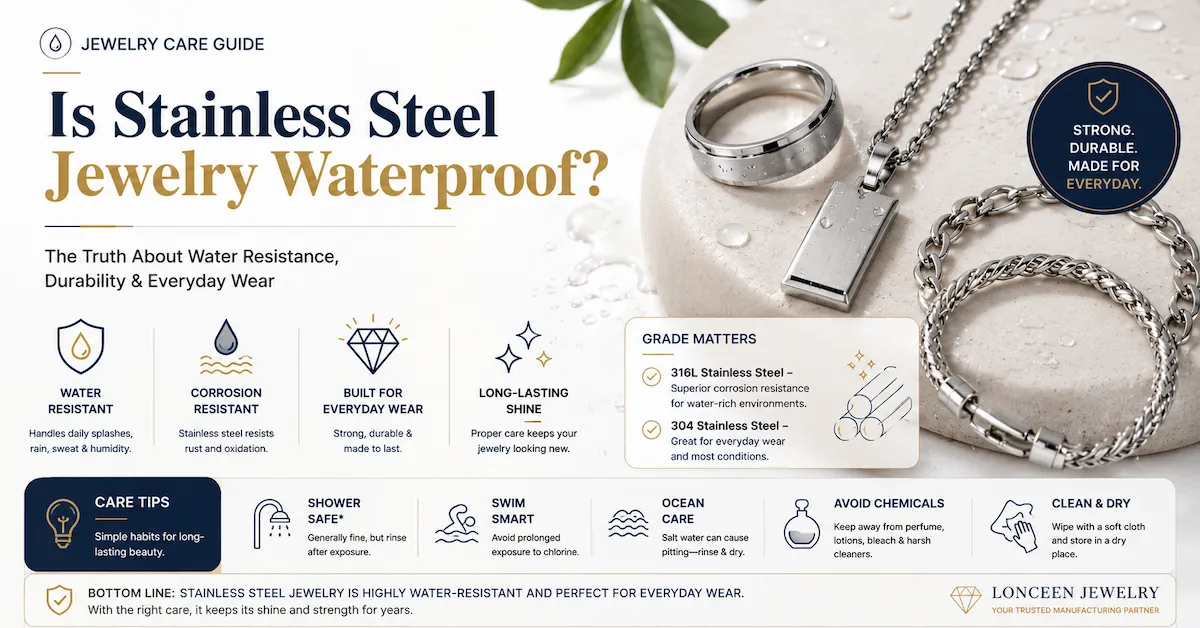
Rinse the jewelry with clean water after swimming and dry it thoroughly.
What About Salt Water and the Ocean?
Salt water deserves even more attention.
The chloride ions found in salt water can contribute to localized corrosion mechanisms such as pitting and crevice corrosion.
This is particularly relevant for jewelry because small gaps, joints, settings, and surface imperfections can retain moisture and salts.
That does not make stainless steel unsuitable for jewelry.
It simply means that “stainless” does not mean “corrosion impossible.”
For everyday jewelry collections, the material can still offer strong durability. But brands should provide realistic care guidance for customers who frequently wear jewelry at the beach or in seawater.
Does the Stainless Steel Grade Matter?
Yes.
“Stainless steel” is a broad material family rather than one single alloy. Different grades offer different levels of corrosion resistance depending on their chemical composition and intended environment.
For jewelry sourcing, buyers should therefore ask the manufacturer:
- What stainless steel grade is being used?
- Is the material specified in the product documentation?
- Is the surface plated or unplated?
- What finishing process is applied?
- How is the finished product inspected?
Two jewelry pieces may both be marketed as “stainless steel jewelry” but perform differently because their grades and finishing systems are different.
For B2B buyers, material specification is more meaningful than the word “waterproof” alone.
Does Gold Plating Change Waterproof Performance?
Yes.
This is one of the most important points for jewelry brands.
A stainless steel jewelry piece can have a corrosion-resistant stainless steel base while also carrying a decorative surface treatment such as:
- Gold color plating
- Rose gold plating
- PVD coating
- Other decorative finishes
In this situation, there are effectively two performance questions:
1. How resistant is the stainless steel base?
2. How durable is the surface finish?
The base material may remain corrosion-resistant even if the decorative surface develops wear over time.
Therefore, brands should not assume that every gold-tone stainless steel product has exactly the same water resistance as an uncoated stainless steel product.
When developing a collection, it is better to evaluate the complete finished product, not only the base material.
What Makes Stainless Steel Jewelry More Water-Resistant?
Several factors influence the final performance.
1. Stainless Steel Grade
A suitable grade provides the foundation for corrosion resistance.
The choice should reflect the intended environment and product positioning.
2. Surface Finish
A clean and well-finished surface can help reduce areas where contaminants accumulate.
Surface condition and manufacturing quality can influence corrosion behavior.
3. Product Construction
Complex designs containing narrow gaps or enclosed areas can retain moisture and residues.
This makes product geometry important.
4. Plating or Coating
Decorative finishes can affect the appearance and wear behavior of the product.
Brands should therefore specify the desired finishing system during product development.
5. After-Sales Care
Even corrosion-resistant jewelry benefits from proper cleaning and drying.
A good care routine can help preserve the product's appearance for longer.
Stainless Steel Jewelry: What Can It Handle?
For an everyday jewelry brand, the following practical guide is useful:
| Environment | General Recommendation |
| Rain | Generally suitable |
| Hand washing | Generally suitable |
| Sweat | Generally suitable |
| Fresh water | Generally suitable |
| Showering | Usually suitable, but rinse afterward |
| Swimming pool | Minimize prolonged exposure |
| Sea water | Minimize prolonged exposure |
| Perfume and cosmetics | Avoid direct repeated contact |
| Bleach / strong chemicals | Avoid |
| Long-term chemical exposure | Avoid |
The important principle is simple:
Water itself is usually not the biggest problem. Aggressive chemicals and prolonged exposure are.
How Should Jewelry Brands Describe Stainless Steel Jewelry?
For brands selling jewelry online, product descriptions should be both attractive and technically responsible.
Instead of writing:
“Completely waterproof forever.”
Consider:
“Corrosion-resistant stainless steel designed for everyday wear and regular water exposure.”
Other useful product description elements include:
- Stainless steel grade
- Surface treatment
- Plating method
- Finish
- Care instructions
- Intended use environment
This gives customers more useful information and reduces the risk of exaggerated material claims.
For brands building a long-term product line, material transparency can also make product pages more credible.
Why Stainless Steel Is Attractive for Everyday Jewelry Collections
The biggest advantage of stainless steel is not simply its relationship with water.
Its broader value comes from the combination of:
- Corrosion resistance
- Durability
- Low maintenance
- Modern appearance
- Versatile finishing options
- Suitability for everyday jewelry
This makes stainless steel particularly interesting for brands developing collections designed for frequent wear.
Compared with materials that require more intensive maintenance, stainless steel can provide a practical balance between appearance and everyday durability.
You can learn more about Lonceen Jewelry's company capabilities and manufacturing background through the About Us page.
How Should Buyers Evaluate Waterproof Stainless Steel Jewelry?
If you are sourcing stainless steel jewelry for a brand, do not evaluate the product based on the word “waterproof” alone.
Ask the manufacturer for five key details:
1. Material Grade
Confirm exactly which stainless steel grade is being used.
2. Surface Treatment
Determine whether the jewelry is:
- Natural stainless steel
- Polished
- Brushed
- PVD coated
- Plated
- Otherwise surface treated
3. Intended Use
Explain how customers are expected to wear the jewelry.
A product designed for occasional fashion wear may have different requirements from jewelry marketed specifically for everyday wear.
4. Quality Inspection
Ask how the finished jewelry is inspected for appearance, finishing consistency, and workmanship.
5. Care Instructions
A professional manufacturer should be able to provide practical recommendations for maintaining the jewelry.
For additional sourcing and product questions, you can also visit Lonceen Jewelry's FAQ & Guide.
Frequently Asked Questions
Is stainless steel jewelry waterproof?
Stainless steel jewelry is generally highly water-resistant and corrosion-resistant, but it should not be considered completely immune to corrosion in every environment.
Can I wear stainless steel jewelry in the shower?
Generally, stainless steel handles normal water exposure well. However, repeated contact with soaps, chemicals, and residues can affect the appearance of the finished product.
Can stainless steel jewelry be worn while swimming?
It is better to minimize prolonged exposure to pool or seawater because chlorine and chloride-rich environments can increase corrosion risks.
Does stainless steel jewelry rust?
Stainless steel is highly corrosion-resistant, but certain grades and environments can still experience localized corrosion or staining.
Is 316 stainless steel better for jewelry?
316 stainless steel is known for stronger corrosion resistance in many environments than some other common grades, particularly because of its molybdenum content. However, the correct grade should always be selected according to the intended application.
Does gold-plated stainless steel remain waterproof?
The stainless steel base can remain corrosion-resistant, but the decorative surface finish has its own wear characteristics. Performance depends on the complete finishing system.
Does stainless steel jewelry tarnish?
Stainless steel is generally much more resistant to tarnishing and discoloration than many common jewelry materials, but surface appearance can still change because of chemicals, abrasion, contamination, or environmental exposure.
Can stainless steel jewelry be worn every day?
Yes. Its durability and corrosion resistance make stainless steel a practical choice for everyday jewelry collections.
How should stainless steel jewelry be cleaned?
Use clean water and a soft cloth for routine cleaning. After exposure to sweat, salt water, or chemicals, rinse the jewelry and dry it thoroughly.
What should brands check before selling waterproof stainless steel jewelry?
Brands should confirm the stainless steel grade, surface treatment, product construction, finishing quality, and appropriate care instructions before making water-resistance claims.
Final Answer: Is Stainless Steel Jewelry Waterproof?
Stainless steel jewelry is highly water-resistant, but “waterproof” should not be interpreted as completely corrosion-proof.
Its strong performance comes from the chromium-rich passive layer naturally formed on stainless steel, which provides substantial protection against corrosion in many everyday environments.
However, chlorine, salt water, strong chemicals, prolonged exposure, product construction, and surface treatments can all influence the final result.
For jewelry brands, the best approach is to move beyond a simple “waterproof” claim and evaluate the complete product specification.
Material grade + surface treatment + construction + finishing + care instructions = real-world water resistance.
If you are developing a stainless steel jewelry collection, Lonceen Jewelry can support product development and manufacturing requirements. Explore the Lonceen Jewelry Products page or contact the team through the company's About Us page.