1. Why Stainless Steel Jewelry Is So Popular
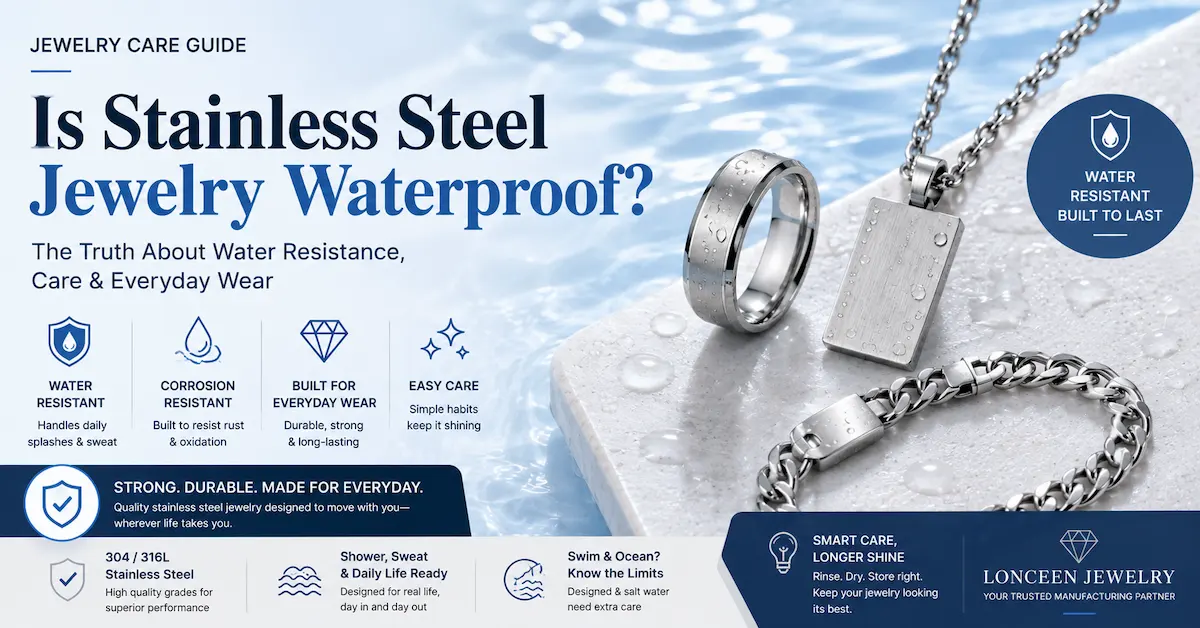
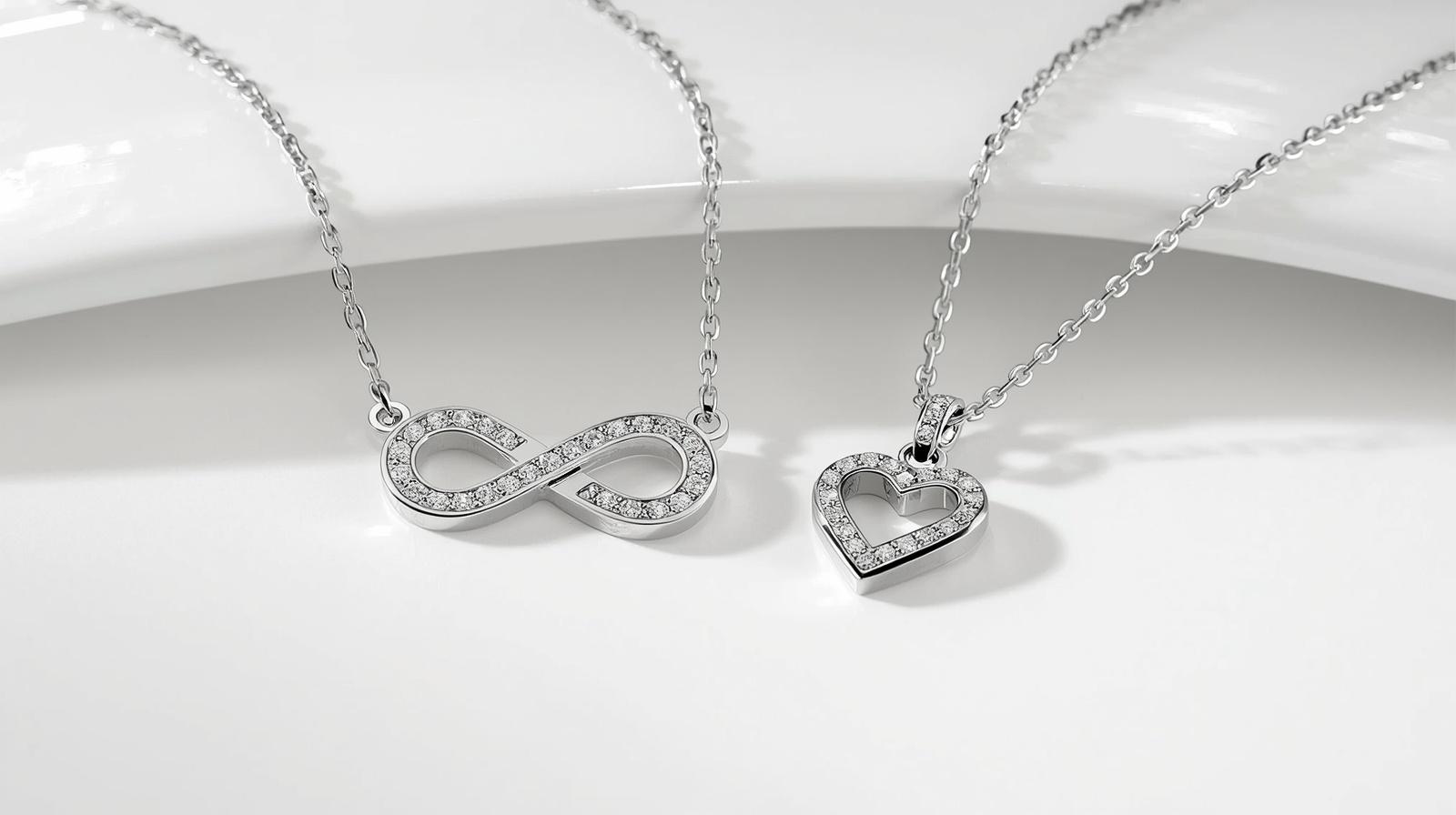
Stainless steel jewelry has become a modern classic — a perfect mix of durability, elegance, and affordability. Unlike silver or gold, stainless steel is resistant to tarnish, corrosion, and moisture, making it ideal for everyday wear.
Another major advantage is its hypoallergenic properties, meaning it rarely causes skin irritation. Whether it’s a stainless steel ring, necklace, or bracelet, this material combines practicality with timeless style.
2. Why Proper Care Still Matters
Even though stainless steel is tough, it’s not indestructible. Over time, exposure to sweat, perfumes, lotions, or household chemicals can cause a buildup of grime or minor discoloration. Proper care keeps your jewelry gleaming and prevents micro-scratches.
Common issues include:
-
Jewelry losing its shine or becoming dull
-
Dirt trapped between links or settings
-
Minor scratches from daily wear
With just a few simple habits, you can easily restore and preserve your jewelry’s natural glow.
3. Daily Care Tips for Stainless Steel Jewelry
1️⃣ Avoid Contact with Chemicals
Perfume, hairspray, and cleaning products can react with metal surfaces. Always apply cosmetics before putting on your jewelry.
2️⃣ Take It Off Before Bathing or Swimming
While stainless steel is rust-resistant, chlorine or saltwater can still reduce its shine over time.
3️⃣ Wipe After Each Use
Gently wipe your jewelry with a soft microfiber cloth to remove oils and sweat that may dull the finish.
4️⃣ Store Separately
Store pieces in individual pouches or boxes to avoid scratches caused by contact with other metals.
4. Deep Cleaning: Step-by-Step Guide
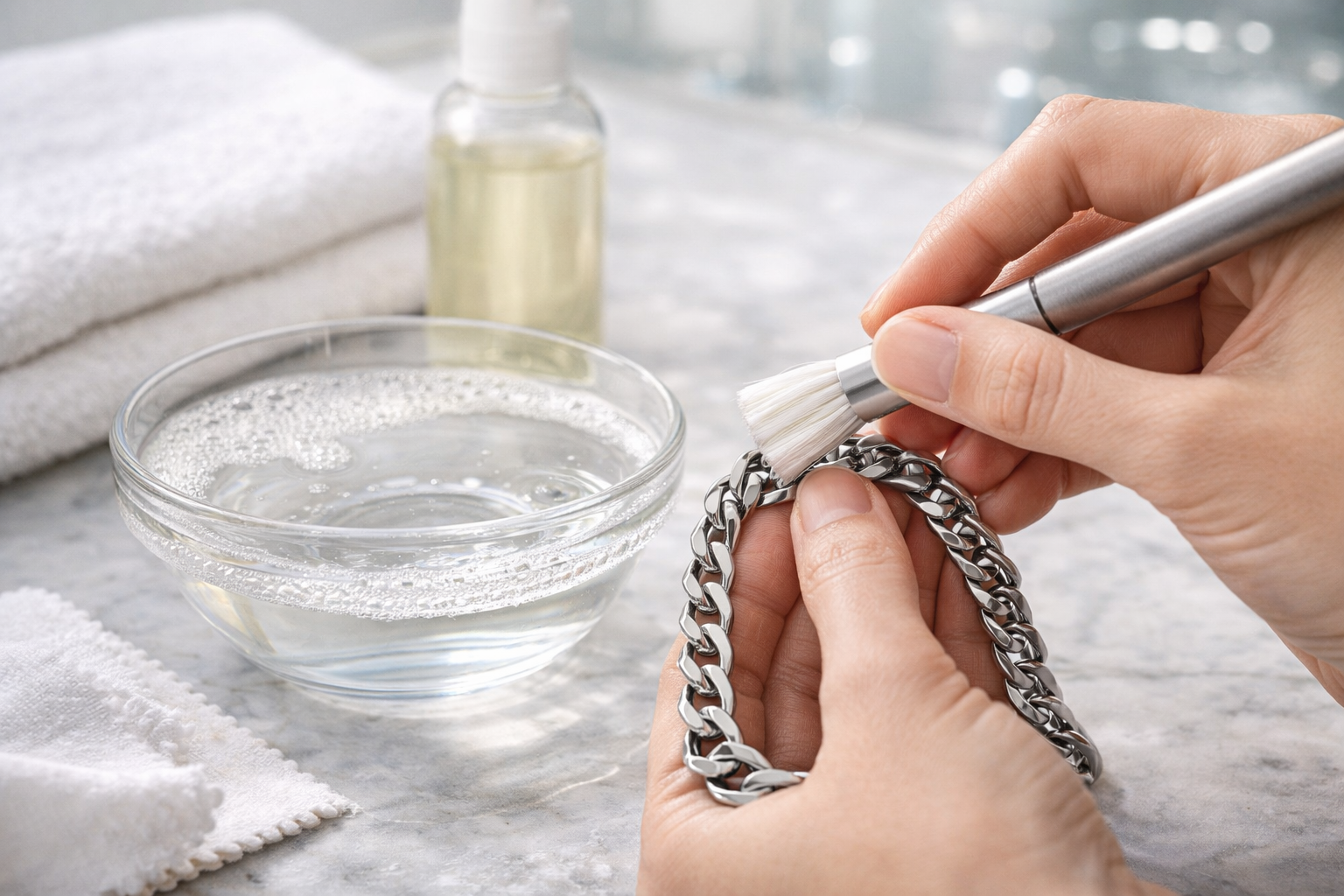
Even with regular wiping, deeper cleaning is needed every few months. Here’s a safe and effective method:
-
Prepare Warm Soapy Water
Mix warm water with a few drops of mild dish soap in a small bowl. -
Soak the Jewelry
Let it sit for about 5 minutes to loosen dirt and oils. -
Brush Gently
Use a soft toothbrush to reach intricate areas and remove debris. -
Rinse Thoroughly
Rinse under running water to remove any soap residue. -
Dry Completely
Pat with a clean, soft cloth and air dry in a shaded area. -
Polish for Extra Shine
Use a jewelry polishing cloth for the final touch.
⚠️ Avoid:
-
Alcohol-based or bleach cleaners
-
Paper towels (they can cause fine scratches)
5. Natural DIY Cleaning Solutions
If you prefer eco-friendly cleaning, here are simple homemade solutions that work wonders:
-
Baking Soda Paste: Mix baking soda with water to form a gentle polishing paste for stubborn stains.
-
Diluted White Vinegar: Great for removing tarnish. Dip briefly, then rinse and dry thoroughly.
-
Lemon Juice + Salt: Acts as a natural degreaser, but use sparingly and rinse quickly.
✅ Always test homemade cleaners on a small, hidden area first to ensure they don’t affect the finish.
6. Pro Tips to Keep Your Jewelry Sparkling
-
Wipe with a dry cloth after every wear
-
Avoid storing in humid areas
-
Use anti-tarnish strips or silica gel packs in jewelry boxes
-
Schedule a deep clean every 3–6 months
These small steps can extend your jewelry’s life dramatically and keep it looking like the day you bought it.
7. Comparing Stainless Steel to Other Materials
| Material | Pros | Cons | Maintenance Level |
|---|---|---|---|
| Stainless Steel | Durable, affordable, anti-tarnish | Slightly less lustrous than silver | ⭐ |
| Silver | Classic shine, valuable | Oxidizes easily | ⭐⭐ |
| Gold | Long-lasting, hypoallergenic | Expensive, soft metal | ⭐⭐ |
| Copper | Warm tone, vintage appeal | Prone to green oxidation | ⭐⭐⭐ |
🧠 Takeaway: Stainless steel jewelry is the best value for durability and style — minimal maintenance, maximum brilliance.
8. FAQ – Frequently Asked Questions
Q1: Does stainless steel jewelry tarnish?
No, it doesn’t tarnish like silver or gold-plated items. However, oils and chemicals can cause dullness, which can be easily cleaned.
Q2: Is stainless steel jewelry hypoallergenic?
Yes. Most stainless steel jewelry is hypoallergenic and safe for sensitive skin.
Q3: Can I clean stainless steel jewelry with toothpaste?
Not recommended. Toothpaste contains abrasive particles that may scratch the surface.
Q4: Can stainless steel jewelry rust?
Only under extreme conditions — such as long exposure to saltwater or harsh chemicals.
Q5: Can I use an ultrasonic cleaner?
Yes, for plain stainless steel pieces without gemstones or enamel. Avoid using it on jewelry with glued or set stones.
9. The Longevity Secret: Consistency
The real secret to maintaining your stainless steel jewelry is consistent, gentle care. Avoid neglecting it for months, and don’t over-clean it aggressively. Think of your jewelry like your skin — regular, gentle attention keeps it radiant.
10. Final Thoughts
Stainless steel jewelry is one of the most versatile, sustainable, and stylish choices available today.
It doesn’t demand luxury-level maintenance — only mindful care. By adopting these cleaning and care habits, your favorite pieces will continue to reflect light and elegance for years to come.
💎 Keep it clean. Keep it dry. Keep it shining.