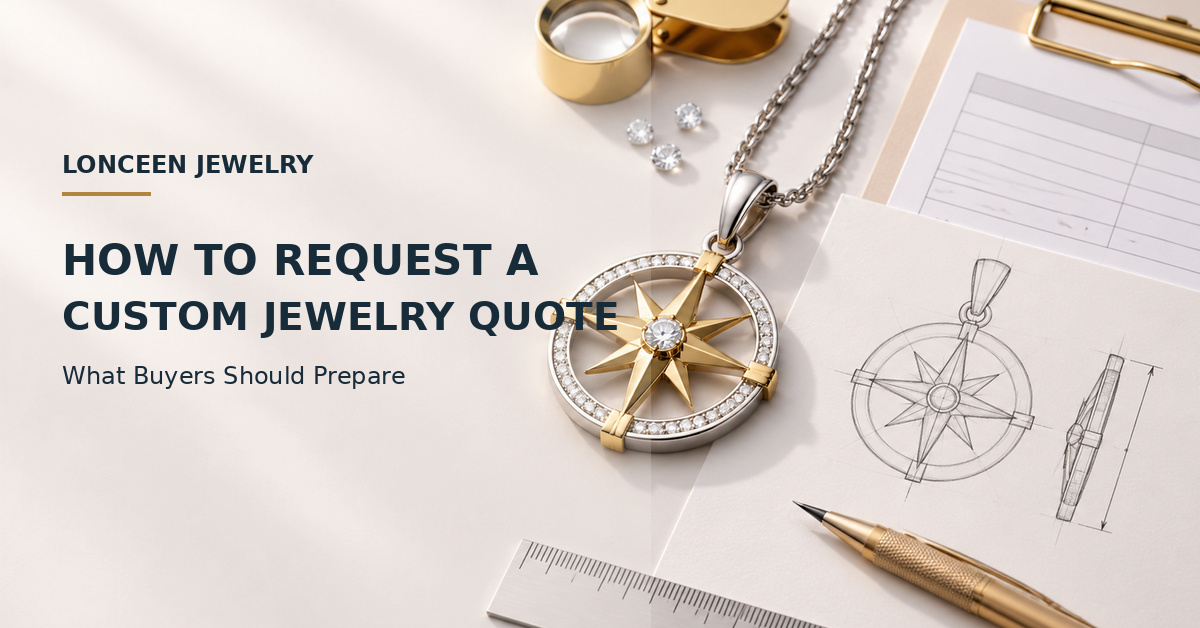


A custom jewelry project may begin with a sketch, reference photo, physical sample, or an idea for a new collection. Before a manufacturer can prepare a useful quotation, both sides need to understand what is being developed.
A custom jewelry quote is more accurate when it is based on clear product requirements—not a short description such as “a gold necklace with a logo.” Product type, dimensions, material, finish, components, quantity, and packaging can all affect the project scope.
You do not need every technical detail finalized before making an inquiry. A basic custom jewelry design brief helps the manufacturer review your idea, identify missing information, and explain the next steps.
1. Why a Clear Design Brief Matters
A quotation depends on the information behind it. Two similar-looking pendants may require different arrangements if their dimensions, materials, stones, or quantities differ.
A clear brief helps the manufacturer understand the product, identify open questions, and estimate the development and production scope. An early estimate can support planning, but the final quotation should reflect confirmed specifications.
2. What to Prepare Before Requesting a Custom Jewelry Quote
Start with the information you have. These six areas make an inquiry easier to review.
1. Product Type and Design Reference
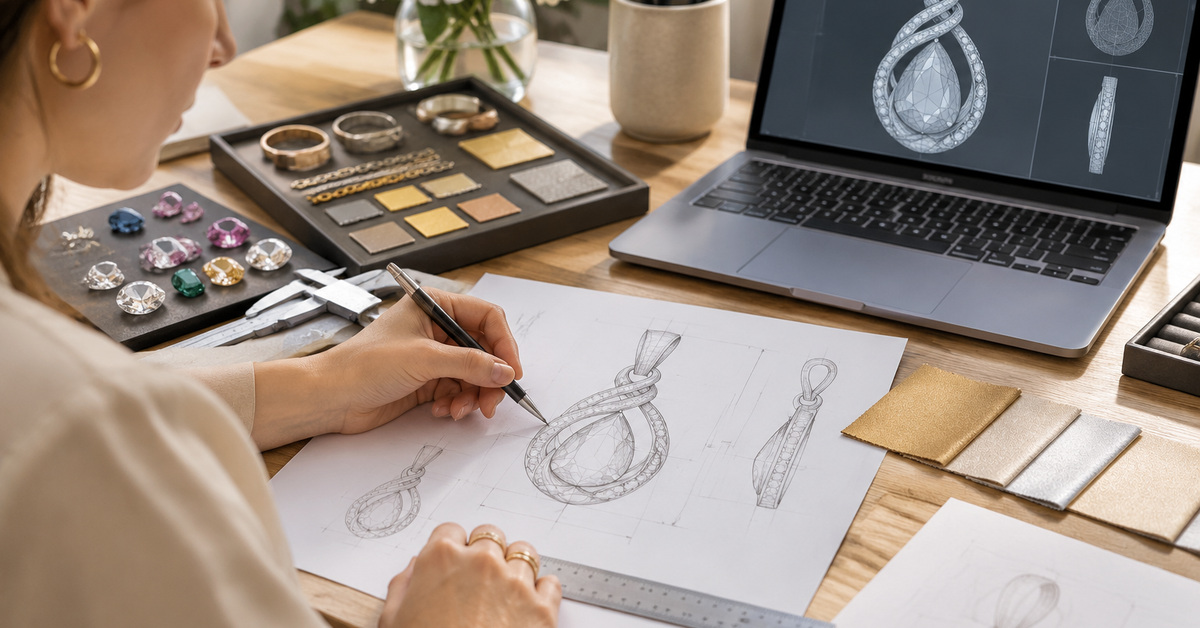
Identify the category—such as a ring, necklace, pendant, bracelet, earrings, anklet, or brooch—and share a reference if available:
-
Hand-drawn sketch, photograph, or inspiration image.
-
Product link or physical sample.
-
CAD drawing or technical file.
-
Written description of the concept.
Explain what should remain and what may change, such as a pendant's shape, dimensions, stone setting, material, or logo placement. Label each design in a collection separately.
2. Dimensions and Product Specifications
Provide measurements where possible: overall length, width and thickness; necklace or bracelet length; ring size; pendant dimensions; chain width; and clasp details.
Use millimeters, and mark unconfirmed measurements as approximate. Images show appearance, while measurements communicate scale and construction.
3. Materials, Stones, and Components
State your preferred base material, if known, such as 925 sterling silver, stainless steel, or copper. List relevant stones and components, including CZ, pearls, chains, clasps, posts, and backs.
If unsure, describe the desired appearance, intended use, target customer, and target price level. Ask for material guidance. Avoid saying “silver metal” if you specifically require 925 sterling silver.
4. Surface Finish and Color
Describe the finish separately from the base material: high polish, matte, satin, brushed, or textured; gold, rose gold, rhodium, black, or another color.
Attach a reference if color matching matters. Terms such as “gold color” can mean different shades and finishes. Confirm the plating or coating specification for the actual product.
5. Branding and Packaging
Specify any logo, engraving, name, date, or symbol. List packaging separately, such as jewelry cards, pouches, boxes, labels, or care cards.
Provide artwork and preferred placement if available; otherwise, mark branding as undecided.
6. Quantity, Variations, and Target Market
Estimate the quantity for each design and, where possible, each size or finish. Also state whether you need a sample, your target market, preferred delivery window, and any known documentation requirements.
Final MOQ, sample arrangements, and timing are project-specific; do not assume an in-stock MOQ applies to custom development.
3. Can You Request a Quote Without a CAD File?
Yes. A finished CAD file is not always necessary for an initial inquiry. You can begin with a sketch, reference image, photograph, physical sample, or written concept. Explain the product clearly and identify details that are still undecided.
LONCEEN's OEM/ODM jewelry service says buyers can share a concept and files such as hand-drawn sketches, JPG, PNG, or PDF references. After the requirements are discussed and details approved, CAD drawings can be prepared for confirmation.
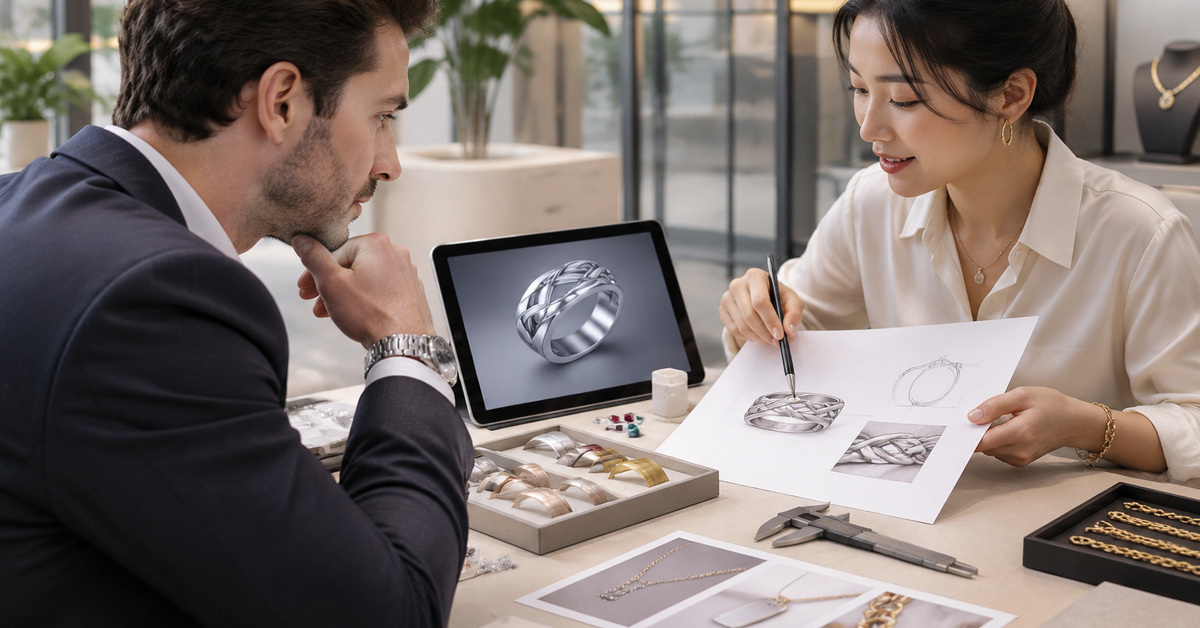
Without technical drawings, provide approximate dimensions, material preference, finish, and key design features. The manufacturer can advise what else is needed.
4. What Should a Custom Jewelry Quote Include?
Check whether the quotation identifies the product and the scope being priced. Depending on the project, ask the manufacturer to clarify:
| Quotation detail | What to confirm |
|---|---|
| Product specification | Design version, dimensions, material, finish, components |
| Quantity | Price basis and quantity breaks |
| Development | Whether design, CAD, tooling, or mold charges apply |
| Sampling | Sample cost, quantity, and approval requirements |
| Unit price | Currency and what is included |
| Packaging | Whether customized packaging is included or separate |
| Timing | Estimated sample and production schedule |
| Shipping | Whether freight, insurance, duties, or other charges are excluded |
| Validity | How long the quotation remains valid |
Not every project involves every item. Clarify what is included rather than assuming all services are covered. This matters when reviewing custom jewelry manufacturing cost: a unit price alone does not show whether quotations cover the same specifications, sampling, packaging, or delivery terms.
5. How to Compare Custom Jewelry Quotes
Compare quotations against the same brief: design version, dimensions, material, stones, finish, components, and quantity. Check whether CAD, tooling, samples, packaging, and shipping are included or separate.
If one price is much lower, ask what is excluded before deciding.
6. How LONCEEN Supports Custom Jewelry Projects
LONCEEN's published OEM/ODM service describes design communication, material and detail discussion, CAD confirmation, sample development, production coordination, quality inspection, packaging, and shipment. Its listed material directions include 925 sterling silver, copper, and stainless steel; suitability depends on the product and confirmed requirements.
Share the information you have rather than waiting until every detail is finalized. Explore LONCEEN's OEM/ODM services, browse the jewelry product collections, or contact the LONCEEN team.
7. A Simple Brief for Your First Inquiry
Copy this checklist into your inquiry and complete the fields you know:
-
Product category:
-
Design reference: Sketch, image, CAD, sample, or written concept
-
Intended use or target customer:
-
Approximate dimensions:
-
Preferred material:
-
Stones and components:
-
Finish or color:
-
Logo, engraving, or personalization:
-
Packaging requirements:
-
Estimated quantity per design:
-
Number of styles or variations:
-
Target market and delivery destination:
-
Target delivery window:
-
Details that still need guidance:
Incomplete fields are acceptable. Mark unknown details clearly so they can be discussed rather than treated as confirmed.
FAQ About Custom Jewelry Quotes
1. What information do I need to request a custom jewelry quote?
Provide the product type, reference, approximate dimensions, material, finish, quantity, and branding or packaging details where available.
2. Can I request a quote without a CAD drawing?
Yes. A sketch, image, sample, or written concept can start the discussion; drawings can be refined after requirements are confirmed.
3. What if I do not know which material to choose?
Describe the intended use and appearance, then ask for material guidance before approving the specification.
4. Should I request a sample before placing a bulk order?
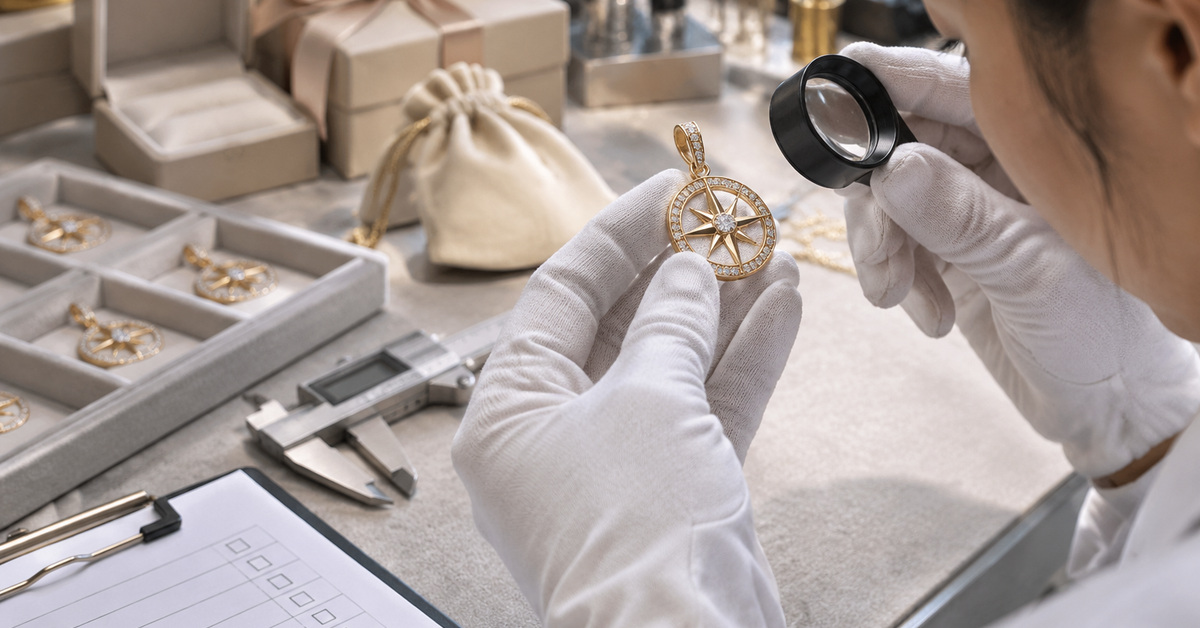
For a new or complex design, a sample helps review appearance, dimensions, finish, and construction. Confirm its scope and cost separately.
5. Does the quotation include packaging and shipping?
Not necessarily. Confirm whether customized packaging, freight, insurance, duties, and other delivery charges are included or separate.
6. Does MOQ 1 apply to custom jewelry orders?
Not automatically. MOQ 1 may apply to eligible in-stock products, while custom development has project-specific minimum quantities and production arrangements. Confirm the MOQ for each design.
7. Is an initial custom jewelry quote the final price?
It may change when specifications or quantities change. Confirm the final product details and quotation scope before production approval.
Conclusion
A successful custom jewelry project starts with clear communication. You do not need a perfect CAD file to make an initial inquiry, but you should provide enough information to explain the product direction.
Prepare a design reference, approximate dimensions, material and finish preferences, estimated quantity, and branding requirements. Ask the manufacturer to clarify open details and explain what the quotation includes.
If you are planning a new design or collection, send your concept to LONCEEN's OEM/ODM team. A clear brief is the first step toward a product that can be reviewed, sampled, and developed for your market.