

Choosing a jewelry manufacturer is not simply a matter of finding a producer with the right equipment. The more important question is whether a manufacturer’s strengths match what your business actually needs. A manufacturer that is excellent for one buyer can be a poor fit for another, even when both are sourcing similar products.
This guide focuses on fit. It explains how different business models create different manufacturer requirements, which dimensions matter when comparing manufacturers, and how to avoid a mismatch that only becomes visible after production begins. It does not cover workshop auditing or general supplier comparison; those are separate evaluation questions.
Why "Manufacturer" Is Not a Single Category
The word manufacturer describes a production role, but not a fixed set of capabilities. Jewelry manufacturers differ in:
- which product types they handle well
- which base materials they work with regularly
- whether they support design development or only execute approved designs
- how they structure order quantities
- how they manage samples, revisions, and repeat production
- what they expect from the buyer in terms of specifications and decisions
Two manufacturers can both be legitimate and capable, yet suit entirely different buyers. A workshop built around efficient repetition of established designs is not the same as one organized around developing new pieces from sketches.
For buyers, the practical question is not "Who is the best manufacturer?" but "Which manufacturer is built for the kind of work I will send them?"
Start with Your Business Model, Not a Supplier List
Your business model determines what you need from a manufacturer more than any product photo does. Before comparing candidates, clarify the pattern of work you will actually place.
Consider these common buyer profiles.
Startup Jewelry Brands
Startups usually need support through the development stage: turning an idea into a producible design, reviewing samples, and adjusting before committing to volume. Their priority is often development support and manageable initial quantities, not maximum output speed.
Established Brands with Defined Designs
Brands with complete technical files and approved specifications need a manufacturer that can execute accurately and reproduce results consistently. Their priority is precision and repeatability, not design guidance.
Boutique Retailers
Boutiques often need smaller runs across a varied assortment. They may rely on a manufacturer’s existing product range or limited customization. Their priority is flexibility across styles and practical order structures.
E-commerce Sellers
Online sellers depend on stable specifications, consistent appearance across batches, and reliable restocking of listed products. Their priority is consistency and documentation that supports product pages and repeat sales.
Wholesalers and Distributors
Businesses supplying other retailers need dependable volume and predictable scheduling. Their priority is capacity planning and delivery reliability across recurring orders.
Each profile points toward a different type of manufacturer. Naming your profile first makes the comparison much more focused.
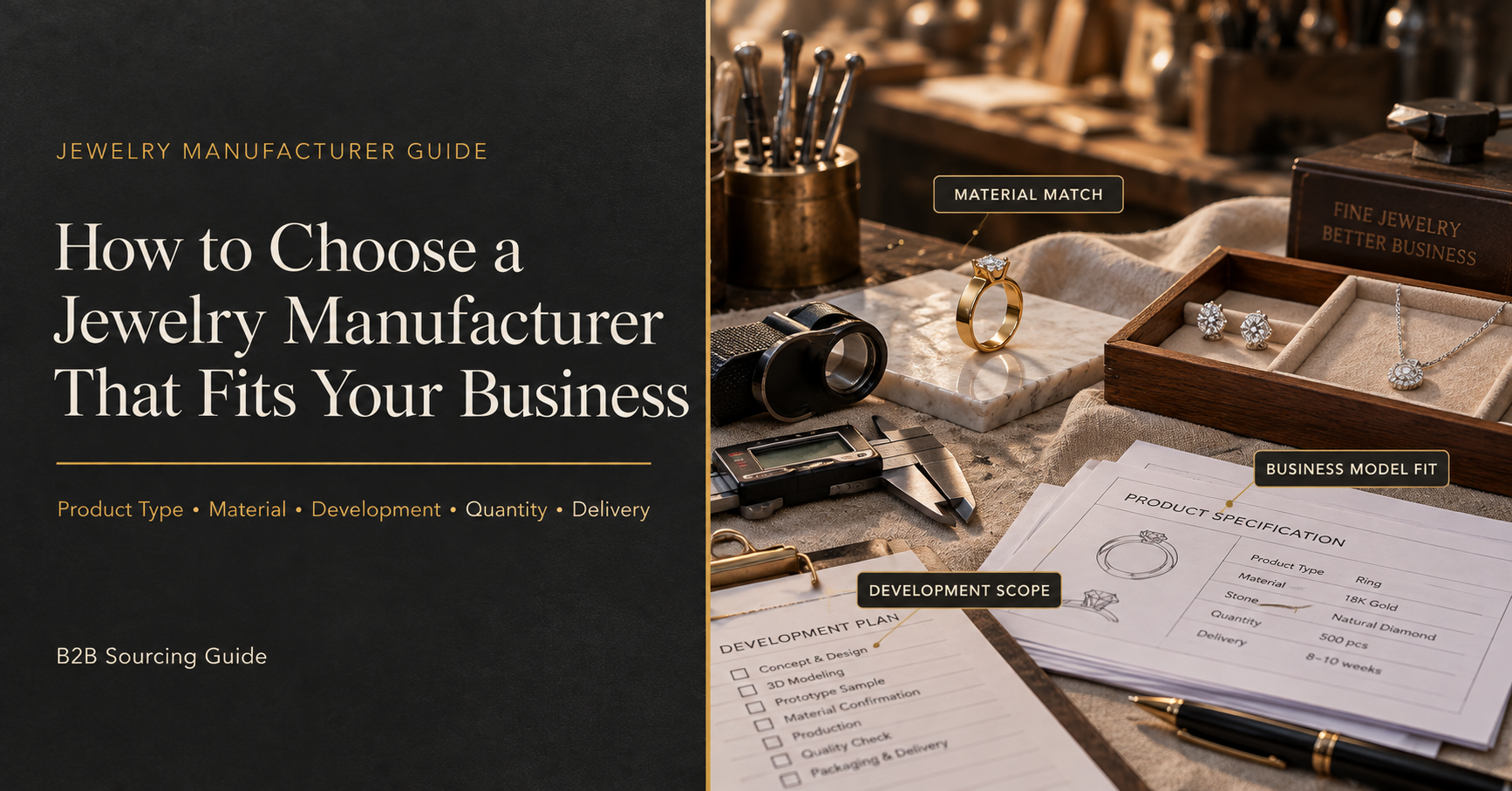
The Five Fit Dimensions That Matter Most
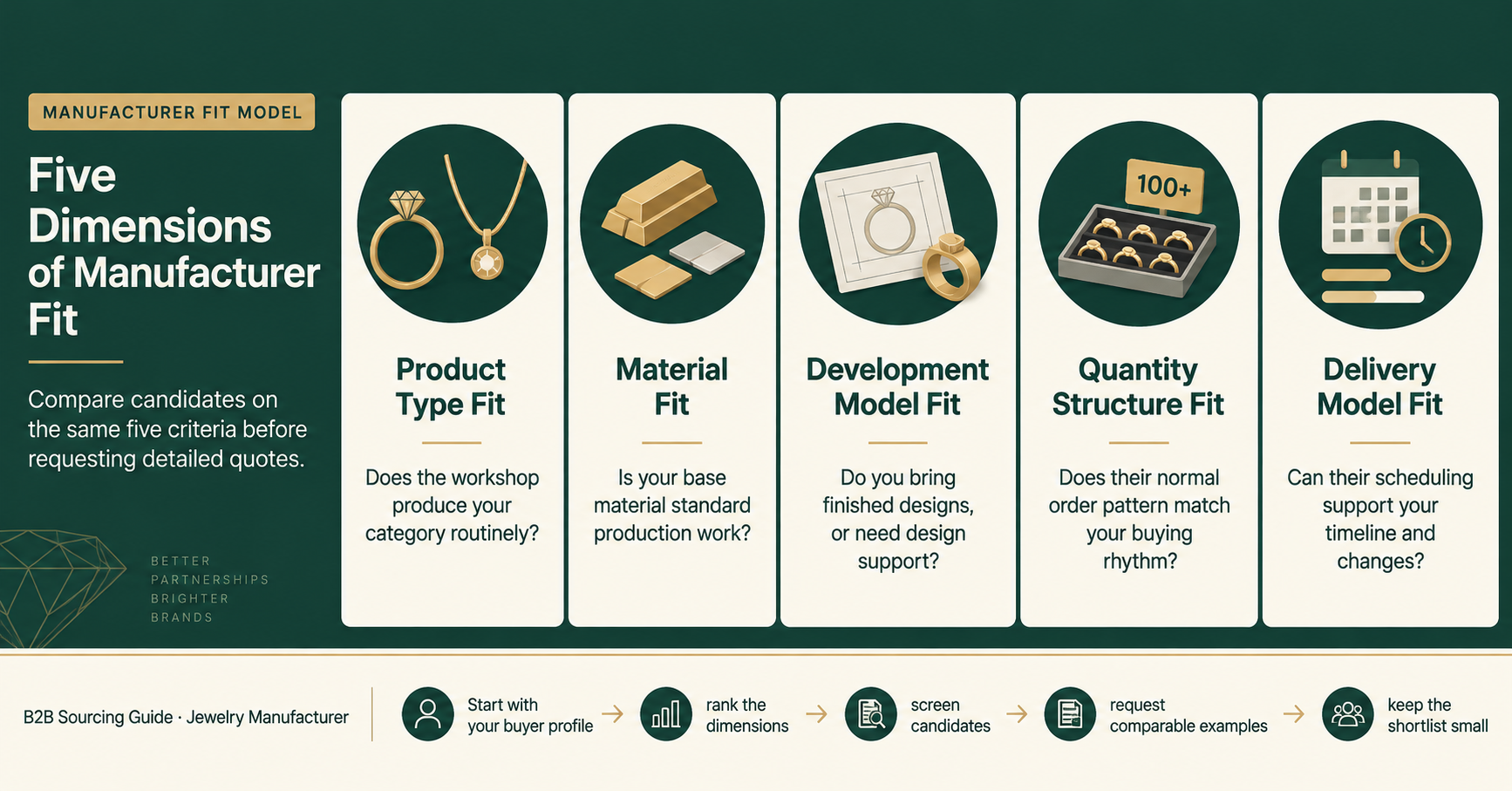
Rather than scoring manufacturers on generic criteria, compare them across the dimensions that connect your needs to their strengths.
1. Product Type Fit
Manufacturers tend to be strongest in the categories they produce regularly. A workshop experienced with rings may not be equally practiced in fine chain work or complex earring assembly.
Ask which product types the manufacturer handles routinely, and request examples that match your construction—not just your aesthetic. A design that looks similar on the surface can require very different production methods.
2. Material Fit
Base material affects tooling, finishing, and process choices. A manufacturer fluent in sterling silver may approach stainless steel or brass differently, and surface treatment requirements vary by material.
Confirm that the manufacturer works with your intended material as a normal part of their production, not as an occasional exception. Material fit influences both quality consistency and how smoothly technical questions get answered.
3. Development Model Fit
Manufacturers differ in how much development they support. Some expect a complete, approved design and focus on execution. Others can help interpret a concept, propose construction options, and guide a design toward production.
Match this to your own capability. If you have full technical files, a strong execution-focused manufacturer may be ideal. If you are still shaping the design, a manufacturer with development support is more practical.
This is a question of who does which part of the work, not a ranking of better or worse manufacturers.
4. Quantity Structure Fit
Order structure affects which manufacturers are realistic partners. Some are set up for larger, less frequent runs; others handle smaller or more varied orders.
Look beyond a minimum number. Ask how the manufacturer prefers to organize production—by style, by material, by season—and whether their typical order pattern resembles yours. A manufacturer whose normal workflow matches your buying rhythm will usually be easier to work with.
5. Delivery Model Fit
Delivery expectations should align with how the manufacturer plans production. A manufacturer accustomed to long, planned runs may not be suited to short-notice changes, while one built around flexible scheduling may not offer the most efficient large-volume timing.
Clarify how the manufacturer handles scheduling, what information they need to plan, and how they communicate progress. Fit here prevents friction later.
When a Manufacturer Is the Wrong Choice
Not every buyer needs a manufacturer. Recognizing this early saves time and cost.
A manufacturer may not be the right starting point if:
- you need a wide assortment quickly and are still testing demand
- your quantities are very small and you have not yet validated a design
- you want to buy established products rather than develop your own
- your specifications are not yet defined enough to execute
In these situations, a wholesale supplier or an existing product range may be a more sensible first step. A manufacturer relationship becomes more valuable once you have a clearer product direction and a realistic view of volume.
Choosing the wrong type of partner is a common source of frustration—not because the manufacturer is weak, but because the buyer’s needs did not match the manufacturer’s model.
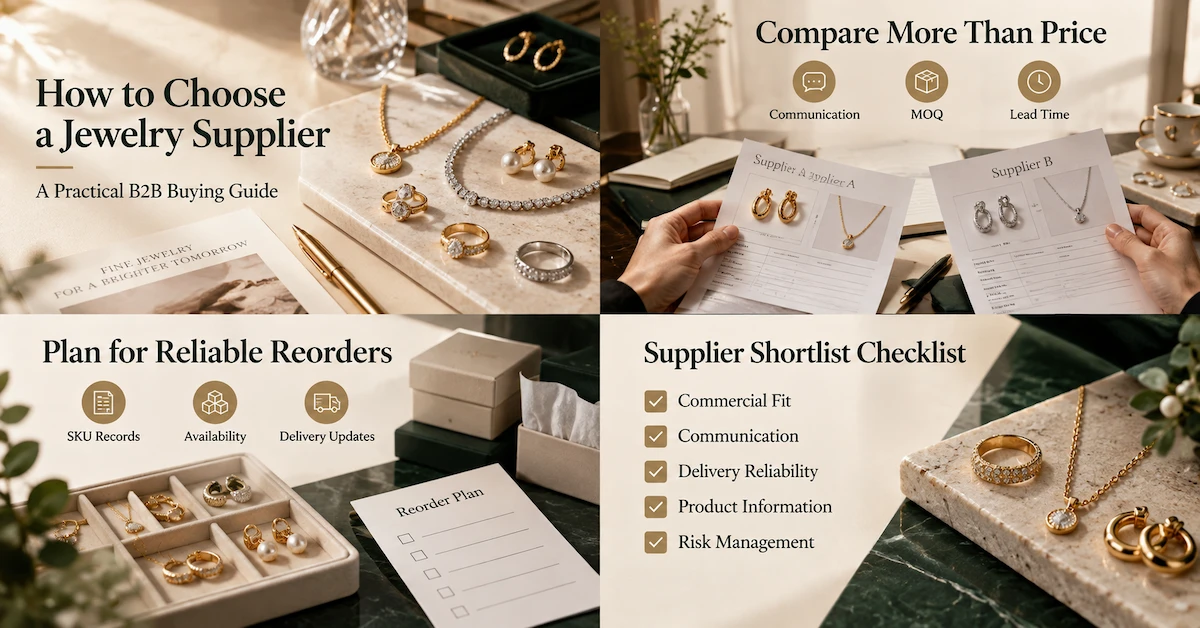
Comparing Manufacturers Without Reducing Them to Price
Price comparisons are only meaningful when the underlying scope is the same. Two quotes can differ because of material, construction, finishing, quantity assumptions, or development included—not because one manufacturer is simply cheaper.
When comparing candidates, keep the scope aligned:
A manufacturer that appears more expensive at unit level may include development work or clearer specifications that reduce costly revisions later. A lower quote may exclude steps you will still need.
The goal is to compare like with like, then judge whether the difference reflects real value for your situation.
A Practical Mismatch: What It Looks Like
Mismatches often appear in recognizable patterns.
- A startup chooses a high-volume manufacturer and finds that minimum quantities and limited development support do not fit its testing stage.
- An established brand chooses a development-focused workshop and finds that its fully specified designs move more slowly than expected because the workflow is oriented toward exploration.
- An e-commerce seller chooses a manufacturer without consistent documentation and struggles to keep product pages accurate across restocks.
- A boutique chooses a manufacturer built for large planned runs and cannot get the varied, smaller orders it needs.
None of these outcomes means the manufacturer is poor. They mean the fit was wrong. Identifying your own pattern in advance makes these problems far less likely.
How to Build a Shortlist That Fits
A shortlist is more useful when it is built around fit criteria rather than a general search.
- Define your buyer profile using the categories above.
- List the five fit dimensions and rank which matter most for your next order.
- Screen candidates against those dimensions before requesting detailed quotes.
- Request examples of comparable work, not just catalogs.
- Ask how each manufacturer typically works, then compare that with your own process.
- Keep the shortlist small and focus on genuine fit rather than collecting many options.
This approach narrows the field to manufacturers who are plausibly right for your work, which makes later discussions far more productive.
Questions Worth Asking Before You Commit
These questions help reveal fit without turning the conversation into a full audit:
- Which product types do you produce most often?
- Which materials do you work with routinely?
- Do you typically execute approved designs, or also support development?
- What does a normal order pattern look like for you?
- How do you plan scheduling, and what information do you need from buyers?
- Can you share examples of comparable construction, not just similar appearance?
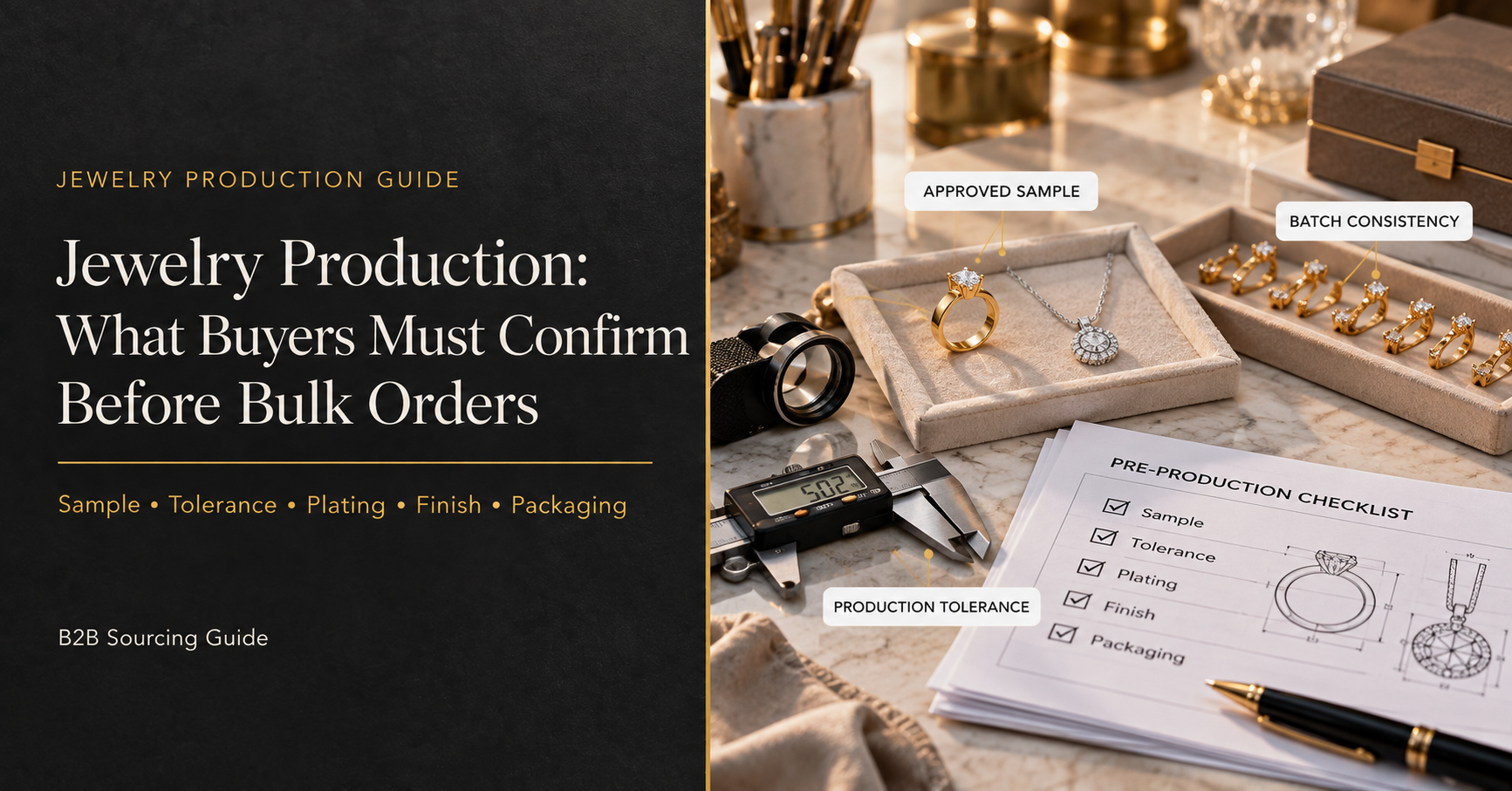
- How do you handle specification details and confirm them before production?
Clear, specific answers indicate a manufacturer that understands its own model—and that makes it easier to judge whether that model suits you.
Conclusion
Choosing a jewelry manufacturer is a matching exercise. The right manufacturer is not the largest or the most versatile in absolute terms, but the one whose product types, materials, development model, quantity structure, and delivery approach align with how your business works.
Start from your own buyer profile, compare manufacturers across these five dimensions, and treat pricing as a factor within a consistent scope rather than the deciding factor on its own. A good fit reduces friction, protects quality, and makes repeat production far more predictable.
If you are evaluating a manufacturer for an upcoming collection, define your profile and your priority dimensions first. That clarity turns a long list of candidates into a focused shortlist of manufacturers genuinely suited to your work.