

A boutique jewelry assortment should feel curated, not crowded.
Unlike large retailers that often compete through product volume, boutique stores usually build their appeal around selection, atmosphere, style and customer experience.
That makes jewelry sourcing a different challenge.
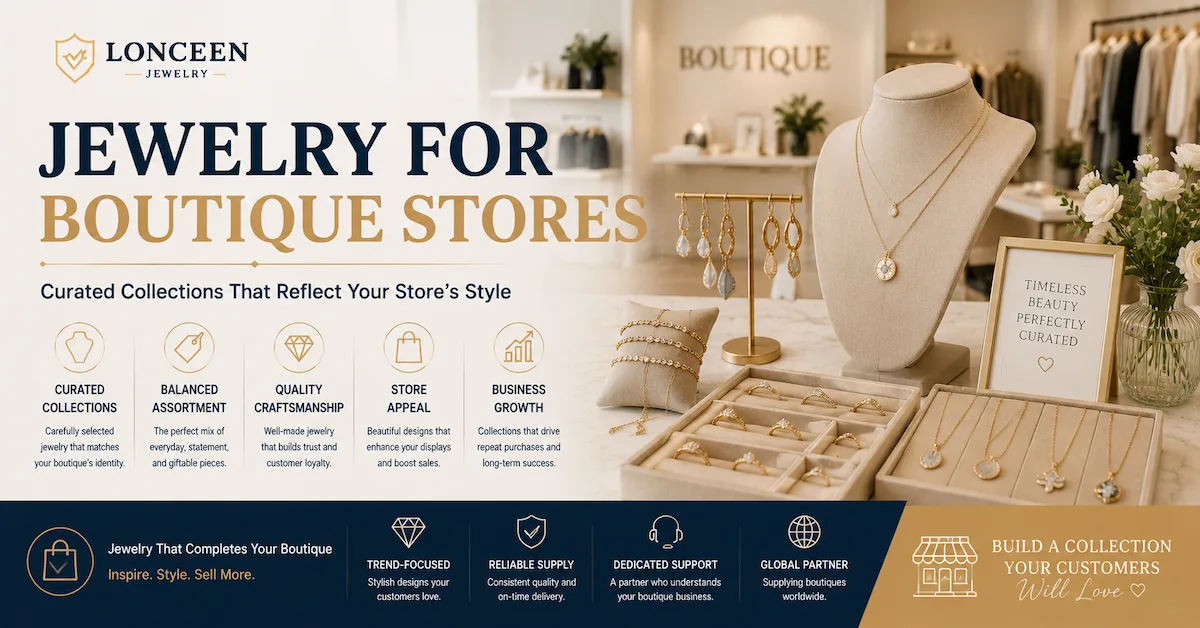
A boutique owner is not simply looking for products to fill shelves. The goal is to find jewelry that fits the store's aesthetic, complements its existing merchandise and gives customers a reason to discover something new.
Choosing the right jewelry for boutique stores therefore requires more than looking at individual product designs.
It requires thinking about the entire collection.
1. What Makes Jewelry Suitable for Boutique Stores?
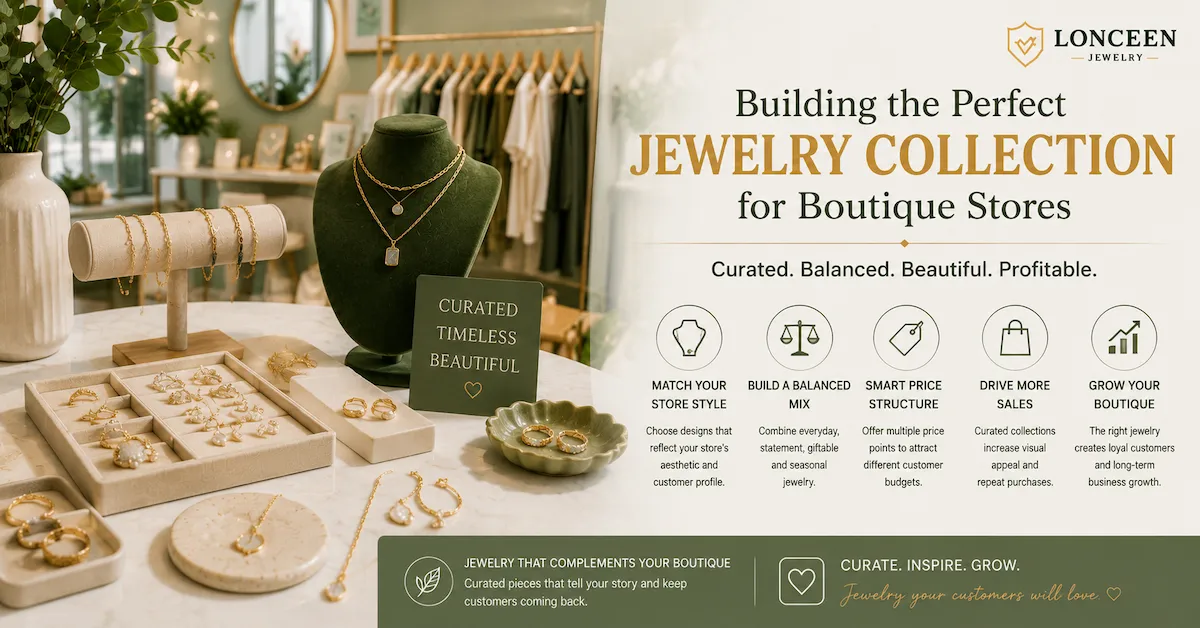
The best jewelry for a boutique should feel consistent with the store rather than looking like a random assortment of products.
A strong boutique collection usually has four characteristics:
- A recognizable visual direction
- A balanced product mix
- Different price points
- Strong individual pieces
The collection should make sense when customers see several products together.
For example, a minimalist fashion boutique may work well with:
- Delicate necklaces
- Small hoop earrings
- Layered chains
- Simple rings
- Subtle bracelets
A bohemian lifestyle boutique may instead prefer:
- Textured metal jewelry
- Natural-inspired pendants
- Statement earrings
- Layered necklaces
- Artisan-style rings
The important point is collection compatibility.
A beautiful individual piece may still be unsuitable if it conflicts with the store's overall aesthetic.
2. Why Boutique Stores Need a Different Jewelry Assortment
Boutiques usually sell a carefully selected lifestyle rather than an unlimited number of products.
This changes how jewelry should be selected.
Jewelry Becomes Part of the Store Experience
Customers often enter a boutique because they like its atmosphere and point of view.
Jewelry should reinforce that experience.
A well-selected jewelry collection can complement:
- Clothing
- Bags
- Shoes
- Beauty products
- Home and lifestyle goods
For fashion boutiques, jewelry can also help complete an outfit.
This means the jewelry does not need to compete with the store's main products.
Instead, it should add another layer to the customer's shopping experience.
3. Build a Curated Jewelry Collection Instead of a Large Catalog
One of the biggest mistakes boutique owners can make is selecting too many unrelated products.
More SKUs do not automatically create a better assortment.
A stronger approach is to divide the collection into clear product roles.
Everyday Jewelry
These are easy-to-wear pieces designed for frequent use.
Examples include:
- Simple necklaces
- Small earrings
- Minimalist rings
- Classic bracelets
These products can provide a foundation for the collection.
Statement Jewelry
Statement pieces create visual interest.
Examples:
- Oversized earrings
- Bold rings
- Chunky chains
- Large pendants
These products are useful for attracting attention to a display.
A boutique does not necessarily need many statement pieces.
A few carefully selected designs can create a stronger visual effect than a crowded display.
Giftable Jewelry
Boutiques often attract customers looking for small gifts.
Gift-oriented products can include:
- Charm necklaces
- Symbolic pendants
- Initial jewelry
- Heart-shaped designs
- Simple gemstone pieces
These products can work particularly well around seasonal shopping periods.
Seasonal Jewelry
Seasonal products allow boutiques to refresh their displays without changing the entire assortment.
Examples include:
- Holiday jewelry
- Summer-inspired pieces
- Valentine's Day styles
- Festive accessories
- Special occasion jewelry
Seasonal items should complement the permanent collection rather than replace it.
4. Match Jewelry With Your Boutique's Aesthetic
Before choosing products, define the visual language of the store.
Consider three questions:
What does the boutique look like?
Think about:
- Interior design
- Lighting
- Materials
- Colors
- Packaging
Who shops there?
Consider:
- Age range
- Lifestyle
- Fashion preferences
- Purchasing behavior
What should the jewelry communicate?
For example:
| Boutique Style | Suitable Jewelry Direction |
|---|---|
| Minimalist | Clean, delicate, understated |
| Luxury | Refined, polished, premium-looking |
| Bohemian | Organic, textured, expressive |
| Contemporary | Geometric, modern, fashion-forward |
| Feminine | Delicate, romantic, elegant |
| Streetwear | Bold, chunky, unconventional |
The goal is not to follow every trend.
The goal is to choose trends that make sense for the boutique's customers.
5. Create a Balanced Price Architecture
A boutique jewelry collection should not depend on a single price level.
Customers enter a store with different budgets.
A practical assortment can include three layers:
Entry-Level Pieces
These make it easier for first-time customers to purchase.
Examples:
- Simple earrings
- Delicate rings
- Small pendants
Core Products
These represent the main collection.
They should provide the strongest balance between:
- Design
- Quality
- Price
- Wearability
Premium Pieces
A smaller number of premium products can increase perceived value.
These might include:
- More elaborate designs
- Larger statement pieces
- Special gemstones
- More detailed craftsmanship
The purpose of premium products is not necessarily to generate the highest sales volume.
They can also help establish the visual positioning of the entire collection.
6. Think About Product Mix, Not Just Individual Products
When selecting jewelry for boutique stores, evaluate how products work together.
For example, a necklace collection could include:
- 40% everyday styles
- 30% fashion-forward pieces
- 20% statement designs
- 10% seasonal or experimental styles
The exact ratio can change according to the boutique.
The important principle is balance.
A collection made entirely of statement jewelry may look impressive but become difficult to wear.
A collection made entirely of basic jewelry may be easy to sell but fail to create excitement.
A balanced assortment gives customers both familiarity and discovery.
7. Choose Jewelry With Strong Display Potential
Boutique jewelry is often sold visually.
Customers may first notice a product because of the way it appears in the display rather than because they were specifically searching for it.
Consider products that work well with:
- Jewelry stands
- Trays
- Display boards
- Clothing displays
- Window displays
Different shapes also create visual variety.
For example, a display could combine:
Long necklace + small earrings + statement ring + bracelet
instead of displaying five visually similar products together.
This creates a more interesting merchandising composition.
8. Consider How Jewelry Works With Fashion Products
For fashion boutiques, jewelry can function as a styling tool.
A necklace can complete a dress.
Earrings can change the visual character of an outfit.
A bracelet can add detail to a minimalist look.
This creates an opportunity for cross-selling.
For example:
Dress → Necklace → Earrings → Bracelet
Instead of presenting jewelry as a separate category, the boutique can present it as part of a complete look.
This is particularly useful for boutiques where clothing remains the primary product category.
9. Select Jewelry With Reorder Potential
A successful boutique collection should not depend entirely on one-time purchases.
Some products should have enough versatility to become repeat sellers.
Look for designs that are:
- Easy to wear
- Suitable for multiple outfits
- Appropriate for different occasions
- Visually recognizable
- Easy to display
These products can become part of the boutique's permanent assortment.
Meanwhile, trend-driven and seasonal products can rotate around them.
This creates a useful structure:
Core Products + Seasonal Products + New Arrivals
rather than constantly replacing the entire collection.
10. What Boutique Owners Should Look for in a Jewelry Supplier
The right supplier should understand that boutique businesses need curation, not simply a large product catalog.
Before choosing a supplier, evaluate:
Product Variety
Does the supplier offer enough categories to build a complete collection?
Look for combinations of:
- Rings
- Necklaces
- Earrings
- Bracelets
- Pendants
Design Consistency
Can you select multiple products that share a similar aesthetic?
This is more valuable than simply having thousands of unrelated styles.
Collection Flexibility
Can the supplier support different boutique concepts?
A contemporary fashion boutique may need a very different collection from a gift boutique.
Product Refresh
Boutiques need newness.
A supplier should be able to support collection updates without forcing the store to completely rebuild its assortment.
Communication
Clear communication matters when selecting products, discussing new collections and planning future purchases.
11. How to Plan a Boutique Jewelry Collection
A simple collection planning framework can make sourcing easier.
Step 1: Define the Boutique Identity
Write down three to five words describing the store.
For example:
Modern · Feminine · Minimal · Premium
Use these words as a filter for product selection.
Step 2: Define the Customer
Identify:
- Typical age
- Lifestyle
- Fashion style
- Spending level
- Purchase occasions
Step 3: Select Core Categories
Start with the categories most relevant to your customers.
For example:
Necklaces + Earrings + Rings
can form the foundation of a fashion boutique collection.
Step 4: Add Visual Highlights
Add a smaller number of:
- Statement pieces
- Seasonal products
- Experimental designs
These create freshness without overwhelming the core collection.
Step 5: Review the Collection as a Whole
Do not evaluate products only one by one.
Place the selected products together and ask:
Does this look like one collection?
If the answer is no, the assortment probably needs refinement.
12. Jewelry Categories That Work Well for Boutique Stores
Different boutique concepts require different product combinations.
Fashion Boutiques
Focus on:
- Trend-led earrings
- Layered necklaces
- Statement rings
- Fashion bracelets
Gift Boutiques
Focus on:
- Personalized jewelry
- Symbolic pendants
- Simple earrings
- Giftable necklaces
Lifestyle Boutiques
Focus on:
- Minimalist jewelry
- Everyday pieces
- Natural-inspired designs
- Easy-to-style accessories
Premium Boutiques
Focus on:
- Refined designs
- Higher-value materials
- Distinctive statement pieces
- Elegant presentation
For boutiques looking to explore a broader range of jewelry categories, the Lonceen Jewelry product collection provides a useful starting point for assortment planning.
13. How Lonceen Supports Boutique Jewelry Collections
Boutique businesses need jewelry that fits their customers and store identity rather than simply selecting products from a generic catalog.
Lonceen Jewelry works with businesses looking to develop jewelry collections for different retail markets.
The focus can include:
- Curated jewelry selections
- Different jewelry categories
- Fashion-oriented collections
- Boutique-focused product combinations
- Long-term product development
You can learn more about the company through About Us.
For businesses comparing jewelry sourcing options, our jewelry supplier page provides broader information about jewelry supply partnerships.
FAQ About Jewelry for Boutique Stores
What type of jewelry is best for boutique stores?
The best jewelry depends on the boutique's customers and aesthetic. Popular choices include minimalist jewelry, statement pieces, giftable designs and seasonal collections.
How many jewelry styles should a boutique carry?
There is no universal number. A curated assortment with clear product roles is generally more useful than a large collection of unrelated styles.
Should boutique stores sell trendy jewelry?
Yes, but trends should complement the store's identity. A combination of core products and seasonal or trend-driven pieces usually creates a more balanced assortment.
What jewelry categories should a fashion boutique carry?
Necklaces, earrings, rings and bracelets are common starting categories. The exact mix should reflect the clothing styles and customer preferences of the boutique.
How can boutiques choose jewelry that matches their brand?
Start with the store's visual identity, target customer and price positioning. Then select products that share a consistent design language.
Is statement jewelry important for boutiques?
Statement jewelry can create visual impact and attract attention, but it should normally be balanced with everyday pieces that are easier for customers to wear.
What should boutiques consider when choosing a jewelry supplier?
Look at product consistency, category variety, collection flexibility, product refresh opportunities and communication quality.
Can jewelry increase sales in a fashion boutique?
Jewelry can create cross-selling opportunities by completing outfits and giving customers additional products to consider alongside clothing and accessories.
Should boutique jewelry collections change seasonally?
A combination works best for many boutiques. Keep proven core products while introducing seasonal and trend-based pieces to create freshness.
How can a boutique build a unique jewelry assortment?
Start with a clear store identity, define the target customer, establish core categories and then add statement, seasonal and experimental products that fit the overall concept.
Conclusion
The best jewelry for boutique stores is not necessarily the jewelry with the largest selection or the most fashionable individual designs.
It is jewelry that fits the identity of the boutique, the expectations of its customers and the way products are presented in the store.
A successful boutique assortment should combine:
- A clear aesthetic
- Balanced product categories
- Multiple price levels
- Everyday bestsellers
- Statement pieces
- Seasonal freshness
- Strong display potential
For boutique owners, the goal should be to create a jewelry collection that feels intentionally selected.
That is what turns jewelry from another product category into an important part of the boutique's overall shopping experience.