

Introduction
For many years, traditional jewelry styling followed a simple rule: gold went with gold, and silver went with silver. Customers often preferred matching accessories, choosing necklaces, bracelets, rings, and earrings in the same metallic color.
That approach is changing.
Today, mixed metal jewelry is becoming an increasingly visible direction in fashion accessories. Consumers are combining warm gold tones with cool silver finishes, wearing two-tone designs, and experimenting with different metal colors in the same outfit.
This shift creates new opportunities for jewelry retailers. Instead of stocking separate gold and silver collections that customers may only wear individually, retailers can develop more flexible assortments that allow shoppers to combine different styles.
Industry coverage supports this direction. JCK's October 2026 report from the JIS Miami jewelry show identified mixed metals as a strong trend, noting that silver gives retailers another way to offer attractive jewelry options without relying entirely on gold. Global News also highlighted the growing popularity of gold-and-silver combinations in Fall 2026 collections.
For jewelry wholesalers, boutiques, and online retailers, the important question is no longer simply whether to stock gold or silver.
It is how to create a balanced collection that makes both finishes work together.
In this guide, we explore mixed metal jewelry styles, product categories, customer preferences, and practical assortment ideas for retailers serving international markets.
1. Why Is Mixed Metal Jewelry Becoming Popular?
The growing interest in mixed metal jewelry reflects changes in both fashion preferences and retail product positioning.
Customers are becoming less concerned about following traditional matching rules. Instead, they are looking for accessories that offer more styling possibilities.
A Shift Away from Traditional Matching Rules
In the past, many shoppers preferred to coordinate every visible accessory.
Gold necklaces were commonly paired with gold bracelets, while silver earrings were matched with silver rings.
Mixed metal jewelry offers a different approach.
A customer can wear a gold necklace with silver earrings or combine a silver bracelet with gold rings.
The result can feel more individual and less restricted by traditional styling rules.
Gold and Silver Offer Different Visual Characteristics
Gold-colored jewelry creates warmth and a classic appearance.
Silver-colored jewelry offers a cooler, cleaner, and often more contemporary look.
When combined, these finishes can create visual contrast without requiring complicated designs.
For retailers, this means one collection can appeal to customers with different color preferences.
Changing Retail Price Considerations
The price of gold has also become an important consideration for jewelry businesses.
JCK's October 2026 industry coverage noted that rising gold prices are encouraging retailers and designers to explore alternatives such as silver, while mixed metal designs allow businesses to retain gold accents without making every piece entirely gold.
This does not mean customers are abandoning gold.
Rather, retailers can offer more varied price positioning through different materials, finishes, and combinations.
More Flexible Everyday Styling
Another reason mixed metal jewelry is attractive is its versatility.
Customers who own both gold and silver accessories do not necessarily need to purchase completely matching sets.
A carefully selected two-tone necklace or bracelet can connect pieces they already own.
This creates opportunities for retailers to position mixed metal jewelry as an everyday wardrobe essential rather than a short-lived fashion trend.
2. What Is Mixed Metal Jewelry?
Before developing a collection, retailers should understand that mixed metal jewelry can describe several different product and styling approaches.
These distinctions are important when writing product descriptions and selecting wholesale products.
True Two-Tone Jewelry
True two-tone jewelry incorporates contrasting metallic colors within one product.
For example, a necklace may combine gold-colored and silver-colored sections within the same design.
Common examples include:
-
Two-tone chain necklaces.
-
Gold and silver link bracelets.
-
Mixed metal rings.
-
Two-color bangles.
-
Gold and silver layered chokers.
These products are particularly useful for customers who want to wear mixed metal styles without combining several separate accessories.
Mixed Metal Styling
Mixed metal styling involves wearing separate gold-tone and silver-tone jewelry pieces together.
For example:
-
A gold necklace with silver earrings.
-
Silver rings combined with gold bracelets.
-
A gold pendant layered with a silver chain.
-
Different metal finishes worn across several accessories.
This approach gives customers more freedom to create individual combinations.
Retailers can support this demand by offering complementary gold and silver designs across their product categories.
Gold and Silver Color Options
Some products are available in separate gold-tone and silver-tone versions.
These are not necessarily two-tone products.
However, stocking both versions allows retailers to serve different customer preferences while maintaining a consistent design direction.
LONCEEN's 925 silver beaded chain necklace, for example, is listed with gold and silver options. Its product description identifies two separate necklace color versions with decorative gold-plated bead details.
This is a useful example of how a retailer can expand a collection through coordinated color options.
Understanding these three approaches helps businesses avoid confusing product specifications with styling concepts.
3. Five Mixed Metal Jewelry Styles Retailers Should Consider
Not every mixed metal product needs to be bold or complicated.
Some designs create subtle contrast, while others use two-tone finishes as their main visual feature.
The following styles offer different ways to build a balanced assortment.
1. Two-Tone Necklaces
Necklaces are one of the most visible categories for introducing mixed metal designs.
Because necklaces sit near the face and neckline, contrasting finishes can create an interesting visual effect without requiring additional accessories.
Popular directions include:
-
Two-tone chain necklaces.
-
Gold and silver layered necklaces.
-
Mixed metal link necklaces.
-
Two-tone pendant necklaces.
-
Silver necklaces with gold accents.
-
Gold necklaces with silver details.
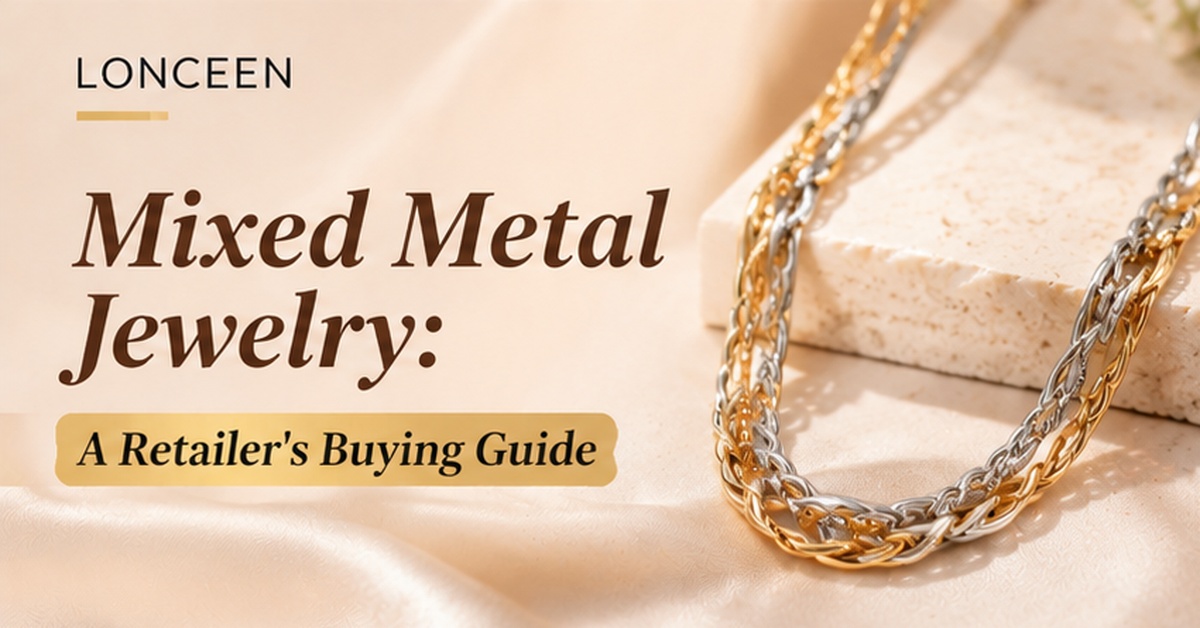
LONCEEN offers a 925 silver two-tone zircon layered choker necklace featuring gold and silver plating details.
This product provides a direct example of a design that combines different metallic finishes within one necklace.
For retailers, two-tone necklaces can be positioned as standalone statement pieces or as part of a wider layering collection.
2. Mixed Metal Bracelets
Bracelets are suitable for customers who enjoy combining accessories around the wrist.
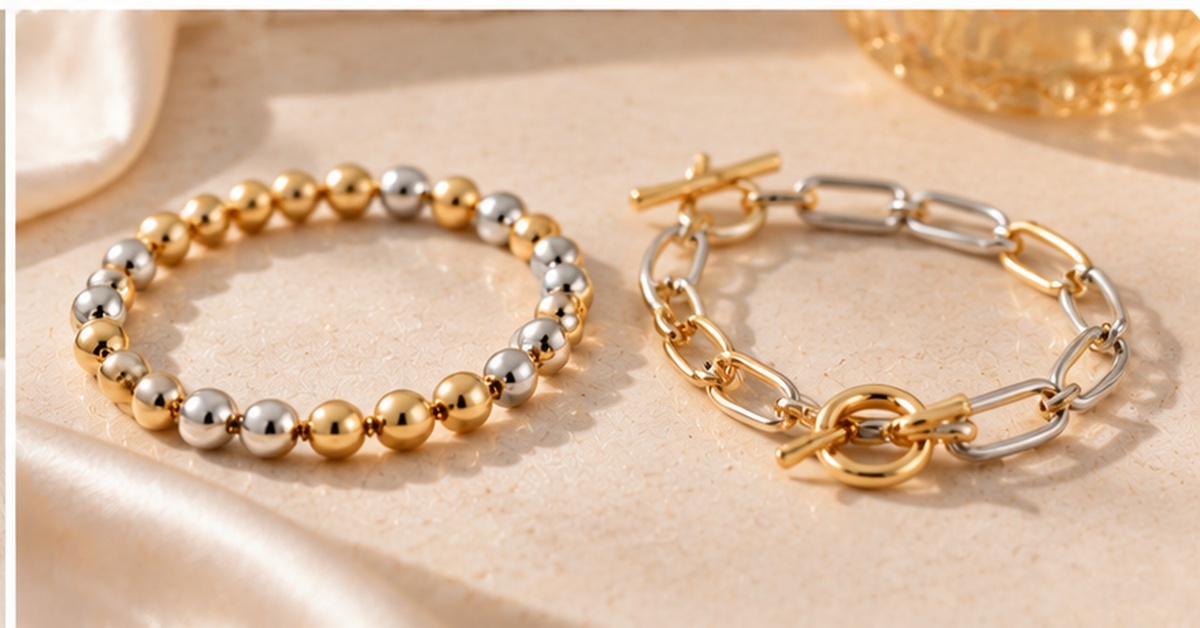
A gold bracelet can be worn alongside a silver bracelet, while two-tone designs provide a ready-made combination.
Potential styles include:
-
Two-tone beaded bracelets.
-
Gold and silver chain bracelets.
-
Mixed metal bangles.
-
Decorative link bracelets.
-
Layered bracelet sets.
LONCEEN's 925 silver two-tone beaded bracelet set includes separate gold-tone and silver-tone bracelet options.
Retailers can present these pieces individually or together, helping customers understand how different finishes can complement each other.
3. Mixed Metal Rings
Rings provide another opportunity to introduce gold-and-silver combinations.
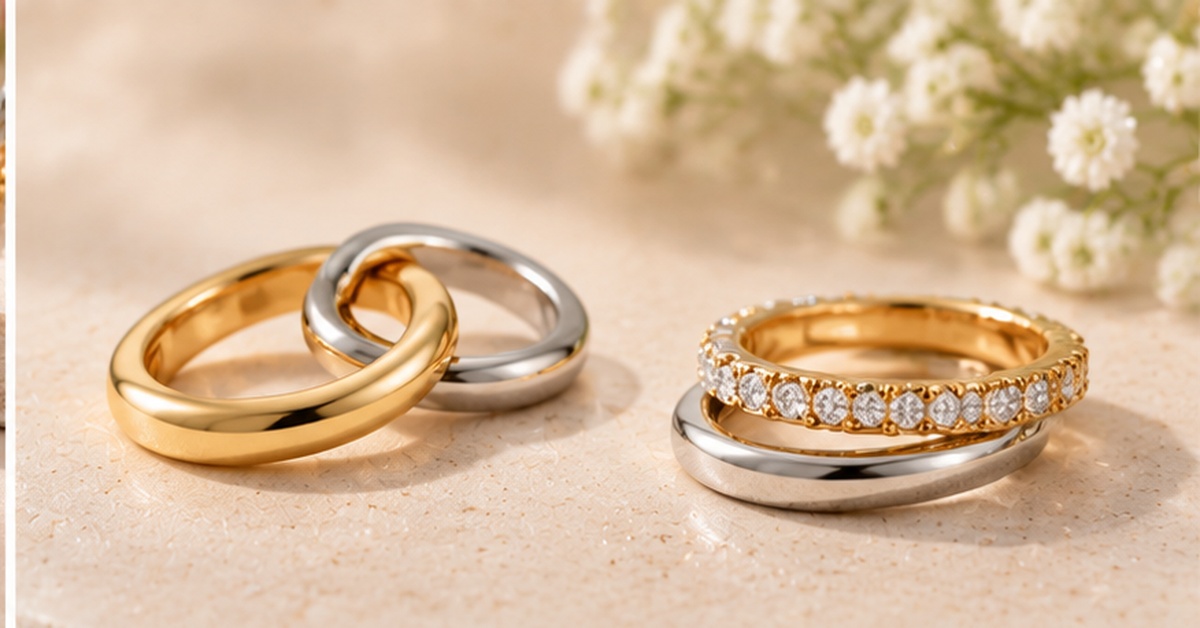
Customers may wear several rings on different fingers, making it relatively easy to experiment with contrasting finishes.
Potential designs include:
-
Two-tone open rings.
-
Mixed metal stacking rings.
-
Gold rings with silver details.
-
Silver rings with gold accents.
-
Geometric two-tone bands.
For retailers, ring collections can be organized around shape and finish rather than separating every product into strict gold and silver sections.
This helps customers explore combinations more naturally.
4. Mixed Metal Earrings
Earrings offer a more subtle way to introduce contrasting metal colors.
Customers do not always need to wear matching earrings and necklaces.
For example, gold hoop earrings can be combined with a silver necklace, or silver studs can complement a gold bracelet.
Potential product directions include:
-
Two-tone hoop earrings.
-
Gold and silver geometric earrings.
-
Mixed metal ear cuffs.
-
Two-color drop earrings.
-
Sculptural metal earrings.
These designs can appeal to customers who prefer small styling changes rather than purchasing an entirely new jewelry set.
5. Two-Tone Jewelry Sets
Jewelry sets provide a convenient option for customers who prefer coordinated accessories.
A two-tone collection may combine a necklace and bracelet, or include several pieces with matching design details.
Possible combinations include:
-
Gold and silver necklace and bracelet sets.
-
Coordinated two-tone rings and earrings.
-
Matching mixed metal chains.
-
Complementary gold and silver accessories.
For retailers, coordinated products can make gift selection easier and create opportunities for cross-selling.
However, a set should have a consistent design identity rather than simply combining unrelated gold and silver products.
4. Which Customers Are Interested in Mixed Metal Jewelry?
Mixed metal jewelry can appeal to different customer groups because it combines two familiar metallic color preferences.
Retailers should understand the purchasing motivations behind these groups.
Customers Who Already Own Both Gold and Silver Jewelry
Some customers have accumulated jewelry in both colors over time.
They may own gold necklaces, silver rings, and different metal bracelets.
Mixed metal products allow them to combine these existing accessories without worrying about traditional matching rules.
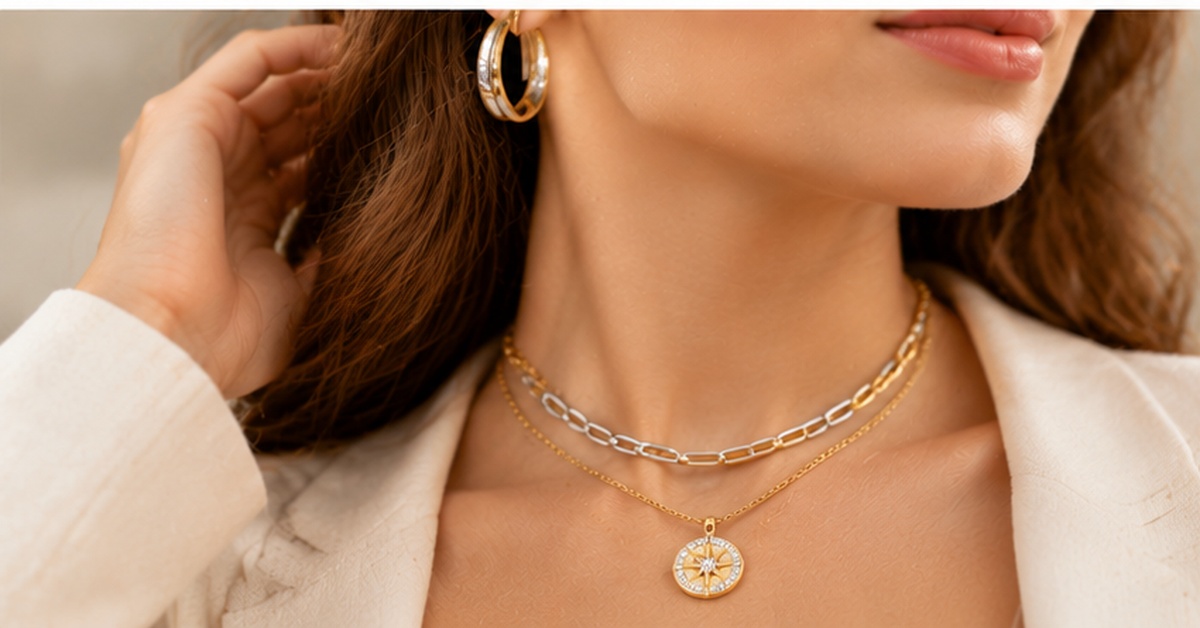
This group is a natural audience for two-tone necklaces, bracelets, and rings.
Minimalist Fashion Customers
Minimalist customers may prefer simple designs with subtle metallic contrast.
They are often interested in:
-
Fine two-tone chains.
-
Small geometric pendants.
-
Simple mixed metal rings.
-
Delicate bracelets.
-
Minimalist earrings.
For these shoppers, the appeal comes from versatility rather than excessive decoration.
Contemporary Fashion Customers
Customers who enjoy experimenting with fashion may prefer stronger contrast.
Their choices may include:
-
Chunky mixed metal chains.
-
Sculptural two-tone rings.
-
Bold silver and gold bracelets.
-
Statement earrings.
-
Layered necklaces.
Retailers can use these products to create more visually distinctive fashion collections.
Gift Buyers
Mixed metal jewelry can also be suitable for gifting.
Because it combines different finishes, it may be easier to select for recipients whose existing jewelry preferences are unknown.
For example, a two-tone necklace can be a practical option when the buyer is unsure whether the recipient usually wears gold or silver.
Customers Looking for Versatile Everyday Accessories
Some shoppers prefer jewelry that works with different clothing colors and accessories.
Mixed metal designs can help bridge warm and cool tones.
This makes them suitable for everyday wear, work outfits, casual styling, and special occasions.
5. How Should Retailers Build a Balanced Mixed Metal Collection?
A strong collection should not contain random combinations of gold and silver.
The products should work together visually and serve different customer preferences.
Here are five practical assortment principles.
Choose a Clear Main Design Direction
Retailers should first decide whether their collection will focus on subtle everyday pieces or more expressive fashion accessories.
A minimalist collection may emphasize:
-
Fine chains.
-
Small pendants.
-
Simple rings.
-
Delicate bracelets.
A more expressive collection may include:
-
Chunky chains.
-
Sculptural rings.
-
Large earrings.
-
Bold two-tone bangles.
Having a clear direction makes product selection and online presentation easier.
Include Both Separate Finishes and True Two-Tone Designs
A balanced assortment can include three product groups:
-
Gold-tone versions.
-
Silver-tone versions.
-
Genuine two-tone designs.
This gives customers several ways to participate in the mixed metal trend.
It also allows retailers to serve shoppers who prefer one finish while gradually introducing them to two-tone accessories.
Use Consistent Design Details
Even when the metal colors are different, products should share some visual characteristics.
For example:
-
Similar chain proportions.
-
Matching geometric shapes.
-
Consistent polished finishes.
-
Repeated decorative motifs.
-
Complementary pendant sizes.
These shared details help make a collection feel intentional.
Offer Different Price Positions
Not every customer is looking for a large or elaborate jewelry piece.
Retailers can create variety through simpler everyday designs and more decorative statement products.
For example, a collection might include a simple two-tone necklace, a decorative layered choker, and a more substantial bracelet.
This allows customers to choose according to their preferences and budgets.
Build Cross-Category Combinations
Mixed metal jewelry works particularly well when products are presented across multiple categories.
For example:
-
Pair a two-tone necklace with complementary bracelets.
-
Display gold and silver rings together.
-
Combine silver earrings with gold-tone necklaces.
-
Present matching bracelet and necklace designs.
This encourages customers to consider the collection as a whole rather than purchasing only one isolated product.
6. How Does Mixed Metal Jewelry Appeal to Different Markets?
LONCEEN serves international customers, so retailers should consider how different markets search for and present mixed metal products.
The same jewelry design may need different descriptions, photographs, and product positioning depending on the target audience.
United States
American shoppers generally use the spelling "jewelry."
Useful keyword directions include:
-
Mixed metal jewelry.
-
Two tone jewelry.
-
Gold and silver jewelry.
-
Mixed metal necklace.
-
Mixed metal bracelets.
For online retailers, product pages can emphasize everyday versatility and the freedom to combine different finishes.
United Kingdom
British shoppers generally use the spelling "jewellery."
Useful keyword directions include:
-
Mixed metal jewellery.
-
Two tone jewellery.
-
Gold and silver jewellery.
-
Mixed metal necklaces.
-
Silver and gold bracelets.
Professional Jeweller's 2026 search analysis found a 22% year-on-year increase in UK searches for mixed-metal jewellery.
This provides a useful signal for businesses targeting British customers.
Canada and Other International Markets
Canadian retailers can explore both the styling and product-selection aspects of mixed metal jewelry.
Global News' Fall 2026 coverage also highlighted the popularity of two-tone designs across brands including Mejuri, Birks, and Jenny Bird.
For European and other international markets, local keyword research is recommended before creating translated product pages.
The important point is to preserve the same product identity while adapting the search language and merchandising approach to each audience.
7. How to Present Mixed Metal Jewelry in Online Stores
Good product presentation is especially important for mixed metal jewelry.
Customers need to see exactly how the different finishes appear and how the product can be combined with other accessories.
Show the Contrast Clearly
Product photographs should make both metallic colors visible.
Avoid lighting that makes gold and silver look almost identical.
For true two-tone jewelry, close-up photographs can help customers understand which sections feature each finish.
Show Individual and Combined Styling
If a product is available in separate gold and silver versions, show both options.
If it is a genuine two-tone design, show it both individually and in a complete outfit.
This helps customers understand the difference between color options and mixed metal construction.
Use Coordinated Product Photography
Retailers can photograph gold and silver pieces together on neutral backgrounds.
Cream, beige, white, and light stone surfaces can help metallic finishes stand out.
For lifestyle photography, clothing in neutral colors can make the jewelry easier to see.
Organize Product Filters Clearly
Useful online store filters include:
-
Gold Tone.
-
Silver Tone.
-
Two Tone.
-
Necklace.
-
Bracelet.
-
Ring.
-
Earrings.
Customers should be able to identify the finish they want without searching through unrelated products.
Explain the Actual Material and Finish
Product color does not necessarily identify the base metal.
For example, a 925 silver product with gold plating is different from a solid gold item.
Retailers should clearly explain the base material, plating, and available color options.
Accurate product descriptions help customers make informed decisions and reduce misunderstandings.
8. What Should Wholesale Buyers Look for When Selecting Mixed Metal Jewelry?
For wholesale buyers, selecting mixed metal jewelry involves more than finding attractive gold and silver designs.
The assortment should be suitable for the target market and consistent with the store's existing product range.
Check Whether the Product Is Truly Two-Tone
First, determine whether the item combines two finishes in one product or is simply available in separate color options.
This distinction should be clear in the product specifications.
Review the Finish and Appearance
Gold and silver finishes should look consistent with the intended design.
Buyers should examine product photographs and actual samples where possible.
Pay attention to:
-
Color consistency.
-
Surface finish.
-
Decorative details.
-
Chain connections.
-
Overall proportions.
Check Product Versatility
Consider whether the product can be worn individually or combined with other pieces.
Versatile designs can be useful for retailers who want to build coordinated collections.
Review Product Information
Buyers should confirm:
-
Base material.
-
Plating material.
-
Available colors.
-
Product dimensions.
-
Available variations.
-
Care recommendations.
These details are especially important when selling products to international customers.
Consider the Complete Collection
A single attractive two-tone necklace may not be enough to create a recognizable collection.
Retailers should look at how necklaces, bracelets, rings, and earrings can complement one another.
The goal is to create a selection that customers can explore across multiple product categories.
Frequently Asked Questions
1. What is mixed metal jewelry?
Mixed metal jewelry refers to jewelry that combines different metallic colors, such as gold and silver. It can describe a single two-tone product or separate gold-tone and silver-tone pieces worn together.
2. Is mixing gold and silver jewelry fashionable in 2026?
Yes. Mixed metal styling is a visible 2026 jewelry trend. Recent industry coverage and fashion reporting have highlighted gold-and-silver combinations in necklaces, rings, bracelets, and earrings.
3. What is the difference between mixed metal and two-tone jewelry?
Mixed metal is a broader styling and product concept. Two-tone jewelry usually describes one item that incorporates two different metallic colors within the same design.
4. Can gold and silver necklaces be worn together?
Yes. Gold and silver necklaces can be layered together. Retailers can help customers create balanced combinations by choosing complementary chain styles, lengths, and decorative details.
5. What mixed metal jewelry should retailers stock?
Popular categories to explore include two-tone necklaces, mixed metal bracelets, stacking rings, hoop earrings, and coordinated jewelry sets.
6. Is mixed metal jewelry suitable for everyday wear?
Many mixed metal designs are created for everyday styling. Their suitability depends on the actual materials, construction, and product care recommendations.
7. Why are mixed metal jewelry designs attractive to retailers?
They provide more styling possibilities and allow retailers to serve customers who prefer different metallic colors. They can also help connect existing gold-tone and silver-tone collections.
8. Where can retailers find mixed metal jewelry wholesale?
Retailers can explore jewelry wholesalers offering two-tone necklaces, bracelets, and coordinated gold and silver collections. Before purchasing, they should review the product materials, finishes, specifications, and available styles.
Conclusion: Create More Versatile Jewelry Collections with Mixed Metals
Mixed metal jewelry represents an interesting opportunity for retailers who want to move beyond traditional gold-only and silver-only collections.
By combining warm gold tones with cool silver finishes, businesses can offer products that feel more flexible, contemporary, and suitable for different personal styles.
From two-tone necklaces and layered chokers to beaded bracelets and mixed metal rings, there are several ways to introduce this direction into an existing jewelry assortment.
For wholesale buyers, the key is to understand the difference between true two-tone designs and separate gold and silver color options.
A well-planned collection should include both, allowing customers to choose individual finishes or experiment with contrasting combinations.
At LONCEEN, our jewelry range includes 925 silver necklaces, two-tone zircon designs, gold and silver color options, and coordinated bracelet styles.
Explore our 925 Silver Two-Tone Zircon Layered Choker Necklace, 925 Silver Beaded Chain Necklace, and Two-Tone Beaded Bracelet Set to discover more options for your retail collection.
Bring gold and silver together, and give customers more ways to express their personal style.