

Choosing the right jewelry material is one of the most important decisions for a jewelry brand.
The material affects not only the appearance of jewelry, but also product positioning, customer perception, pricing strategy, durability expectations, and long-term brand development.
For emerging jewelry brands, fashion labels, and retail businesses, the question is not simply:
“Which jewelry material is the highest quality?”
The better question is:
“Which jewelry material is the best fit for my brand, target customers, and market strategy?”
Different materials create different brand identities. Some materials support affordable fashion collections, while others help brands build premium positioning.
This guide explains how jewelry brands can choose the most suitable materials for their product strategy.
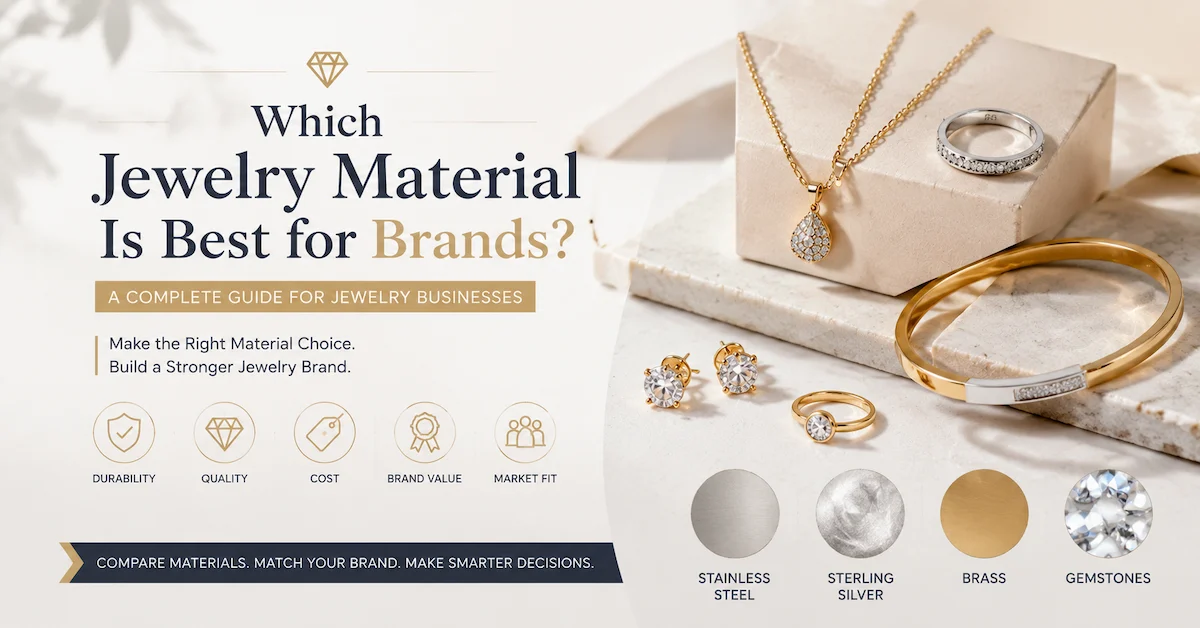
Why Material Selection Matters for Jewelry Brands
A jewelry material becomes part of a brand’s identity.
When customers purchase jewelry, they evaluate more than the design. They also consider:
- How the jewelry feels when worn
- How long it maintains its appearance
- Whether it matches their lifestyle
- Whether the price feels reasonable
- Whether the product reflects the brand image
For B2B buyers, choosing the right material also affects:
- Production costs
- Target retail price
- Customer expectations
- Product return risks
- Collection positioning
A luxury-inspired jewelry brand and a fast-fashion accessories brand may sell similar designs, but their material choices can be completely different.
The Best Jewelry Material Depends on Brand Positioning
There is no single material that is best for every jewelry brand.
The ideal material depends on four key factors:
1. Target Customer
Different customer groups have different expectations.
For example:
- Fashion customers may prioritize appearance and affordability.
- Premium customers may value material authenticity and craftsmanship.
- Everyday jewelry buyers may focus on comfort and durability.
2. Brand Price Range
Material selection directly influences pricing.
A brand selling entry-level fashion jewelry usually needs materials that allow competitive pricing.
A premium jewelry brand may choose materials that support higher perceived value.
3. Product Usage
Consider how customers will use the jewelry.
Daily-wear products require different material characteristics compared with occasional statement pieces.
Important factors include:
- Durability
- Weight
- Maintenance requirements
- Resistance to daily exposure
4. Market Position
A brand targeting minimalist everyday jewelry may select different materials from a brand focused on luxury-inspired collections.
Material choice should support the overall brand story.
Popular Jewelry Materials for Brands
Different materials provide different advantages. The following options are commonly considered by jewelry businesses.
Stainless Steel: Best for Durable Fashion Jewelry Brands
Stainless steel has become a popular choice for many modern jewelry brands because it combines durability, affordability, and design flexibility.
Key advantages include:
- Strong resistance to daily wear
- Easy maintenance
- Competitive production cost
- Suitable for modern designs
- Good performance for everyday jewelry
For brands selling:
- Minimalist jewelry
- Trend-based collections
- Everyday accessories
- Affordable premium products
stainless steel can be a practical material choice.
It allows brands to create attractive products while maintaining accessible price points.
However, brands should also consider the customer expectation. If a brand focuses on traditional luxury positioning, other materials may better communicate premium value.
Sterling Silver: Best for Premium and Classic Jewelry Brands
Sterling silver is widely recognized as a classic jewelry material.
It is often selected by brands that want to create products with a more premium feel.
Advantages include:
- Recognized material value
- Elegant appearance
- Suitable for detailed designs
- Strong customer acceptance
Sterling silver works well for:
- Fine jewelry-inspired collections
- Personalized jewelry
- Gift-oriented products
- Premium boutique brands
For brands building long-term customer relationships, sterling silver can help create stronger perceived value.
However, brands should consider pricing carefully because material costs are generally higher compared with fashion-oriented materials.
Brass and Copper: Best for Creative and Fashion-Focused Brands
Brass and copper are often used for artistic and trend-driven jewelry collections.
They provide:
- Design flexibility
- Cost advantages
- Good suitability for statement pieces
These materials can work well for:
- Seasonal collections
- Fashion accessories
- Artistic jewelry concepts
They are especially suitable for brands that frequently introduce new designs and focus on visual trends.
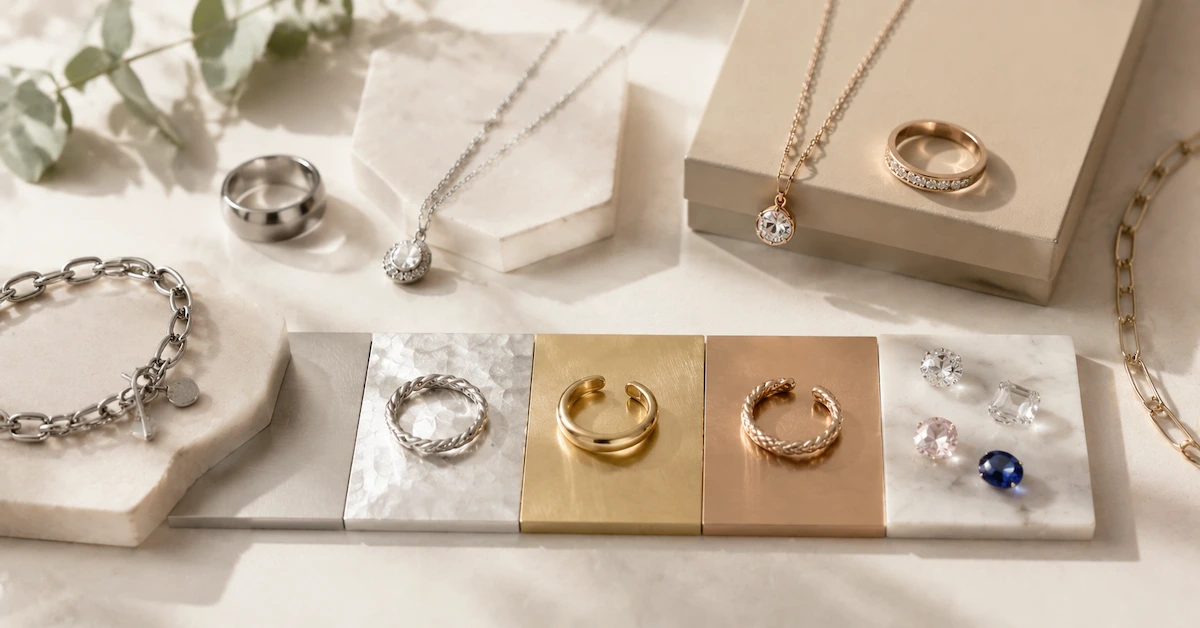
Gemstones and Crystal Elements: Best for Emotional Value
Gemstones and crystal elements are often used to enhance jewelry storytelling.
They can add:
- Visual impact
- Collection themes
- Symbolic meaning
- Premium appearance
For wedding jewelry, gift collections, and personalized products, decorative stones can increase emotional connection.
The key for brands is selecting stones that match the intended market position and product pricing.
Material Comparison for Jewelry Brands
| Material | Best For | Main Advantages | Brand Position |
|---|---|---|---|
| Stainless Steel | Everyday fashion jewelry | Durable, affordable, versatile | Modern & accessible |
| Sterling Silver | Premium collections | Classic value, elegant appearance | Boutique & premium |
| Brass/Copper | Trend collections | Flexible designs, cost-effective | Creative & fashion |
| Gemstones/Crystals | Statement pieces | Emotional appeal, visual impact | Gift & premium |
How Brands Should Choose Jewelry Materials
Instead of selecting materials based only on cost, successful brands usually evaluate materials from a complete business perspective.
Match Material With Product Category
Different jewelry categories may require different material strategies.
For example:
Everyday necklaces
→ Durable and comfortable materials
Statement earrings
→ Lightweight materials with strong visual impact
Premium rings
→ Materials with stronger perceived value
Gift jewelry
→ Materials that support emotional storytelling
A complete jewelry collection does not always need only one material.
Many successful brands combine materials strategically.
Should Jewelry Brands Use One Material or Multiple Materials?
Both strategies can work.
Single Material Strategy
Advantages:
- Clear brand identity
- Easier product communication
- Simplified sourcing
This works well for brands with a very specific positioning.
Multi-Material Strategy
Advantages:
- More product variety
- Different price levels
- Wider customer coverage
For example, a brand may use:
- Stainless steel for everyday collections
- Sterling silver for premium lines
- Crystal elements for special collections
This creates a complete product structure.
Material Selection and Customer Perception
Jewelry materials influence how customers understand a brand.
A customer may associate:
- Stainless steel → modern, practical, lifestyle-focused
- Sterling silver → classic, valuable, timeless
- Gemstone details → meaningful, emotional, special
Therefore, materials should support the brand message.
A mismatch between material and brand positioning can create customer confusion.
For example, a luxury-focused brand using only low-cost materials may struggle to communicate premium value.
What Should Brands Ask Their Jewelry Supplier About Materials?
Before selecting a material partner, brands should ask:
1. What materials are suitable for my target market?
A professional supplier should understand the relationship between material, design, and customer expectations.
2. How does the material affect product positioning?
Material decisions should support pricing and branding strategies.
3. Can the supplier support different material options?
As brands grow, they may need multiple collections with different positioning.
4. How consistent is the material quality?
Stable material quality is important for maintaining customer trust.
Lonceen Jewelry provides different jewelry solutions and product categories for business customers. Brands can explore available product directions through the [Lonceen Jewelry products page](Lonceen Jewelry Products).
How Lonceen Jewelry Supports Brand Material Selection
For jewelry brands, selecting the right material is only the beginning.
A successful product line requires the connection between:
- Material choice
- Design direction
- Customer positioning
- Product collection strategy
Lonceen Jewelry works with brands to develop jewelry products based on different market needs and design concepts.
More information about the company and service capabilities can be found on the [Lonceen Jewelry About Us page](Lonceen Jewelry About Us).
Brands can also review common questions related to jewelry development and ordering through the [Lonceen Jewelry Guide](Lonceen Jewelry Guide).
Final Thoughts
So, which jewelry material is best for brands?
The answer depends on your brand strategy.
There is no universal “best” material. The best choice is the material that matches your:
- Customer group
- Price positioning
- Product category
- Brand identity
- Long-term business goals
For some brands, stainless steel provides the ideal balance between durability and affordability.
For others, sterling silver creates stronger premium value.
For growing jewelry businesses, the smartest approach is choosing materials based on market strategy rather than following trends alone.
The right material does not just create a jewelry product.
It helps build a recognizable jewelry brand.