

Why Custom Bracelets Are Becoming a High-Conversion Product Category
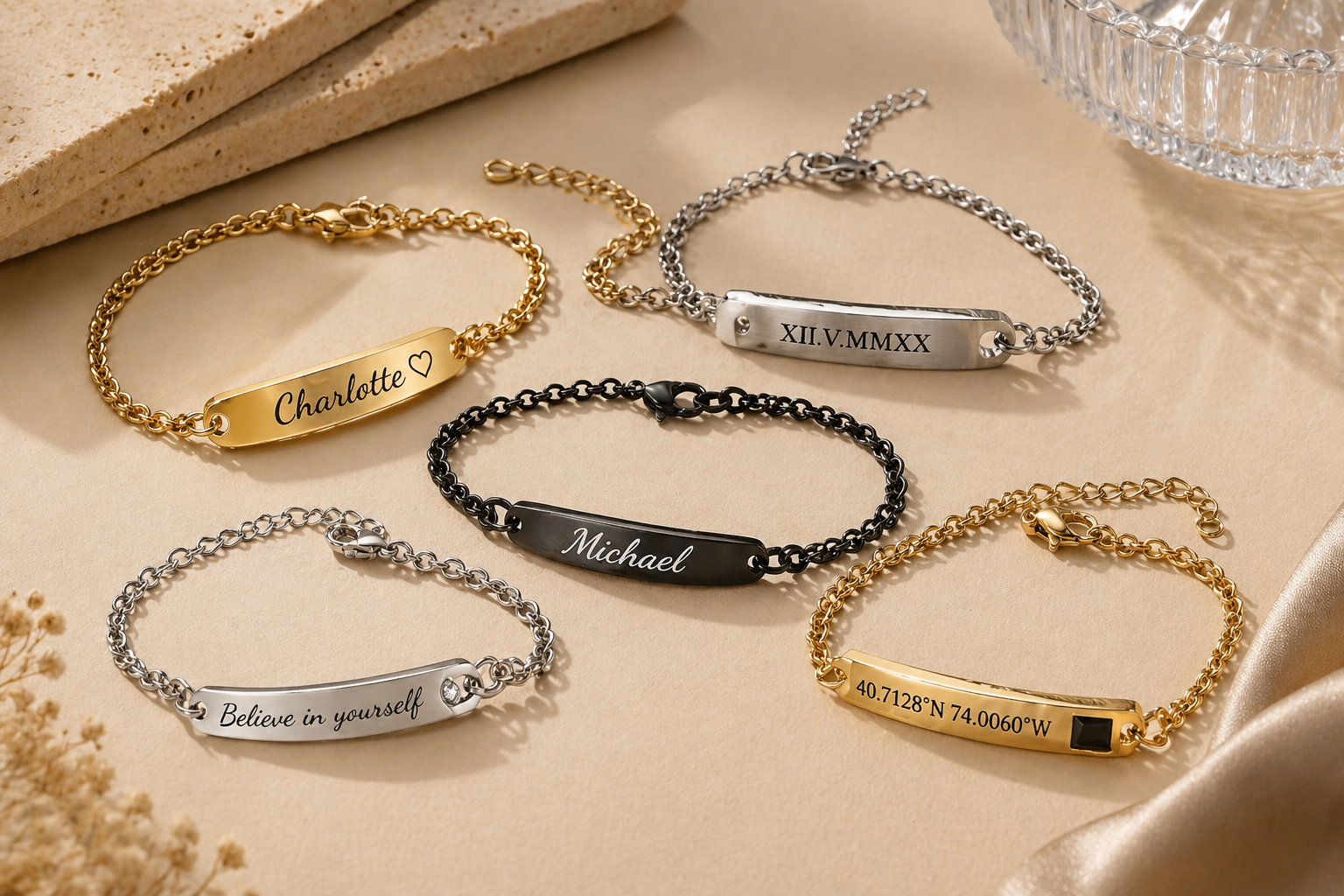
Many jewelry businesses focus heavily on necklaces and rings, but bracelets are quietly becoming one of the most effective products for personalization. They are easy to wear, suitable for different styles, and highly adaptable to customization.
At Lonceen Jewelry, we’ve observed that custom bracelets often outperform standard bracelet designs because they offer a balance between personalization and practicality. Customers can easily connect with engraved names, symbols, or messages—making the product more meaningful and less price-sensitive.
More importantly, bracelets are easier to standardize structurally compared to other jewelry types, which makes them ideal for scalable customization.
Material and Structure: What Determines Bracelet Durability
Unlike necklaces, bracelets experience more friction and movement during daily wear. This makes material selection and structure design even more critical.
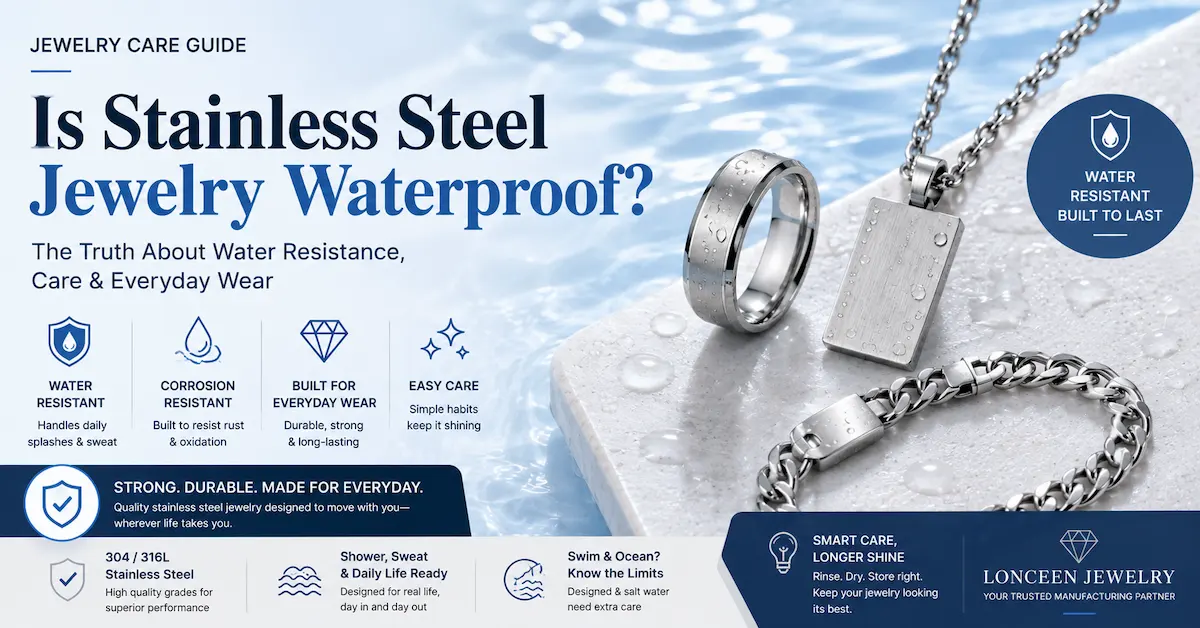
Stainless steel (304/316) is widely used because it provides:
- High resistance to bending
- Better corrosion resistance
- Stable engraving surface
For custom bracelets, thickness and chain strength must be balanced. Typical parameters:
- Chain thickness: 1.5mm–3mm
- Plate/bar thickness (for engraving): 1.2mm–2.0mm
Plating also affects performance. A gold layer of 0.1μm–0.25μm provides stable wear resistance, while thinner coatings fade much faster under friction.
According to Statista, durability and comfort are among the top factors influencing repeat purchases in wearable accessories.
👉 https://www.statista.com/
Why Production Experience Matters in Custom Bracelet Manufacturing
Bracelets may look simple, but poor production control often leads to common issues:
- Loose or weak chain connections
- Uneven engraving depth
- Surface scratches after plating
At Lonceen Jewelry, we treat custom bracelet production as a controlled engineering process. Before production begins, each design is evaluated for:
- Structural balance (weight vs flexibility)
- Engraving compatibility with surface finish
- Wear resistance under daily movement
This reduces the gap between sample quality and mass production results—something many suppliers fail to manage.
Where Custom Bracelets Create Real Business Value
Custom bracelets are highly versatile across different business models.
For e-commerce sellers, they allow rapid variation. A single bracelet design can support multiple personalization options—names, initials, or symbols—without redesigning the entire product.
In the gift market, bracelets are one of the most popular personalized items because they are easy to wear daily and carry emotional meaning.
For branding, custom bracelets can integrate logos or identity elements, making them ideal for promotional use, events, or corporate gifting.
Managing Small Batch Bracelet Production Efficiently
One of the main concerns with customization is production efficiency. However, bracelets are particularly suitable for small batch production when workflows are optimized.
Typical production benchmarks:
- MOQ: 50–200 pieces
- Sample lead time: 3–5 days
- Bulk production: 10–15 days
According to McKinsey & Company, reducing production cycle time improves responsiveness and market competitiveness.
👉 https://www.mckinsey.com/
For bracelet products, this means faster testing, quicker iteration, and lower inventory risk.
Data Comparison: Standard Bracelet vs Custom Bracelet
| Metric | Standard Bracelet | Custom Bracelet |
|---|---|---|
| Conversion Rate | 1.6%–2.4% | 3.2%–5.5% |
| Average Order Value | $15–$28 | $30–$65 |
| MOQ Requirement | 300–800 pcs | 50–200 pcs |
| Product Variations | Limited | High |
| Return Rate | 5%–8% | 2%–4% |
| Customer Retention | 12%–20% | 28%–42% |
Custom bracelets show clear advantages in both flexibility and performance.
Case Insight: Improving Bracelet Sales Through Personalization
A mid-sized online jewelry store approached us after struggling with low engagement on their bracelet category.
We introduced a custom bracelet strategy:
- Added engraved name options
- Increased plate thickness to 1.5mm for better durability
- Optimized chain strength for daily wear
They launched with small batch testing across multiple styles.
Within 6–8 weeks:
- Conversion rate increased from ~2% to over 4%
- Customer feedback improved (especially on durability)
- Top-performing designs were scaled successfully
This improvement was driven by better product design and production control—not increased marketing spend.
Frequently Asked Questions About Custom Bracelets
Q: Are custom bracelets durable enough for daily use?
A: Yes, when proper materials and structural design are applied, they perform very well under daily wear conditions.
Q: Does engraving affect bracelet strength?
A: No, as long as engraving depth is controlled within safe limits.
Q: How long does custom bracelet production take?
A: Typically 2–3 weeks for bulk production after sample approval.
Making Custom Bracelets a Reliable Growth Product
Custom bracelets combine personalization, practicality, and scalability—making them one of the most effective jewelry categories for business growth.
At Lonceen Jewelry, we focus on ensuring that every custom bracelet meets real-world performance standards, from material strength to engraving precision and production consistency.
If you want to explore available bracelet styles and customization options, you can visit our product page here:
👉 https://www.lonceenjewelry.com/en/products
And if you are planning a custom bracelet project, feel free to contact our team for tailored recommendations:
👉 https://www.lonceenjewelry.com/contact-us