

Why Custom Necklaces Are Becoming the Core Product for Jewelry Businesses
Many jewelry sellers eventually realize that standard products are easy to launch—but difficult to scale. Competition increases, price pressure rises, and products quickly become interchangeable.
Custom necklaces change that dynamic.
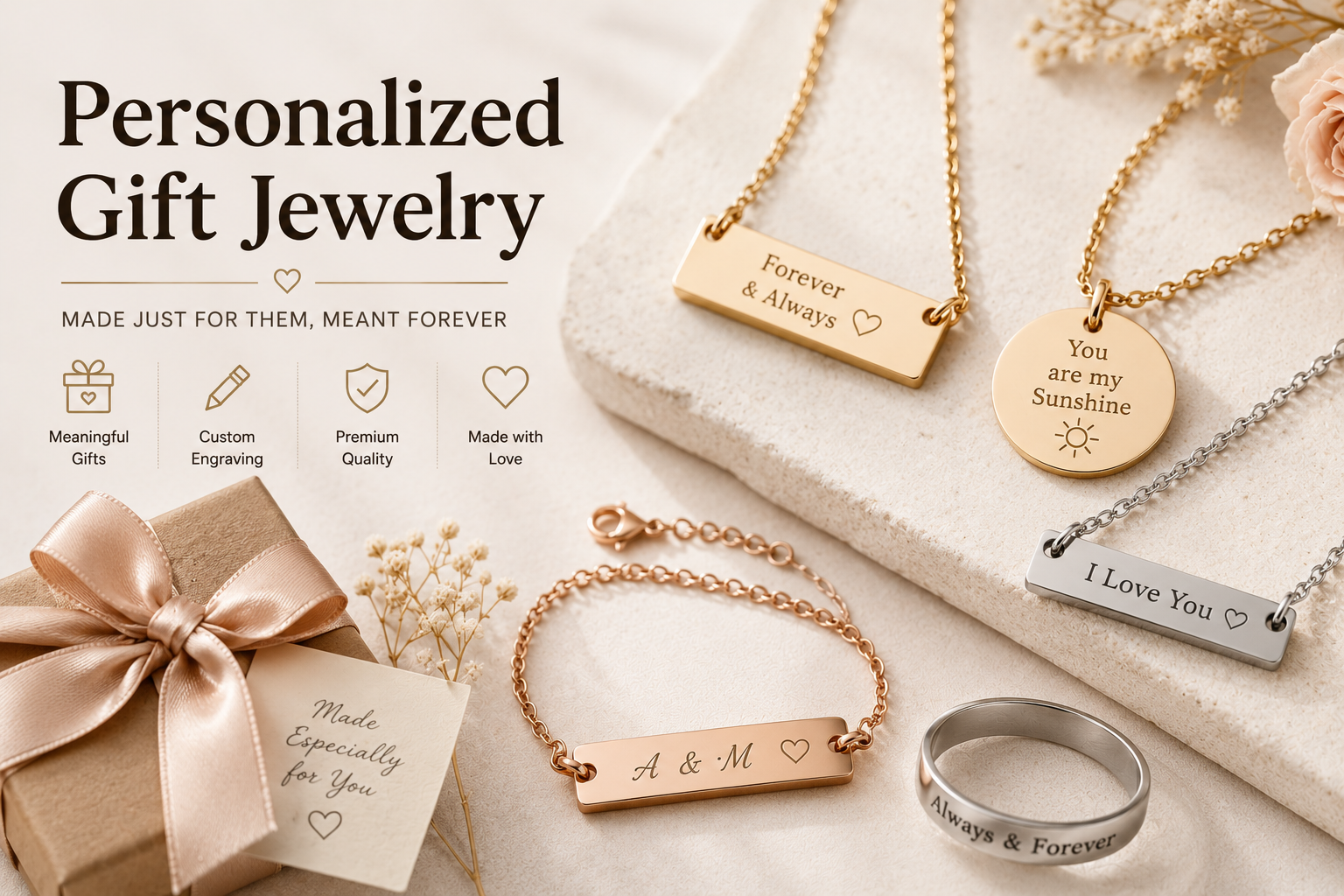
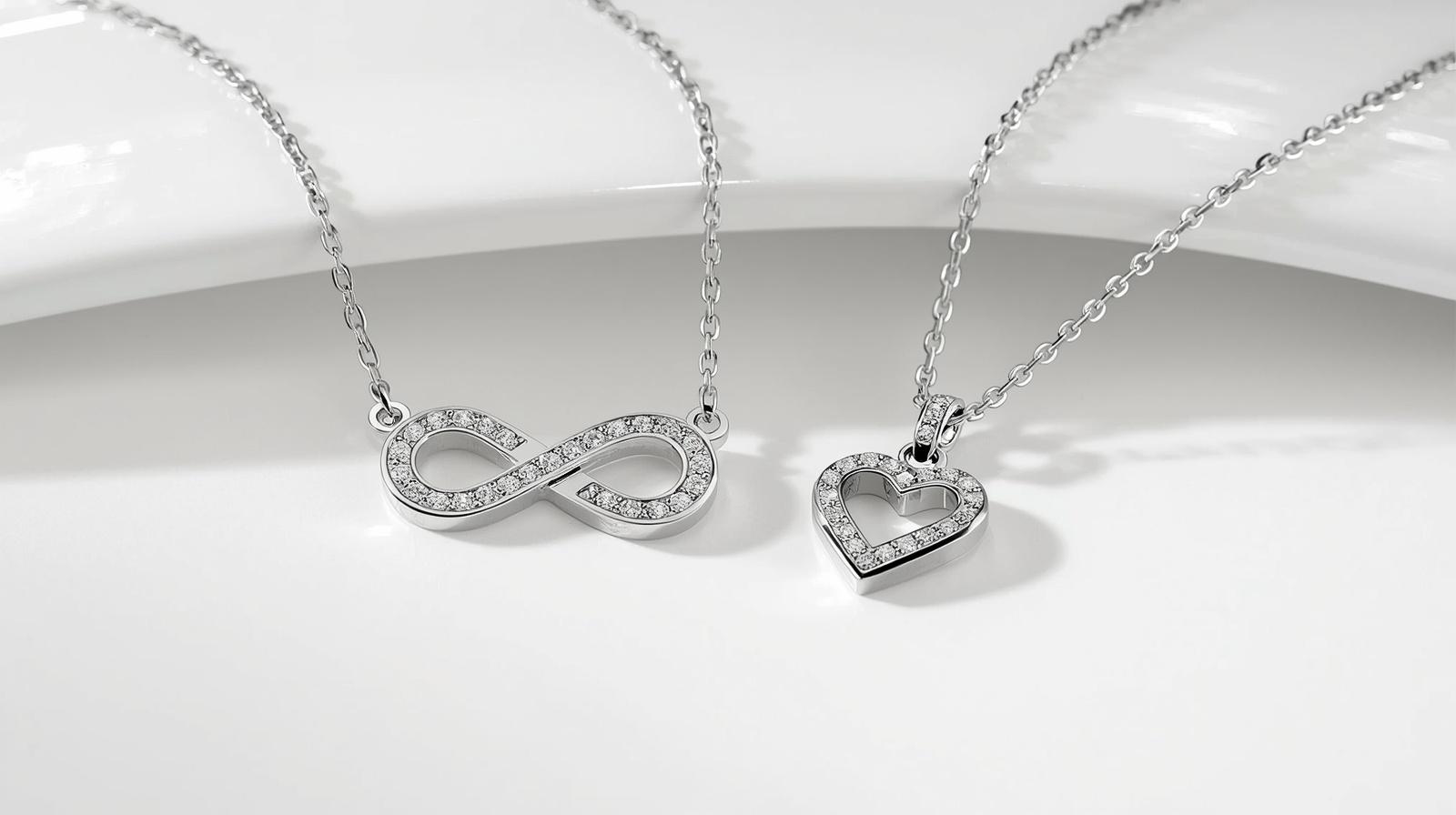
Instead of relying on fixed designs, businesses can create products that reflect identity, personalization, or brand positioning. At Lonceen Jewelry, we’ve seen custom necklace collections consistently become core revenue drivers because they allow flexibility without requiring massive inventory investment.
This shift is not about trends—it’s about control. Control over design, differentiation, and ultimately, customer perception.
Material Selection and Structural Design Define Product Reliability
A custom necklace is not just about appearance—it is a structural product that must perform consistently in real use.
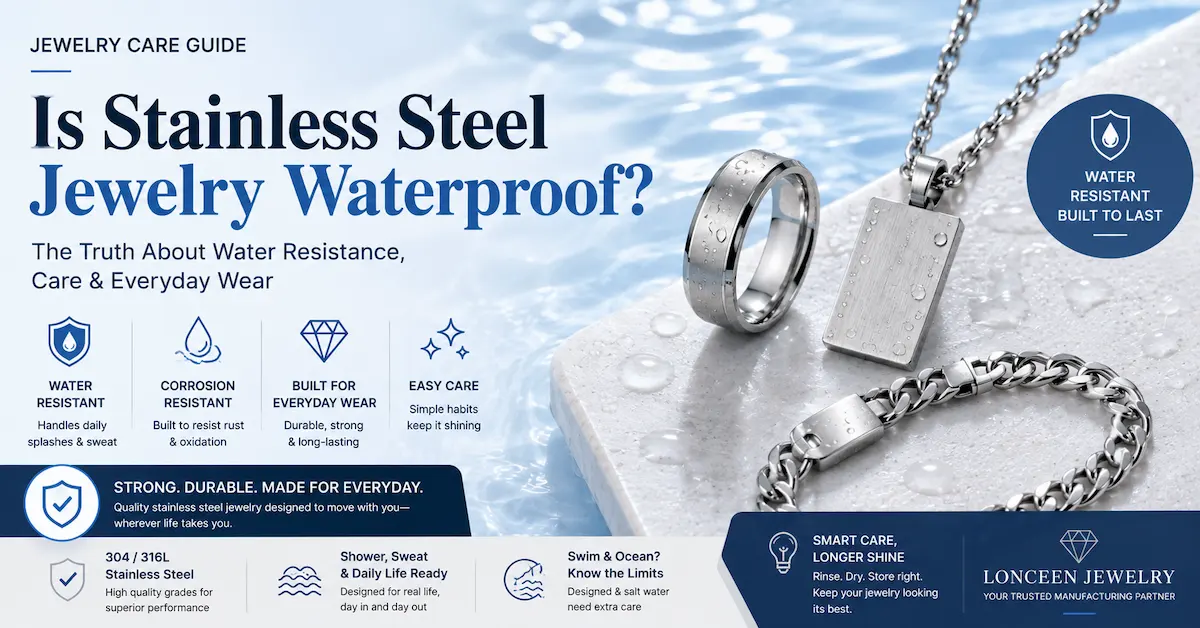
Stainless steel (304/316) is commonly used because of its balance between strength and corrosion resistance. Compared to softer metals, it maintains shape stability, especially in pendant structures and fine chain connections.
Thickness also matters. For most custom necklace pendants:
- 1.0mm–1.5mm → lightweight, suitable for minimalist designs
- 1.5mm–2.5mm → better durability for daily wear
Plating plays a key role in longevity. A controlled layer of 0.1μm–0.25μm gold plating typically ensures stable color retention for several months under normal conditions.
According to data insights from Statista, durability and product uniqueness are among the top factors influencing repeat purchases in jewelry categories.
👉 https://www.statista.com/
Why Production Experience Directly Affects Custom Necklace Quality
Many businesses underestimate how complex custom necklace production actually is.
At Lonceen Jewelry, each design goes through a feasibility check before production:
- Pendant weight vs chain strength
- Engraving compatibility with surface finish
- Connection point durability
Without this step, products may look good in samples but fail in real use—chains break, pendants bend, or engraving becomes unclear over time.
Our approach ensures that every custom necklace design is not only visually appealing but also structurally reliable.
How Custom Necklaces Adapt to Different Business Models
Custom necklaces perform well across multiple sales channels because they are inherently flexible.
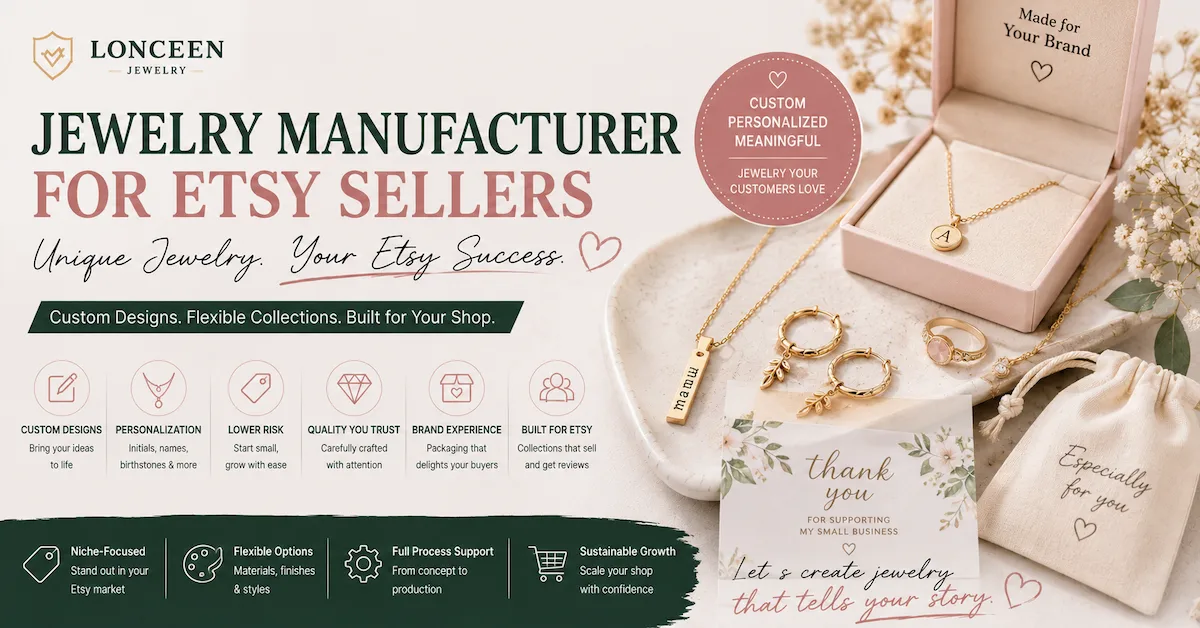
For e-commerce sellers, they enable rapid testing. A single base design can be adapted into multiple variations—names, symbols, or custom shapes.
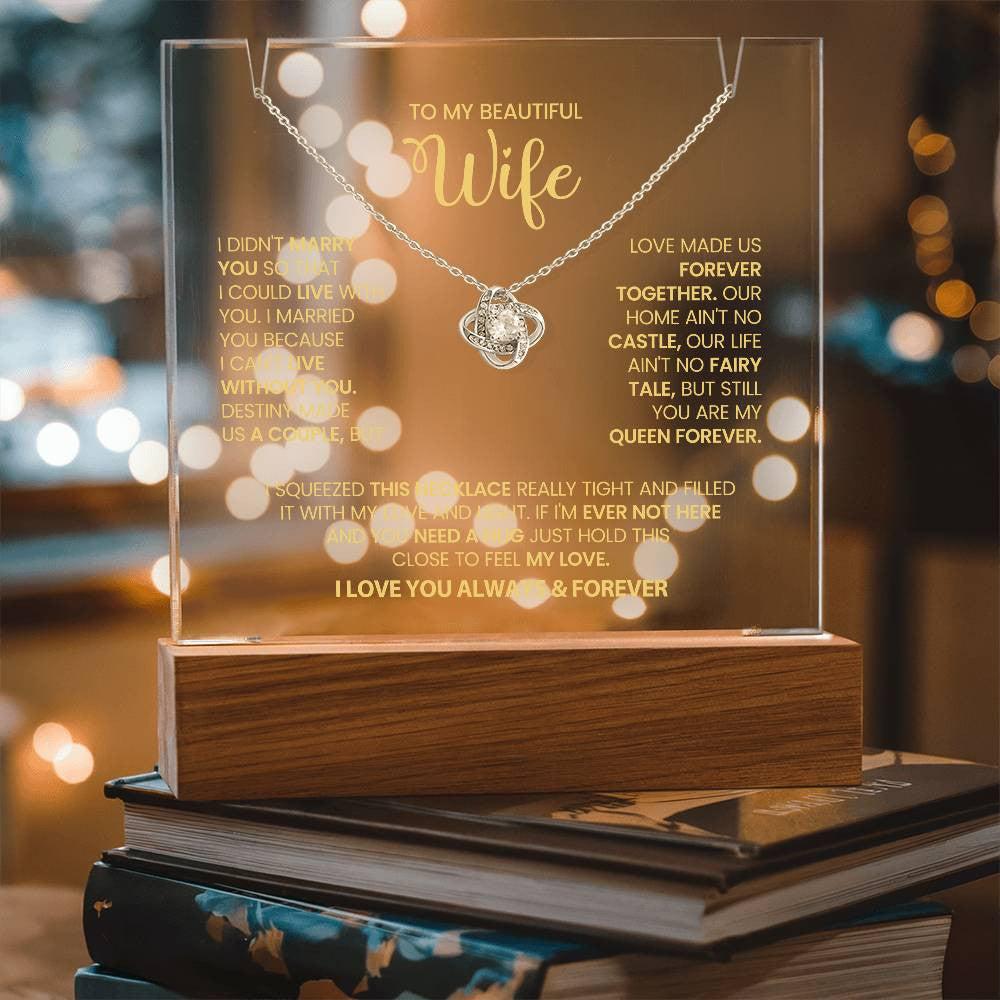
In the gift market, custom necklaces provide emotional value. Customers are not buying accessories—they are buying something meaningful, which increases willingness to pay.
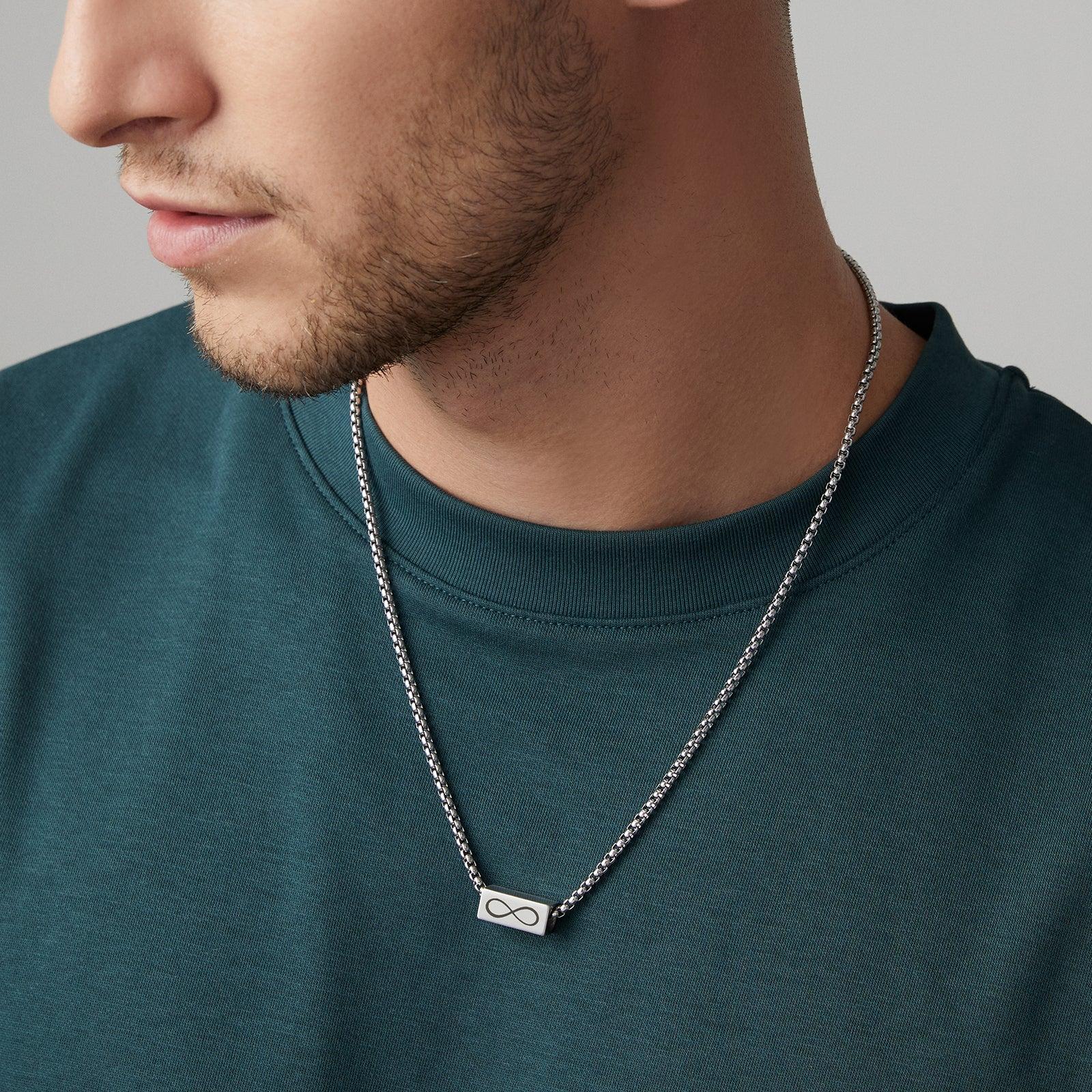
For branding, custom necklaces allow integration of logos or symbolic elements, making them suitable for promotional campaigns and identity-driven collections.
Managing Small Batch Production Without Losing Efficiency
One of the biggest challenges in jewelry production is balancing flexibility with efficiency.
Traditional models require large quantities, which increases risk. Custom necklace production, when optimized, allows for smaller batches without sacrificing consistency.
Typical optimized production ranges:
- MOQ: 50–200 pieces
- Sample lead time: 3–7 days
- Bulk production: 10–20 days
According to McKinsey & Company, reducing product development time improves market responsiveness significantly.
👉 https://www.mckinsey.com/
For jewelry businesses, this means launching faster and adapting to demand without overstocking.
Data Comparison: Standard Necklace vs Custom Necklace Performance
| Metric | Standard Necklace | Custom Necklace |
|---|---|---|
| Conversion Rate | 1.5%–2.5% | 3.0%–5.8% |
| Average Order Value | $18–$30 | $35–$75 |
| MOQ Requirement | 300–1000 pcs | 50–200 pcs |
| Product Variability | Low | High |
| Customer Retention | 10%–20% | 28%–45% |
| Inventory Risk | High | Controlled |
These numbers reflect typical outcomes seen in personalization-driven product lines.
Case Insight: From Generic Products to Custom Necklace Growth
A small jewelry brand approached us after struggling with slow product turnover. Their catalog was filled with standard designs that generated traffic but low conversions.
We helped them transition to a custom necklace strategy:
- Introduced adjustable pendant thickness (1.5mm standard)
- Added engraving options for personalization
- Enabled small batch testing across multiple designs
Within two months:
- Conversion rate increased from ~2% to over 4.5%
- Inventory turnover improved significantly
- Best-selling designs were scaled based on real demand
This shift allowed them to grow without increasing inventory risk.
Frequently Asked Questions About Custom Necklaces
Q: Are custom necklaces durable enough for daily wear?
A: Yes, when proper materials and structural design are used, they can perform as well as standard jewelry.
Q: How fast can custom necklaces be produced?
A: With optimized workflows, samples can be ready within a week, and bulk production within 2–3 weeks.
Q: Does customization increase cost significantly?
A: Not necessarily. While unit cost may be slightly higher, it reduces unsold inventory risk.
Turning Custom Necklaces Into a Scalable Business Advantage
Custom necklaces are no longer just an option—they are becoming a core strategy for differentiation in the jewelry market.
At Lonceen Jewelry, we focus on making custom necklace production stable, flexible, and scalable. From material selection to structural design and batch control, every step is optimized to support real business growth.
If you want to explore available styles and customization options, you can visit our product page here:
👉 https://www.lonceenjewelry.com/en/products
And if you are planning a custom necklace project or need tailored recommendations, feel free to contact our team:
👉 https://www.lonceenjewelry.com/contact-us