

Why Skin Reactions Are One of the Biggest Problems in Jewelry
Many customers experience irritation, redness, or itching after wearing jewelry—even when the product looks high quality. This issue is especially common with earrings, rings, and bracelets that come into direct contact with the skin.
These reactions are usually caused by metal sensitivity, especially to nickel or low-quality alloys.
At Lonceen Jewelry, we treat hypoallergenic jewelry as a critical requirement rather than an optional feature. By controlling material composition and finishing processes, we help reduce skin irritation and improve long-term wear comfort.
What Makes Jewelry Hypoallergenic in Real Production
The term “hypoallergenic” is often used loosely, but in practice it depends on material composition.
Common hypoallergenic materials include:
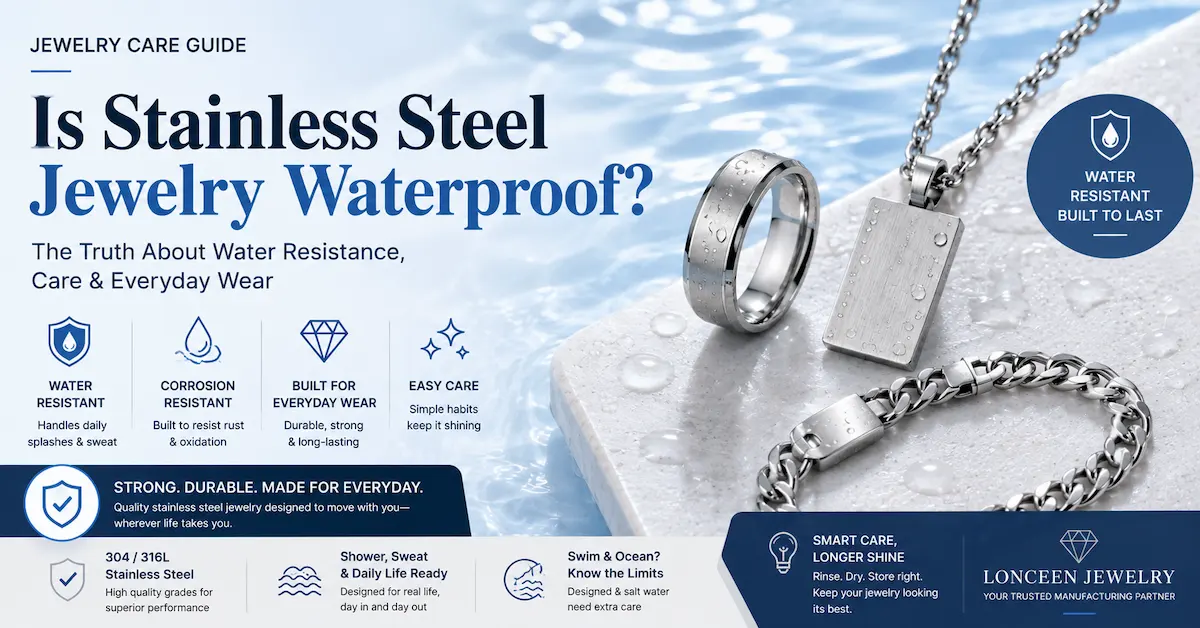
- Stainless steel (304/316) → stable, low reaction rate
- Titanium (less common but highly safe)
- High-quality plated stainless steel
Materials that often cause reactions:
- Nickel-containing alloys
- Low-cost mixed metals
- Poorly plated surfaces
According to research from Statista, skin comfort and safety are increasingly important factors in accessory purchasing decisions.
👉 https://www.statista.com/
This is why hypoallergenic jewelry is gaining demand globally.
Why Surface Finishing Matters for Skin Safety
Even safe materials can cause irritation if surface finishing is poor.
Common problems include:
- Rough edges that irritate skin
- Uneven plating that exposes base metals
- Residual chemicals from production
At Lonceen Jewelry, we control this through:
- Multi-stage polishing for smooth surfaces
- Consistent plating layers
- Cleaning processes to remove residues
A properly finished surface reduces friction and prevents direct exposure to reactive elements.
Where Hypoallergenic Jewelry Creates the Most Value
Hypoallergenic jewelry is especially important in certain product categories.
For earrings, skin sensitivity is most common due to direct contact with pierced areas.
For rings and bracelets, long wear time increases exposure, making material safety critical.
In the gift market, hypoallergenic jewelry reduces the risk of dissatisfaction—customers can purchase without worrying about compatibility.
Balancing Comfort, Durability, and Production Efficiency
Producing hypoallergenic jewelry requires balancing safety with scalability.
Typical production benchmarks:
- MOQ: 50–300 pieces
- Sample lead time: 3–7 days
- Bulk production: 10–20 days
According to McKinsey & Company, standardized production improves both quality consistency and efficiency.
👉 https://www.mckinsey.com/
This ensures that hypoallergenic performance is maintained across batches.
Data Comparison: Standard Jewelry vs Hypoallergenic Jewelry
| Metric | Standard Jewelry | Hypoallergenic Jewelry |
|---|---|---|
| Skin Reaction Rate | 10%–20% users | <3% users |
| Material Stability | Low–Medium | High |
| Surface Smoothness | Variable | Consistent |
| Customer Complaints | High | Low |
| Wear Comfort | Medium | High |
| Product Trust | Low–Medium | High |
These differences directly affect customer satisfaction and repeat purchases.
Case Insight: Reducing Skin Complaints Through Material Upgrade
A jewelry brand approached us after receiving frequent complaints about skin irritation.
We implemented:
- Stainless steel base materials (316)
- Improved polishing and finishing
- Controlled plating thickness
Within two months:
- Customer complaints dropped significantly
- Product reviews improved
- Return rates decreased
This change improved both customer experience and brand trust.
Frequently Asked Questions About Hypoallergenic Jewelry
Q: Is stainless steel jewelry hypoallergenic?
A: Yes, especially 304 and 316 stainless steel are widely used for skin-friendly jewelry.
Q: Can plated jewelry be hypoallergenic?
A: Yes, if the base material is safe and plating is consistent.
Q: Why do some jewelry pieces still cause irritation?
A: Poor finishing or hidden alloy content can expose reactive metals.
Building a Jewelry Line That Customers Can Wear Comfortably
Hypoallergenic jewelry is not just a feature—it’s a requirement for long-term customer satisfaction.
At Lonceen Jewelry, we focus on producing skin-friendly jewelry through controlled material selection and finishing processes, ensuring comfort and durability.
If you want to explore our hypoallergenic jewelry options, you can visit our product page here:
👉 https://www.lonceenjewelry.com/en/products
And if you are planning a jewelry project or need recommendations, feel free to contact our team:
👉 https://www.lonceenjewelry.com/contact-us