

Why Layered Necklaces Are Dominating Modern Jewelry Styles
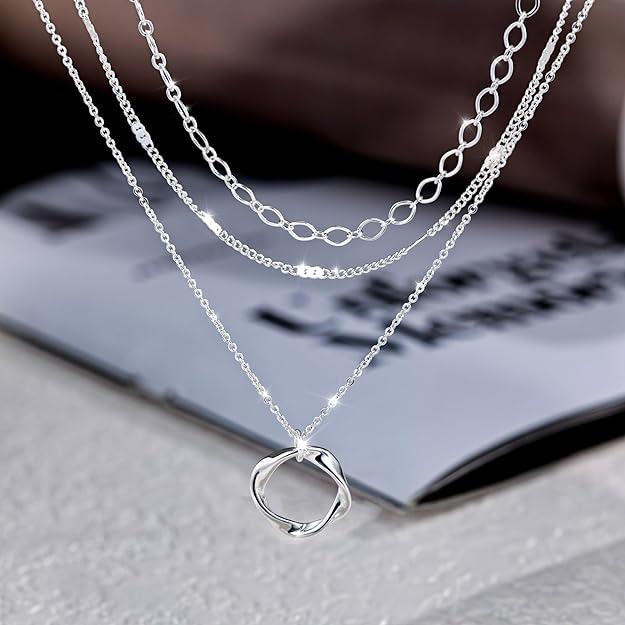
Jewelry trends change quickly, but some styles evolve into long-term staples. Layered necklaces are one of them. Instead of a single piece, customers now prefer multiple chains combined into a cohesive look.
This shift is driven by versatility. A layered necklace can adapt to different outfits, occasions, and personal styles without requiring multiple separate products.
At Lonceen Jewelry, we’ve seen layered necklace collections consistently perform well because they offer both visual impact and practical flexibility. Customers perceive them as more valuable due to the multi-layer effect, even when production cost remains controlled.
Design Balance: The Key to a Successful Layered Necklace
Layered necklaces may appear simple, but achieving balance requires precise design control.
Key design factors include:
- Chain length variation (typically 40cm / 45cm / 50cm)
- Weight distribution across layers
- Pendant size proportion
If layers are too similar in length, they overlap. If weight is uneven, the necklace shifts during wear.
Typical structure parameters:
- Chain thickness: 1.0mm–2.0mm
- Layer spacing: 3cm–5cm difference
- Total weight: 5g–15g per set
These details directly affect wearability and appearance.
Material Selection and Durability in Multi-Layer Designs
Because layered necklaces involve multiple chains, durability becomes more important than in single-layer products.
Stainless steel (304/316) is widely used because:
- It resists tangling and deformation
- It supports consistent plating
- It maintains structure over time
Gold plating thickness of 0.08μm–0.2μm is typically sufficient due to lower friction compared to bracelets or rings.
According to Statista, versatility and ease of styling are major factors influencing jewelry purchases.
👉 https://www.statista.com/
Layered necklaces fit perfectly into this demand.
Why Production Control Matters for Multi-Layer Jewelry
Layered necklaces require tighter production control than single-piece designs.
Common production issues include:
- Uneven chain length
- Weak connection points
- Inconsistent plating across layers
At Lonceen Jewelry, we control:
- Chain length tolerance (±0.1–0.2cm)
- Connector strength testing
- Uniform plating across all layers
Without these controls, the final product may not match the intended design.
How Layered Necklaces Fit Different Market Segments
Layered necklaces are highly adaptable across different markets.
For e-commerce sellers, they offer strong visual appeal, making them ideal for product photography and social media marketing.
In the gift market, they provide a “complete look,” which increases perceived value compared to single necklaces.
For brands, layered designs allow signature styles—combining minimalism with trend-driven elements.
Efficient Production for Trend-Based Jewelry
Layered necklaces must be produced efficiently to keep up with fashion cycles.
Typical production benchmarks:
- MOQ: 50–200 sets
- Sample lead time: 3–5 days
- Bulk production: 10–15 days
According to McKinsey & Company, faster product cycles improve competitiveness in fashion-driven markets.
👉 https://www.mckinsey.com/
This is especially relevant for layered jewelry.
Data Comparison: Single Necklace vs Layered Necklace
| Metric | Single Necklace | Layered Necklace |
|---|---|---|
| Visual Impact | Medium | High |
| Conversion Rate | 1.8%–2.8% | 3.5%–6.0% |
| Average Order Value | $20–$40 | $35–$75 |
| Styling Flexibility | Low | High |
| Product Perceived Value | Medium | High |
| Trend Adaptability | Medium | High |
Layered necklaces outperform in both style and sales potential.
Case Insight: Increasing Sales Through Layered Necklace Designs
A jewelry brand focused on minimalist products wanted to increase product value without significantly raising costs.
We introduced layered necklace designs:
- Combined 2–3 chain layers
- Adjusted length spacing for balance
- Maintained lightweight structure
Within 6 weeks:
- Average order value increased significantly
- Conversion rates improved
- Best-selling products shifted toward layered designs
The success came from combining simplicity with visual depth.
Frequently Asked Questions About Layered Necklaces
Q: Do layered necklaces tangle easily?
A: Not when chain spacing and weight distribution are properly designed.
Q: Are layered necklaces heavy?
A: No, when optimized, they remain lightweight and comfortable.
Q: Can layered necklaces be customized?
A: Yes, through variations in chain length, pendants, and finishes.
Building a Trend-Driven Jewelry Line with Layered Designs
Layered necklaces represent a shift toward versatility and styling flexibility in jewelry.
At Lonceen Jewelry, we focus on producing layered necklaces that balance design precision with production efficiency, helping businesses stay competitive in fast-moving markets.
If you want to explore layered necklace styles and customization options, you can visit our product page here:
👉 https://www.lonceenjewelry.com/en/products
And if you are planning a jewelry project, feel free to contact our team:
👉 https://www.lonceenjewelry.com/contact-us