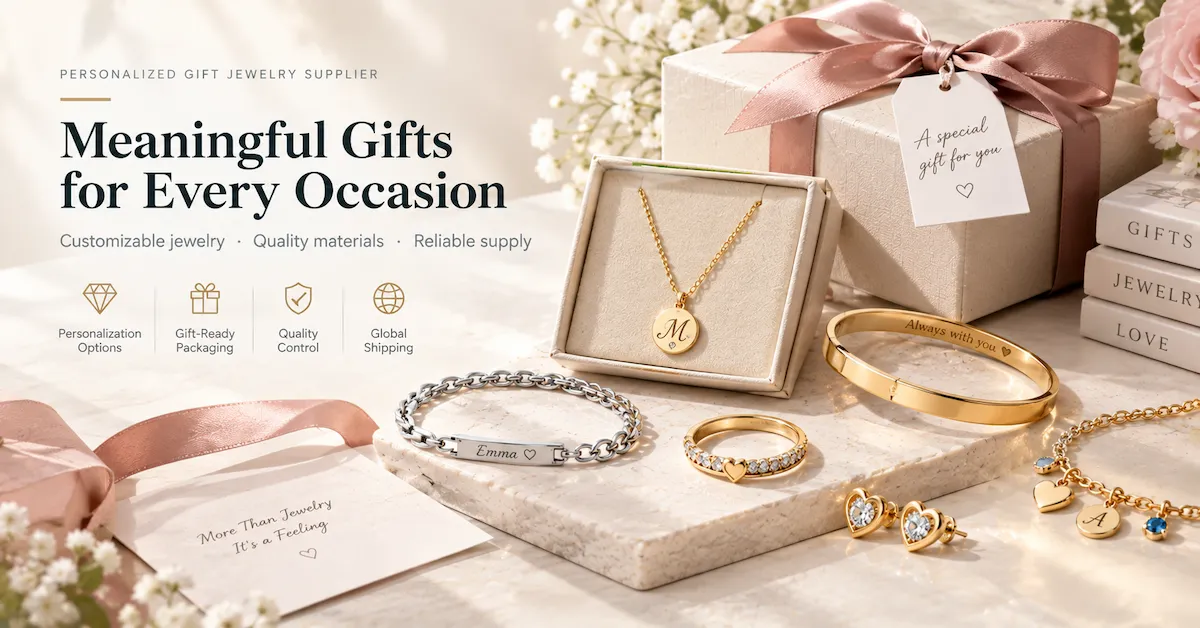


Personalized rings have become an important product category for jewelry brands because they combine everyday wear with personal meaning. Names, initials, dates, symbols, birthstones, and other details can turn a standard ring into a product customers feel connected to.
For B2B buyers, however, finding a personalized ring supplier is different from simply finding a custom jewelry manufacturer. The key question is not only whether a supplier can make a ring, but whether it can support a repeatable personalization program that works across different designs, customer preferences, and sales channels.
Lonceen's keyword strategy positions personalized jewelry as a transaction-oriented B2B topic for brands and gift businesses, while custom rings manufacturer is treated as a separate product-manufacturing search.
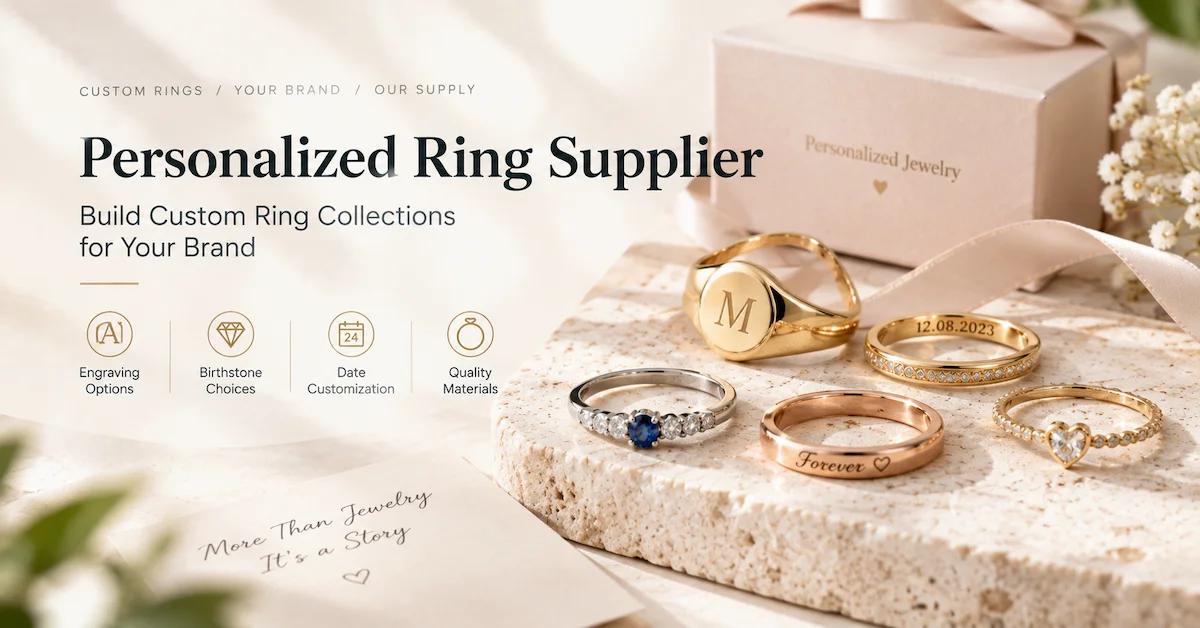
This article therefore focuses specifically on how brands should evaluate personalized ring suppliers and build commercially viable personalized ring collections, rather than repeating general jewelry manufacturing or sourcing advice.
1. What Is a Personalized Ring Supplier?
A personalized ring supplier provides rings that can be adapted to individual customer preferences or a brand's personalization concept.
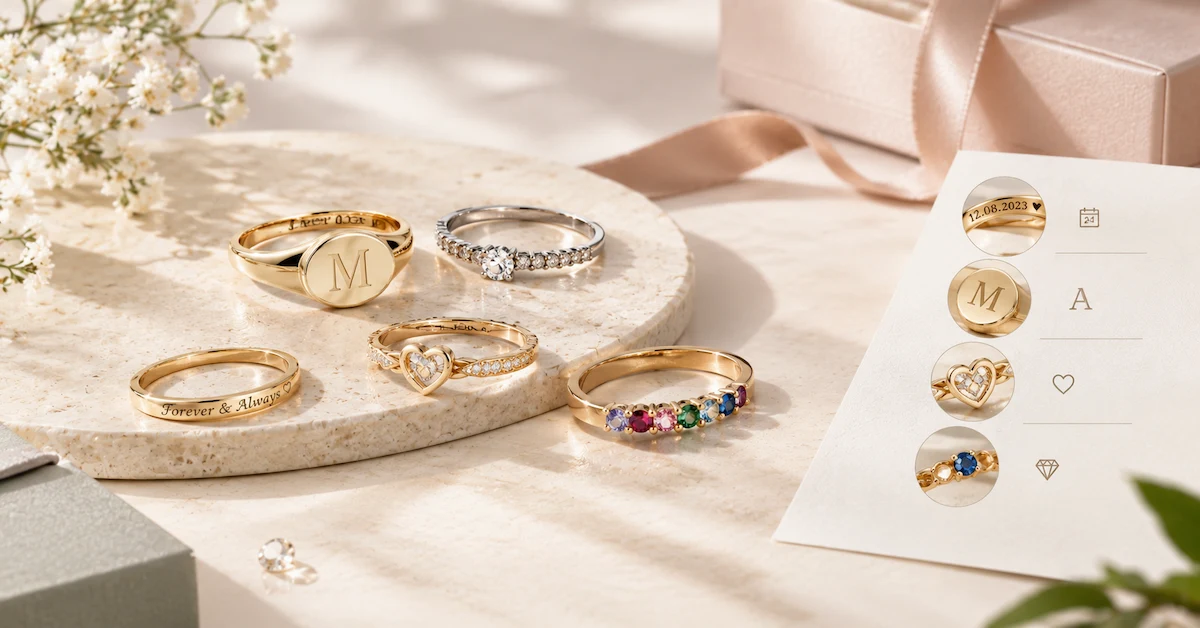
Depending on the collection, personalization may include:
- Names
- Initials
- Dates
- Short messages
- Symbols
- Coordinates
- Birthstones
- Letters or numbers
- Custom motifs
This creates an important difference between a standard ring supplier and a personalized ring supplier.
A standard supplier mainly provides fixed designs.
A personalized ring supplier needs to support a product structure where the base design stays consistent while selected elements can change.
For online jewelry brands, this makes personalization easier to incorporate into product listings and customer purchasing journeys.
2. Why Personalized Rings Are Valuable for Jewelry Brands
The main commercial advantage of personalized rings is their connection to individual stories.
A customer may purchase a personalized ring to represent:
- A relationship
- A family member
- A special date
- Personal identity
- A milestone
- A meaningful place
- A personal belief
This gives brands an opportunity to sell more than a physical accessory.
Instead of competing only on appearance, the product can be positioned around meaning and personalization.
For B2B buyers, this can create several collection directions.
Name & Initial Rings
Simple designs featuring initials or names can appeal to customers looking for everyday personalized jewelry.
Date Rings
Dates can represent:
- Anniversaries
- Birthdays
- Weddings
- Important milestones
Symbolic Rings
Brands can develop collections around hearts, stars, zodiac symbols, religious motifs, geometric elements, or other recognizable designs.
Birthstone Rings
Combining personalization with birthstones gives customers another way to create a more individualized product.
3. The Most Important Personalization Options
Not every personalization method is equally suitable for every ring.
A supplier should be able to recommend an appropriate option according to the design and material.
Engraving
Engraving is one of the most recognizable personalization methods.
It can be applied to:
- Ring interiors
- Ring surfaces
- Signet faces
- Flat decorative areas
It works particularly well for names, initials, dates, and short messages.
Symbol or Motif Customization
Instead of adding text, brands can create collections based on symbols.
For example, a ring could incorporate:
- Hearts
- Stars
- Initial motifs
- Geometric patterns
- Brand-specific symbols
This approach is useful when a brand wants personalization without making every product dependent on customer text.
Birthstone Personalization
A ring can combine a consistent setting with different stone options.
For example, the same ring design could be offered with different birthstones to create multiple variants from one core product concept.
4. Build Personalization Into the Product Architecture
One of the most useful ways to work with a personalized ring supplier is to separate the product into fixed elements and variable elements.
For example:
| Product Element | Fixed | Personalized |
|---|---|---|
| Ring silhouette | ✓ | |
| Band width | ✓ | |
| Base material | ✓ | |
| Surface finish | ✓ | |
| Initials | ✓ | |
| Name | ✓ | |
| Date | ✓ | |
| Birthstone | ✓ | |
| Symbol | ✓ |
This structure allows brands to maintain a recognizable collection while giving customers meaningful choices.
It also prevents personalization from becoming unnecessarily complicated.
A successful collection should make the customer's options feel simple and intentional, not unlimited and confusing.
5. Choose Ring Designs That Support Personalization
The base ring design determines how effectively personalization can be integrated.
Minimal Bands
Minimal bands provide a clean surface for:
- Names
- Dates
- Initials
- Short phrases
They are particularly suitable for everyday jewelry collections.
Signet Rings
Signet-style rings provide a larger surface area and can accommodate:
- Initials
- Family symbols
- Logos
- Crests
- Monograms
Stacking Rings
Stackable rings create an opportunity to combine multiple personalized elements.
A customer might purchase:
- One initial ring
- One birthstone ring
- One date ring
The individual products become part of a larger personalized story.
Symbolic Rings
Rings incorporating hearts, stars, or other motifs can combine visual design with personalized details.
The important consideration is that personalization should enhance the original design rather than overwhelm it.
6. Material Selection Should Match the Personalization Concept
Material affects not only appearance but also how a personalized ring should be positioned.
Stainless Steel
Stainless steel can be suitable for brands targeting accessible, contemporary jewelry.
It works well with:
- Minimalist rings
- Signet-style designs
- Everyday personalized rings
Sterling Silver
Sterling silver is appropriate for collections positioned toward a more premium jewelry segment.
It can complement:
- Fine engraving
- Personalized gift rings
- Birthstone designs
- Higher-value collections
Mixed Materials and Stones
Combining metals, finishes, or stones can help create more distinctive personalized collections.
The material should therefore be selected according to the target customer, price positioning, and design language, rather than personalization alone.
Lonceen's keyword planning also distinguishes stainless steel jewelry and sterling silver jewelry as separate B2B manufacturing categories, reflecting the importance of material-specific positioning in jewelry sourcing.
7. Personalized Rings for Different B2B Markets
A good personalized ring supplier should be able to support different commercial applications.
Jewelry Brands
Brands can develop a dedicated personalized collection with a consistent visual identity.
Instead of offering random customized products, they can create a recognizable system around:
- Typography
- Symbols
- Materials
- Finishes
- Packaging
- Collection themes
This helps personalization become part of the brand identity.
Gift Businesses
Personalized rings naturally fit the gift market.
Potential occasions include:
- Birthdays
- Anniversaries
- Valentine's Day
- Mother's Day
- Weddings
- Graduations
The product can be marketed around the story behind the personalization rather than only the jewelry itself.
Online Jewelry Stores
E-commerce businesses can create product variants around specific personalization options.
For example:
Ring → Choose finish → Add initial → Select size
A clear personalization structure makes the product easier for customers to understand and purchase online.
Couple Jewelry Brands
Personalized rings can also become part of matching or complementary collections.
Instead of selling identical rings, brands can offer:
- Matching initials
- Shared dates
- Complementary symbols
- His & hers variations
- Two-part designs
This connects personalization with relationship-based product positioning. The keyword strategy separately identifies couple jewelry manufacturer as a distinct B2B application, so this article treats it only as one use case rather than making it the primary topic.
8. How to Evaluate a Personalized Ring Supplier
When comparing suppliers, focus on personalization capability rather than simply catalog size.
1. Personalization Flexibility
Ask what can actually be personalized.
Can the supplier support:
- Text?
- Initials?
- Dates?
- Symbols?
- Stones?
- Different finishes?
The more clearly these options are defined, the easier it is to create a commercial collection.
2. Design Consistency
Personalized products still need to maintain consistent proportions and visual quality.
A supplier should be able to keep the base design stable even when individual personalization details change.
3. Detail Accuracy
Small engraving elements require precision.
Important considerations include:
- Letter clarity
- Positioning
- Spacing
- Depth
- Alignment
- Surface finishing
These details can have a significant effect on perceived product quality.
4. Product Range
A supplier with several ring styles can help brands test different personalization concepts without completely rebuilding their product range.
5. Communication
Personalization creates more product variables than standard jewelry.
Clear communication is therefore essential when confirming:
- Artwork
- Text
- Font
- Placement
- Material
- Finish
- Stone selection
9. Create a Personalized Ring Collection Instead of One Product
A common mistake is launching one customized ring and expecting it to serve every customer.
A stronger approach is to build a personalization collection.
For example:
Collection A: Initial Rings
Simple bands featuring one or two initials.
Collection B: Date Rings
Minimal designs intended for anniversaries and milestones.
Collection C: Birthstone Rings
Different stones representing different months.
Collection D: Signature Rings
Larger rings featuring personalized symbols or monograms.
This creates a clear product hierarchy while allowing customers to choose the type of personalization that matters to them.
10. Personalization and Brand Differentiation
Personalized jewelry can help brands move away from purely price-based competition.
A standard ring can be compared primarily through:
Design + material + price
A personalized ring adds another layer:
Design + material + meaning + personal relevance
That difference can help a brand develop stronger product storytelling.
For example, instead of describing a ring simply as a “gold-tone minimalist band,” an online store could position it as a ring designed to commemorate a meaningful date.
The physical product may be similar, but the commercial proposition is different.
11. Why Lonceen Can Support Personalized Ring Development
Lonceen Jewelry's existing jewelry offering covers multiple ring categories and provides jewelry design, development, manufacturing, and wholesale-related solutions.
This makes it relevant for brands that want to explore personalized ring collections rather than source a single fixed ring style.
The company's keyword strategy also identifies personalized jewelry manufacturer as a transaction-focused term aimed at gift brands, reinforcing the connection between personalization and B2B jewelry product development.
Learn More About Lonceen Jewelry
For brands developing personalized products, the focus should be on translating a personalization concept into a commercially repeatable product range.
12. A Simple Checklist Before Choosing Your Supplier
Before moving forward with a personalized ring supplier, confirm:
Design
- Can the supplier work with different ring styles?
- Can personalization remain visually balanced?
Customization
- What personalization options are available?
- Can names, initials, dates, symbols, or stones be incorporated?
Materials
- Which materials are available?
- Which material best matches your target price and positioning?
Product consistency
- Can the base ring remain consistent across personalized orders?
- Are engraving placement and finishing controlled?
Brand development
- Can multiple personalized designs be developed as one collection?
- Can the supplier support future product extensions?
This evaluation is more useful for personalized ring sourcing than simply comparing suppliers by price or catalog size.
Conclusion: Choose a Personalized Ring Supplier That Scales With Your Brand
A successful personalized ring collection needs more than customization capability.
The right personalized ring supplier should help brands balance:
- Personalization flexibility
- Design consistency
- Material selection
- Detail precision
- Collection development
- Commercial usability
The strongest approach is to create a structured personalization system rather than offering unlimited customization.
When the base design, personalization options, and brand positioning work together, a personalized ring can become more than a customized accessory—it can become a recognizable product category within your jewelry brand.
For brands, gift businesses, and online jewelry retailers developing personalized ring collections, Lonceen Jewelry can be explored as a potential jewelry development and supply partner.
FAQ
1. What does a personalized ring supplier provide?
A personalized ring supplier provides ring designs that can be adapted with customer-specific details such as names, initials, dates, symbols, or birthstones.
2. What can be personalized on a ring?
Depending on the design, personalization can include engraving, initials, names, dates, symbols, motifs, and gemstone choices.
3. Which rings are best for personalization?
Minimal bands, signet rings, stacking rings, and rings with defined decorative surfaces are generally well suited to personalization.
4. Are personalized rings suitable for online jewelry stores?
Yes. Personalized rings can work particularly well online because customers can select predefined options such as size, finish, initials, or birthstones when ordering.
5. How should brands choose a personalized ring supplier?
Evaluate personalization options, design consistency, detail accuracy, material choices, product development capability, and the supplier's ability to support a complete collection.
6. Can personalized rings be developed as a private-label collection?
Yes. Brands can develop a consistent series of personalized ring designs around their own visual identity, symbols, materials, and product positioning.