

Introduction
Earrings are no longer limited to a single pair worn on each earlobe. More fashion-conscious consumers are experimenting with multiple earrings, different placements, and carefully selected combinations to create a personalized look.
This styling approach is commonly known as ear stacking or the curated ear.
From classic lobe studs and small hoops to cartilage jewelry, ear cuffs, and decorative clip-on designs, the ear has become an important space for personal expression.
In 2026, this trend is becoming more expressive. Rather than wearing several identical earrings, consumers are combining different sizes, shapes, textures, and silhouettes to create a look that feels individual.
For jewelry retailers, this creates an opportunity to sell more than individual earrings. A carefully selected collection can encourage customers to purchase several complementary pieces instead of choosing only one pair.
The growing attention around ear cuffs, stacked lobes, and hidden helix jewelry also suggests that consumers are exploring different ways to create layered ear looks.
However, building a successful ear stack jewelry collection requires more than stocking random earrings.
Retailers need to understand different ear placements, product structures, styling combinations, and customer preferences.
In this guide, we explore how jewelry retailers can select, organize, and present ear stack jewelry collections for different markets.
1. What Is Ear Stack Jewelry?
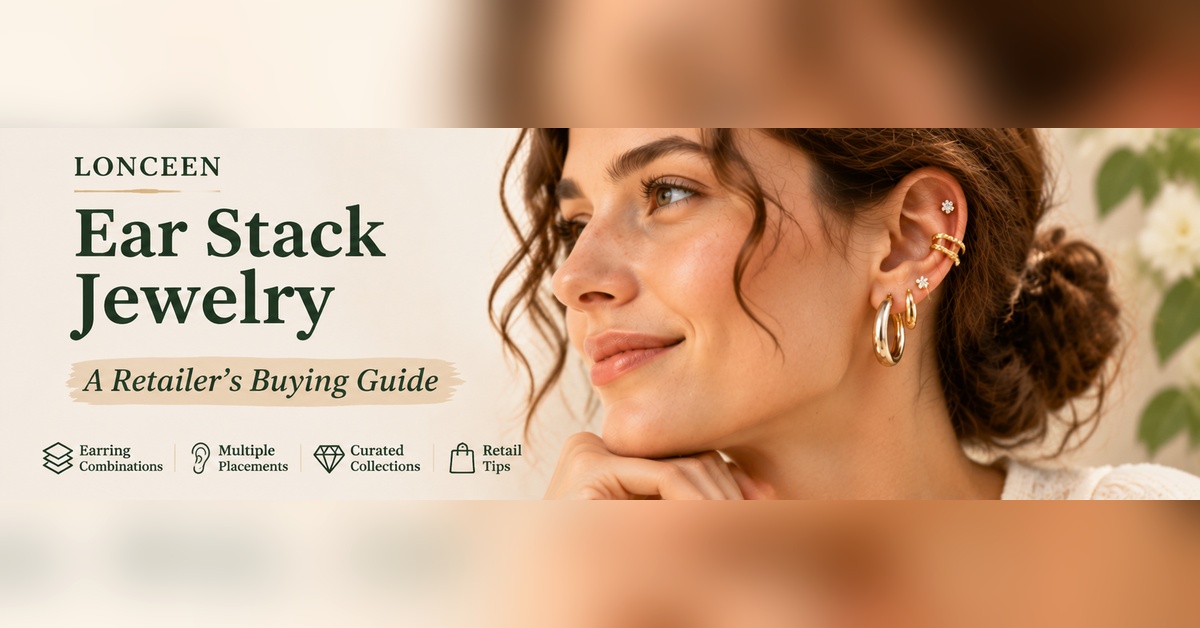
Ear stack jewelry refers to wearing multiple earrings or ear accessories together to create a coordinated appearance.
Unlike traditional earring collections, where products are often purchased and displayed individually, ear stacking focuses on how several pieces work together.
A complete combination may include:
-
A statement hoop at the first lobe.
-
A small stud at the second lobe.
-
A delicate huggie at the upper lobe.
-
A cartilage earring.
-
An ear cuff placed along the outer ear.
The exact combination depends on the wearer's existing piercings and preferred style.
What Is a Curated Ear?
A curated ear is a more intentional approach to earring styling.
Instead of randomly combining different pieces, the wearer selects earrings according to their shape, size, placement, and overall appearance.
For example, a customer might choose one larger hoop as the main piece, then add smaller studs and a decorative upper-ear accessory.
The result feels coordinated without requiring every piece to look identical.
Ear Stacking Is More Than Wearing Multiple Earrings
The key difference is the overall composition.
A successful ear stack usually considers:
-
Visual balance.
-
Different earring sizes.
-
Placement along the ear.
-
Consistent design details.
-
Appropriate spacing.
-
Individual style preferences.
For retailers, this means the selling opportunity lies not only in individual products but also in the combinations they can create.
2. Five Product Categories for an Ear Stack Jewelry Collection
A well-organized ear stack jewelry collection should include several product types.
Each category serves a different position within the overall styling combination.
1. Lobe Stud Earrings
Stud earrings are often the starting point of an ear stack.
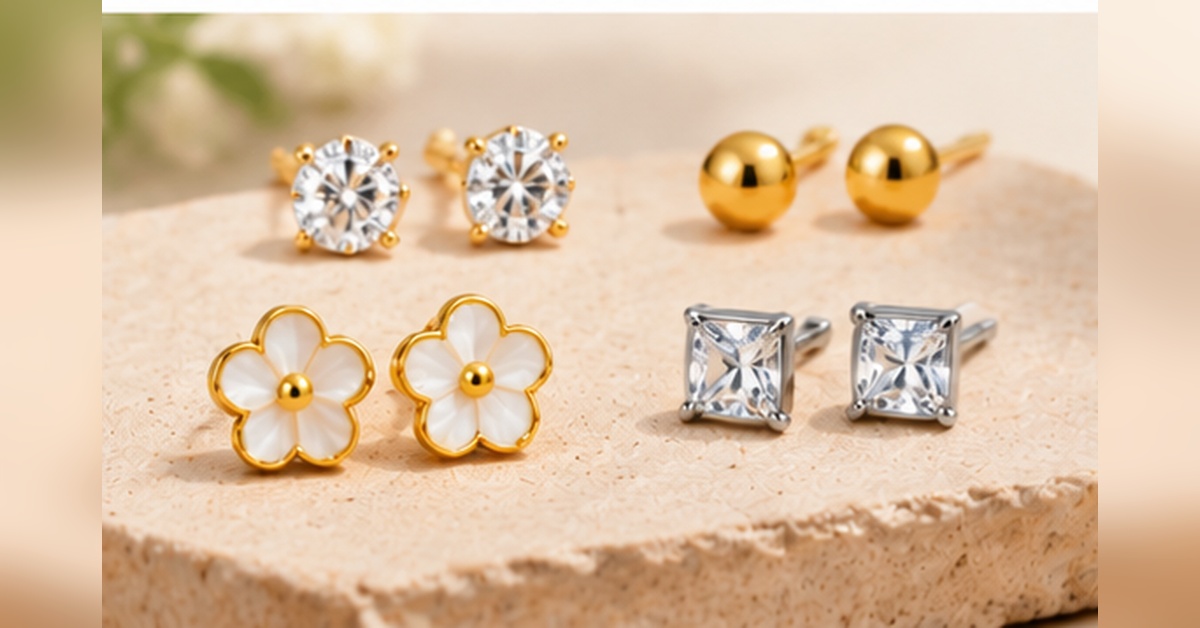
They sit directly on the earlobe and can provide a simple visual anchor for additional pieces.
Popular styles include:
-
Round crystal studs.
-
Geometric studs.
-
Flower-shaped earrings.
-
Pearl-style studs.
-
Small decorative metal designs.
-
Minimalist gemstone earrings.
For retailers, small studs are useful because they can complement many other earring styles.
A customer who already owns statement hoops may simply want a small stud to complete the upper part of the look.
2. Hoop and Huggie Earrings
Hoops and huggies are among the most recognizable components of a layered ear look.
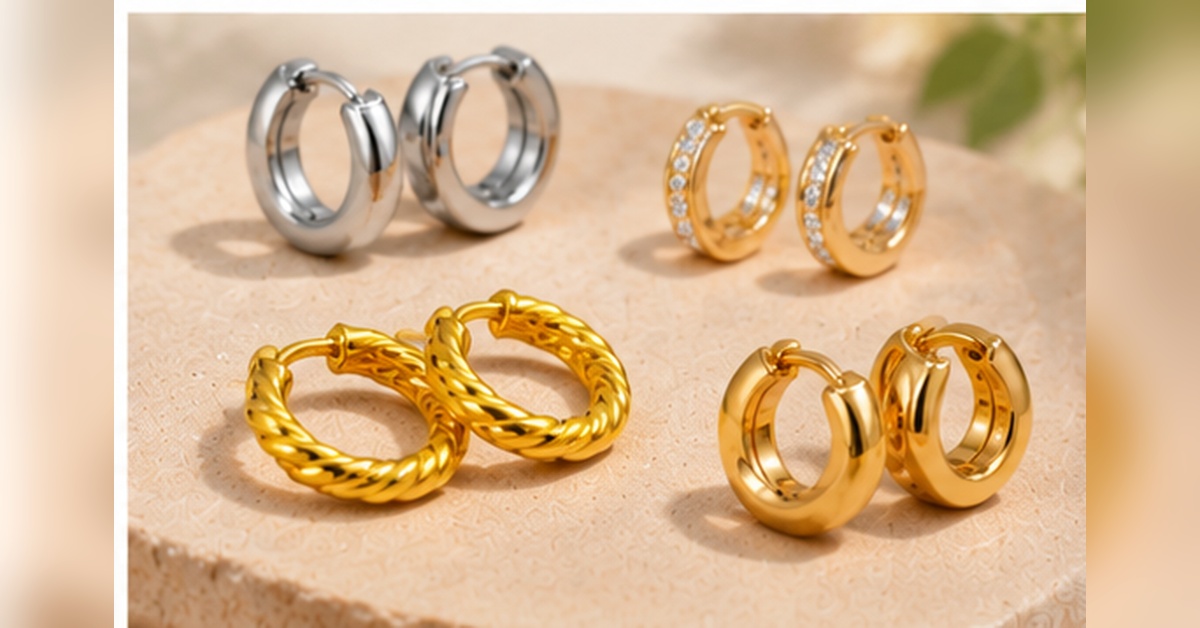
They provide a curved silhouette that contrasts with the smaller and more compact appearance of studs.
Popular directions include:
-
Small gold-tone hoops.
-
Silver-tone huggies.
-
Twisted hoops.
-
Textured hoops.
-
Chunky mini hoops.
-
Decorative crystal hoops.
Different sizes can create different visual effects.
A larger hoop can anchor the lower lobe, while smaller hoops can be placed higher along the ear.
For retailers, offering several sizes within a coordinated design family can encourage customers to purchase multiple pieces.
3. Ear Cuffs
Ear cuffs are designed to sit around part of the outer ear.
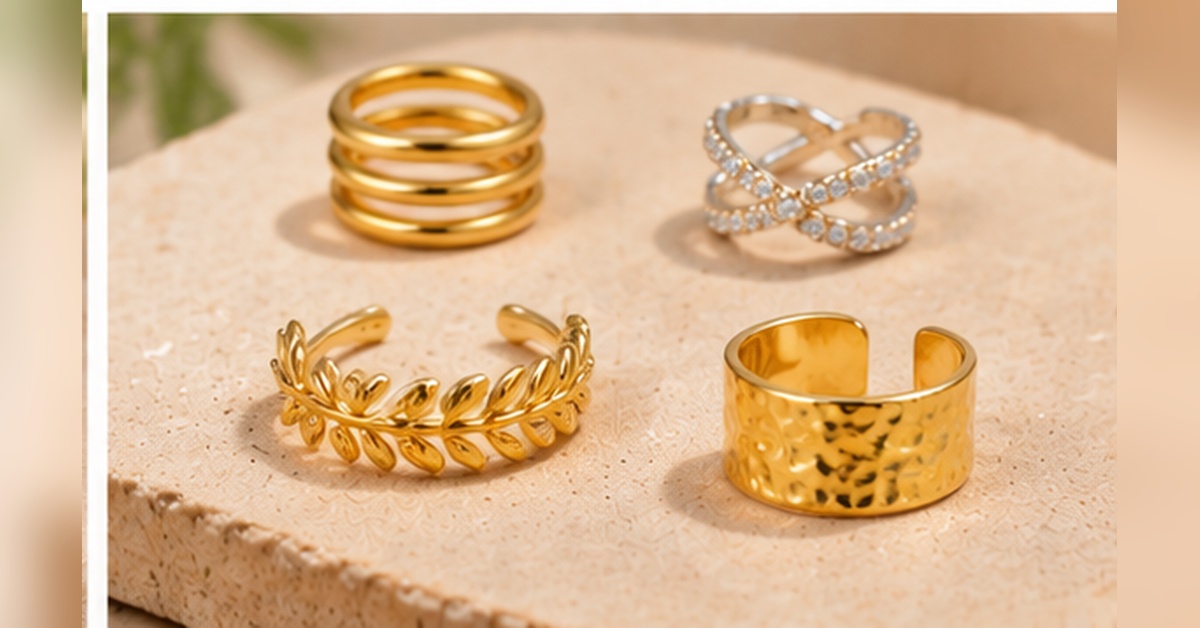
Many traditional ear cuffs do not require a piercing, making them an alternative for customers who want the appearance of additional ear jewelry without getting another piercing.
Common styles include:
-
Simple open-band cuffs.
-
Double-band cuffs.
-
Sculptural metal cuffs.
-
Crystal ear cuffs.
-
Decorative wrap-around designs.
-
Chain-connected ear accessories.
The fit and construction are important considerations.
A cuff should remain comfortably positioned without excessive pressure. Buyers should review the product dimensions and wearing structure before selecting products for retail.
Ear cuffs are particularly useful for creating visual variety in an ear stack.
4. Cartilage and Piercing Earrings
Cartilage earrings are designed for specific piercing positions beyond the traditional earlobe.
Common placement-related product categories include:
-
Helix earrings.
-
Flat-back studs.
-
Tragus jewelry.
-
Conch jewelry.
-
Rook piercing jewelry.
-
Daith jewelry.
Each position may require a different jewelry structure and dimension.
Retailers should not assume that one piercing product can be used interchangeably across all ear locations.
For professional piercing customers, accurate specifications are particularly important.
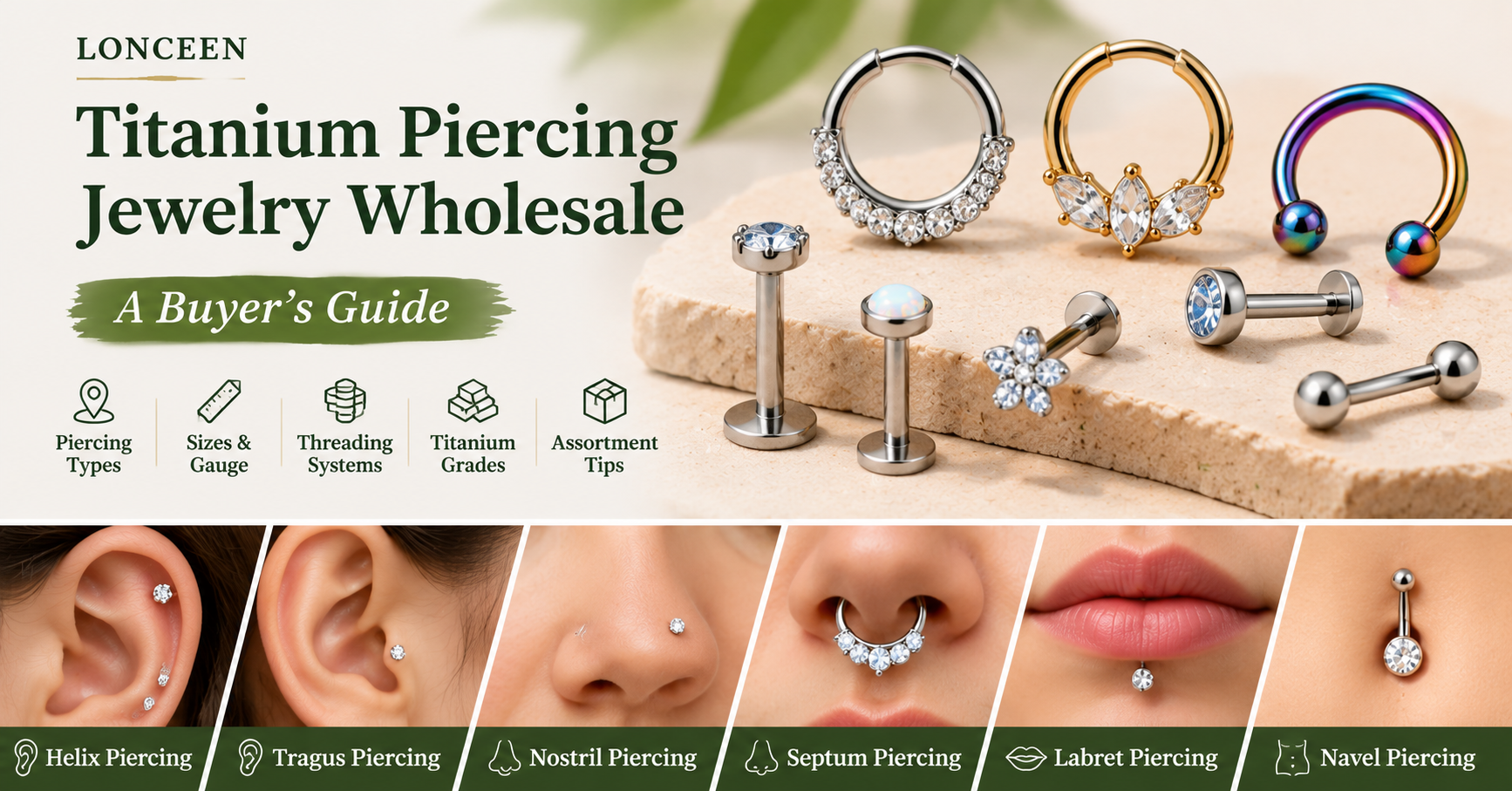
LONCEEN's titanium piercing jewelry range can support a dedicated body-jewelry assortment. However, individual products should only be listed under the ear placement they are actually designed for.
5. Clip-On Earrings
Not every customer has pierced ears.
Clip-on earrings provide an alternative for people who want to wear earrings without having pierced earlobes.
They can also appeal to customers who prefer occasional accessories or want to experiment with a different look.
Common designs include:
-
Clip-on hoops.
-
Decorative clip-on earrings.
-
Statement clip-on styles.
-
Fashion clip-on designs.
-
Colorful clip-on accessories.
LONCEEN currently lists stainless steel clip-on earrings, including a personality fashion design.
This provides a practical product direction for retailers who want to include non-pierced options within a wider earring collection.
Explore LONCEEN Stainless Steel Clip-On Earrings.
3. Four Popular Ear Stack Styling Directions
Retailers should not present every combination in the same way.
Different customers prefer different levels of detail and visual expression.
The following four directions can help organize a collection.
1. Minimalist Ear Stacking
Minimalist ear stacking focuses on small, simple pieces.
Typical combinations include:
-
Two small studs.
-
One stud and one mini hoop.
-
Two delicate huggies.
-
A simple lobe hoop with a small upper-ear accessory.
The overall appearance is clean and understated.
This direction can appeal to customers who want a subtle change to their everyday accessories.
2. Curated Gold and Silver Ear Stacks
Some customers prefer to combine different metal colors rather than wearing an entirely gold or silver collection.
A gold hoop can be paired with silver studs, while repeated shapes or decorative details help create a consistent appearance.
For retailers, the key is to make the combination look intentional.
One approach is to use a dominant metal color and introduce the second color through smaller accessories.
This styling direction can connect separate gold-tone and silver-tone earring collections.
3. Statement Ear Stacking
Statement ear stacking uses stronger visual elements.
Popular combinations may include:
-
Large hoops with smaller studs.
-
Sculptural ear cuffs.
-
Decorative drop earrings.
-
Bold geometric shapes.
-
Multiple contrasting silhouettes.
This direction is particularly suitable for fashion boutiques and customers who enjoy expressive accessories.
Rather than making every piece equally prominent, retailers should select one main statement piece and use smaller earrings to support it.
4. Asymmetrical Ear Stacking
Symmetry is no longer necessary for every earring combination.
Some customers prefer different arrangements on the left and right ears.
For example:
-
One ear with several small earrings.
-
The other ear with a statement hoop.
-
A cuff on one side and a stud combination on the other.
-
Different earring shapes connected by a similar decorative detail.
This creates a more personal appearance.
Retailers can present asymmetrical combinations as complete styling suggestions rather than requiring customers to purchase identical sets.
4. How to Build a Balanced Ear Stack
A good combination should feel coordinated without appearing overcrowded.
Retailers can use several simple principles when creating product displays and suggested combinations.
Start with One Main Piece
Choose the most visually noticeable earring first.
This might be:
-
A medium-sized hoop.
-
A decorative stud.
-
A statement earring.
-
A sculptural cuff.
The main piece establishes the visual direction.
Add Smaller Supporting Pieces
Once the main piece is selected, introduce smaller accessories.
For example, a medium hoop can be paired with a small crystal stud or a delicate upper-ear piece.
The purpose is to create variation without competing with the main design.
Use Different Shapes and Proportions
Combining identical earrings may create a uniform appearance.
Instead, consider different shapes:
-
Round hoops.
-
Square studs.
-
Oval decorative pieces.
-
Small geometric designs.
-
Curved cuffs.
The contrast between these shapes can make the overall combination more interesting.
Leave Enough Visual Space
More jewelry does not automatically create a better ear stack.
If every position contains a large or decorative piece, the combination can become visually crowded.
A more balanced arrangement leaves some space between prominent accessories.
Create a Consistent Design Theme
Even when the earrings are different, they should share at least one visual element.
This could be:
-
Similar metal finishes.
-
Repeated geometric shapes.
-
Matching stones.
-
Related textures.
-
A consistent color palette.
This creates a recognizable collection identity.
5. Which Customers Are Interested in Ear Stack Jewelry?
Understanding customer groups can help retailers choose more suitable product combinations.
Customers with Multiple Ear Piercings
These customers already have several piercing positions and may regularly look for new ways to update their ear combinations.
They may purchase individual studs, hoops, and cartilage jewelry rather than complete matching sets.
Retailers can serve this group by offering products that complement different positions.
Customers Interested in the Curated Ear Look
Some consumers enjoy the appearance of multiple earrings but do not necessarily want to follow traditional matching rules.
They may prefer asymmetrical combinations, different sizes, and unusual shapes.
For this group, styling inspiration can be as important as the individual products.
Customers Who Prefer Non-Pierced Jewelry
Not every customer wants additional ear piercings.
Clip-on earrings and suitable non-pierced cuffs provide alternatives.
This customer group can expand the potential audience of an earring collection.
Retailers should clearly distinguish between clip-on earrings and piercing-dependent products when presenting their catalog.
Fashion Boutique Customers
Fashion boutiques often need accessories that can complement clothing collections.
A coordinated ear stack can work with minimalist clothing, evening outfits, streetwear, and contemporary fashion.
The ability to present several products together can also create stronger merchandising opportunities.
Gift Buyers
Individual earrings and coordinated earring combinations can be suitable gift products.
For customers who are unsure about the recipient's existing piercings, non-pierced options may offer additional flexibility.
Gift shops can also introduce small coordinated earring sets for birthdays, holidays, and other occasions.
6. How Should Retailers Organize an Ear Stack Jewelry Collection?
Instead of placing every earring in one general category, retailers can create a clearer product structure.
A practical assortment can include four groups.
Everyday Essentials
This group includes:
-
Small studs.
-
Simple hoops.
-
Mini huggies.
-
Basic decorative earrings.
These products can serve as the foundation of a collection.
Layering Accessories
This group includes:
-
Small upper-ear earrings.
-
Additional lobe studs.
-
Delicate hoops.
-
Coordinated decorative pieces.
These products are intended to complement other earrings.
Statement Pieces
This group includes:
-
Larger hoops.
-
Decorative drop earrings.
-
Sculptural designs.
-
Statement cuffs.
-
Distinctive geometric earrings.
These products help create a stronger fashion identity.
Non-Pierced Options
This group includes:
-
Clip-on earrings.
-
Non-pierced ear accessories.
-
Suitable adjustable ear cuffs.
This category can attract customers who prefer not to have additional piercings.
The advantage of this structure is that customers can shop according to their needs while retailers can display complementary products together.
7. How Different Markets Can Approach Ear Stacking
Ear stacking is a flexible styling concept, but retailers should consider the preferences and search language of their target markets.
United States
American customers generally search using terms such as:
-
Ear stack jewelry.
-
Ear cuff.
-
Ear stacking.
-
Stacked earrings.
-
Cartilage earrings.
-
Clip-on earrings.
Retailers targeting the US can focus on everyday styling, personal expression, and combinations that work with different outfits.
United Kingdom
British customers generally use the spelling jewellery.
Useful search terms include:
-
Ear stack jewellery.
-
Ear cuff jewellery.
-
Curated ear jewellery.
-
Stacked earrings.
-
Clip-on earrings.
UK fashion publications have also highlighted ear cuffs as versatile accessories for everyday styling.
For British retailers, curated combinations and non-pierced options can be useful directions to explore.
European and International Markets
Retailers in different international markets may use different terminology for ear accessories.
Some customers search for piercing jewelry, while others are more familiar with terms such as ear cuffs, ear clips, or cartilage earrings.
Product descriptions should therefore explain the actual wearing method and intended placement.
This is especially important when selling products across different countries.
8. How to Photograph and Market Ear Stack Jewelry Online
Product photography is particularly important for ear stack jewelry because customers need to understand how multiple pieces look together.
A photograph of one isolated earring may not communicate the full styling potential.
Use Full-Ear Lifestyle Photography
Show the entire ear rather than photographing only the earring.
This helps customers understand the position and scale of each accessory.
Show Different Combinations
Create photographs showing:
-
Minimalist ear stacks.
-
Gold-tone combinations.
-
Silver-tone combinations.
-
Statement ear styling.
-
Clip-on alternatives.
This allows customers to explore several looks using related products.
Include Individual Product Photographs
Even when products are presented together, each earring should also have its own product photograph.
Customers need to know exactly which pieces are included in a set.
Create Product Combination Suggestions
Online retailers can recommend complementary items.
For example:
-
Hoop earrings paired with small studs.
-
A statement earring paired with a minimalist accessory.
-
Matching designs in different sizes.
-
A non-pierced clip-on option alongside traditional earrings.
This creates additional opportunities for cross-selling.
Use Clear Product Descriptions
Descriptions should explain whether a product is:
-
A pierced earring.
-
A clip-on earring.
-
An ear cuff.
-
A cartilage piercing accessory.
-
A decorative ear accessory.
These categories should not be used interchangeably.
Clear descriptions help customers understand how a product is worn before purchasing.
9. What Should Wholesale Buyers Consider When Selecting Ear Stack Jewelry?
When purchasing for a retail collection, buyers should evaluate how products work together rather than selecting every item independently.
Design Compatibility
Check whether the products share a consistent visual direction.
Similar finishes, shapes, and decorative details can help create a more recognizable collection.
Product Dimensions
The size of an earring affects how it works within a combination.
Buyers should consider the diameter of hoops, the size of studs, and the overall proportions of decorative accessories.
Intended Wearing Position
Not every earring is suitable for every ear location.
Confirm the product's intended placement and wearing structure.
For piercing jewelry, buyers should verify the exact specifications of the selected style.
Non-Pierced Alternatives
Consider including clip-on earrings and suitable non-pierced accessories.
These products can help reach customers who do not have pierced ears.
Individual and Set Presentation
Decide whether the products will be sold individually or as coordinated combinations.
Selling individual pieces offers greater flexibility, while sets can make product selection easier.
Product Photography and Information
Request clear product images, dimensions, weights, and accurate material descriptions.
These details help retailers create reliable product listings and avoid confusion between different earring types.
Frequently Asked Questions
1. What is ear stack jewelry?
Ear stack jewelry refers to wearing multiple earrings or ear accessories together to create a coordinated look. Common combinations include studs, hoops, huggies, cartilage earrings, and suitable ear cuffs.
2. What is a curated ear?
A curated ear is an intentionally arranged combination of earrings selected according to placement, size, shape, and overall appearance. The goal is to create a personalized look rather than simply wearing several unrelated pieces.
3. How many earrings are needed for an ear stack?
There is no fixed number. Some customers prefer two or three coordinated pieces, while others create more elaborate combinations. The right selection depends on available piercings and personal styling preferences.
4. What is the difference between an ear cuff and an ordinary earring?
Many ear cuffs attach around the outer ear without requiring a piercing, while traditional earrings usually use a post or hook that passes through a pierced earlobe. Some cuff-style products also require a piercing, so buyers should check the actual construction.
5. Can customers create an ear stack without multiple piercings?
Yes. Suitable clip-on earrings and non-pierced ear cuffs can create a layered appearance without requiring additional piercings.
6. What earrings work best together?
Hoops, studs, and small decorative earrings are common combinations. Retailers should consider size variation, visual balance, and repeated design details when suggesting combinations.
7. Why are ear cuffs popular in 2026?
Ear cuffs provide an additional styling option without necessarily requiring a new piercing. They can also create the appearance of a more elaborate ear arrangement when combined with conventional earrings.
8. Where can retailers source ear stack jewelry wholesale?
Retailers can explore wholesale suppliers offering studs, hoops, clip-on earrings, and piercing jewelry. Buyers should confirm the product type, intended placement, dimensions, and available variations before ordering.
Conclusion: Build a More Versatile Ear Stack Jewelry Collection
Ear stacking provides retailers with an opportunity to present earrings in a more creative and flexible way.
Instead of selling every piece as an isolated accessory, businesses can introduce coordinated combinations that help customers explore different styles and placements.
From minimalist studs and small hoops to statement earrings, clip-on designs, and specialized piercing accessories, there are many ways to build an attractive ear stack jewelry collection.
For jewelry boutiques, fashion retailers, gift shops, and online stores, the key is to create a balanced assortment that serves customers with different preferences and wearing habits.
At LONCEEN, our earring range includes S925 silver earrings, stainless steel fashion earrings, and non-pierced clip-on designs. Our titanium piercing jewelry range also provides additional options for businesses serving the body jewelry market.
Explore our Stainless Steel Clip-On Earrings and LONCEEN Jewelry Collection to discover more possibilities for your earring assortment.
Create combinations, inspire individual style, and give customers more ways to express themselves through jewelry.