

Introduction
Earrings are among the most frequently purchased fashion accessories, but not every customer can comfortably wear every type of earring.
For people with sensitive ears, material composition is an important purchasing consideration. Some consumers experience itching, redness, or irritation when wearing earrings containing metals that trigger contact allergies. Nickel is one of the most common causes of metal-related contact dermatitis.
As a result, more shoppers are paying attention to the materials used in earrings, particularly the metal components that come into direct contact with pierced skin.
This has created an opportunity for jewelry retailers to develop collections featuring titanium, selected stainless steel grades, and other materials with documented skin-contact properties.
The market demand is also worth watching. In July 2026, a third-party analysis of the US Amazon marketplace reported approximately 252,000 units sold among the top 50 listings for the keyword "Hypoallergenic Earrings."
For jewelry wholesalers, boutiques, piercing studios, and online jewelry stores, this category offers an opportunity to serve customers who prioritize material information alongside appearance.
However, selecting hypoallergenic earrings requires more than simply choosing a product labeled as nickel-free or sensitive-skin friendly.
Buyers need to understand the differences between materials, identify which components touch the skin, and check whether product claims are supported by appropriate documentation.
In this guide, we explore the materials, product categories, customer requirements, and purchasing considerations that matter when sourcing hypoallergenic earrings for international retail markets.
1. Why Are Hypoallergenic Earrings Important to Jewelry Retailers?
Many customers choose earrings based on appearance, but customers with sensitive ears often have an additional requirement: material compatibility.
This makes hypoallergenic earrings an important product category for retailers targeting a wider range of consumers.
Nickel Sensitivity and Earring Selection
Nickel is widely used in metal alloys and jewelry components because it contributes to certain material properties.
However, it is also a common cause of allergic contact dermatitis.
For customers with nickel sensitivity, earrings containing nickel-releasing components may cause uncomfortable skin reactions.
The issue is particularly important for earrings because the post passes through the piercing and remains in direct contact with sensitive tissue.
This means that the material of the decorative front is not necessarily the most important specification.
The post, backing, and other skin-contact components also need attention.
Growing Interest in Material Transparency
Consumers increasingly want to understand what their jewelry is made from.
Instead of relying entirely on product descriptions such as premium quality or skin-friendly, customers may look for specific material information.
Examples include:
-
Titanium.
-
316L stainless steel.
-
304 stainless steel.
-
925 sterling silver.
-
Gold.
-
Nickel-release testing information.
For retailers, providing clear material specifications can help customers compare products and make more informed purchasing decisions.
A Wider Customer Base
Hypoallergenic earrings are not limited to one fashion style or age group.
They can include simple everyday studs, colorful hoops, fashionable drop earrings, and specialized piercing jewelry.
This gives retailers opportunities to combine material-focused products with different fashion categories.
The objective is to make sensitive-ear options available without limiting customers to basic or unattractive designs.
2. Which Materials Should Wholesale Buyers Consider?
Material selection is one of the most important parts of sourcing hypoallergenic earrings.
Different materials have different compositions, properties, and documentation requirements.
The following options are worth understanding before purchasing.
1. Titanium Earrings
Titanium is an important material in body jewelry and products designed for customers who prioritize material compatibility.
Its advantages include:
-
Lightweight construction.
-
Good corrosion resistance.
-
Suitability for specialized piercing jewelry.
-
Availability in different finishes.
-
Strong relevance to customers looking for titanium accessories.
Titanium is particularly relevant to professional piercing jewelry and customers who prefer clearly specified metal grades.
However, not every product advertised as titanium uses the same grade.
Wholesale buyers should confirm the exact material specification.
For example, ASTM F136 is a specification for wrought titanium-6aluminum-4vanadium ELI alloy used in surgical implant applications.
If a supplier advertises implant-grade titanium, buyers should request documentation confirming the relevant specification rather than relying on the product name alone.
2. 316L Stainless Steel Earrings
316L stainless steel is widely used in fashion jewelry and other products requiring corrosion resistance.
It is a useful option for retailers developing stainless steel earring collections.
Potential product styles include:
-
Small stainless steel studs.
-
Classic hoop earrings.
-
Huggie earrings.
-
Decorative drop earrings.
-
Flat-back piercing jewelry.
-
Gold-tone stainless steel earrings.
An important point is that 316L stainless steel contains nickel as part of its alloy composition.
Therefore, it should not automatically be described as nickel-free.
For customers with nickel sensitivity, the relevant question is whether the finished product meets the applicable nickel-release requirements.
This distinction is important when retailers evaluate suppliers and prepare product descriptions.
3. 304 Stainless Steel Earrings
304 stainless steel is another common material in fashion jewelry.
It offers a practical option for different earring designs and price positions.
Retailers may encounter 304 stainless steel in:
-
Fashion hoop earrings.
-
Decorative earrings.
-
Pendant-style earrings.
-
Everyday jewelry designs.
However, 304 stainless steel also contains nickel.
Its presence in a product does not automatically establish that the finished earring is suitable for every sensitive-ear customer.
Buyers should check the exact product composition and relevant testing results before making low-allergy claims.
4. 925 Sterling Silver Earrings
925 sterling silver contains 92.5% silver, with the remaining portion consisting of other metals used in the alloy.
It is a familiar material in jewelry retail and can be attractive to customers who prefer traditional precious-metal accessories.
Common styles include:
-
Sterling silver studs.
-
Silver hoop earrings.
-
Silver gemstone earrings.
-
Minimalist drop earrings.
-
Decorative silver ear accessories.
Retailers should still verify the complete alloy composition and any additional components, including posts and backs.
5. Gold Earrings
Solid gold earrings are another option for customers looking for precious-metal jewelry.
Gold content and alloy composition vary depending on the karat.
For example, 14K and 18K gold contain different proportions of gold and other alloying metals.
Buyers should not assume that every gold-colored or gold-plated product is made from solid gold.
Gold-plated earrings may use stainless steel, brass, copper, or another base material.
The underlying metal and the components that touch the piercing should always be identified.
3. Which Parts of an Earring Matter Most?
One of the most important purchasing considerations is understanding which parts of an earring come into direct contact with the skin.
A product may have an attractive titanium-colored or gold-colored decorative front, but that does not tell buyers what material is used throughout the entire assembly.
The Earring Post
The post is the component that passes through the ear piercing.
For this reason, buyers should pay particular attention to its material.
Questions worth asking include:
-
What exact material is used for the post?
-
Is the material the same as the decorative front?
-
Is there a material certificate?
-
Are nickel-release test results available?
-
Does the product meet the requirements of the target market?
For sensitive-ear product collections, post specifications should never be overlooked.
The Earring Back
The backing also comes into contact with the ear.
Different products may use butterfly backs, screw backs, flat backs, or other fastening systems.
Buyers should confirm whether the backing uses the same material as the post.
A mismatch between the post and backing specifications can create uncertainty when describing the product.
The Decorative Front
The decorative part of an earring may contain:
-
Stainless steel.
-
Titanium.
-
Cubic zirconia.
-
Enamel.
-
Crystals.
-
Pearls.
-
Other decorative materials.
The front may also use plating or surface treatments.
Retailers should distinguish between the base material and the surface finish.
For example, a gold-plated stainless steel earring is not the same product as a solid gold earring.
Plating and Surface Coatings
Some earrings use gold-tone or other decorative coatings.
The appearance of the coating does not establish the composition of the base material.
Buyers should understand:
-
The underlying metal.
-
The coating material.
-
The parts that remain exposed.
-
Whether the coating has been tested for the intended application.
-
Whether relevant nickel-release requirements are met.
This is particularly important for earrings because the post may have different material requirements from the decorative front.
4. Five Hypoallergenic Earring Styles Worth Stocking
Material specifications are important, but appearance still determines whether customers want to purchase a product.
Retailers should therefore offer different designs within their material-focused collections.
1. Minimalist Stud Earrings
Stud earrings are among the most versatile styles for everyday jewelry collections.
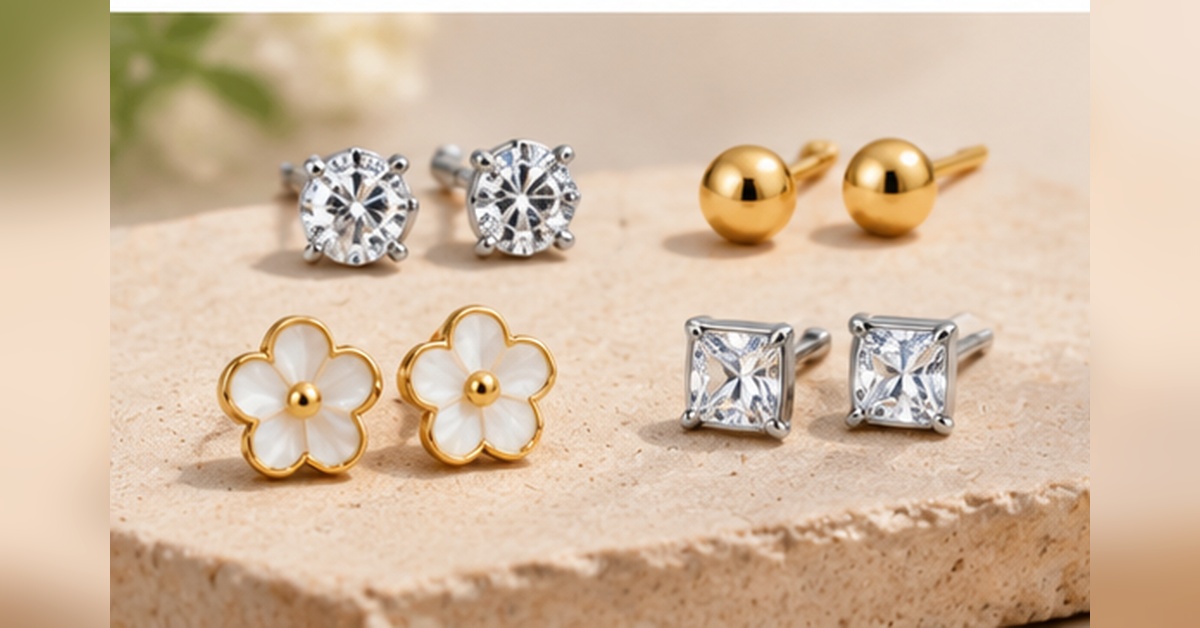
They usually feature a small decorative front and a post that passes through the piercing.
Popular directions include:
-
Small round studs.
-
Geometric studs.
-
Crystal studs.
-
Minimalist flower designs.
-
Heart-shaped studs.
-
Simple metallic designs.
For retailers, minimalist studs can be a useful starting point when developing a sensitive-ear collection.
2. Stainless Steel Hoop Earrings
Hoop earrings remain a recognizable fashion category.
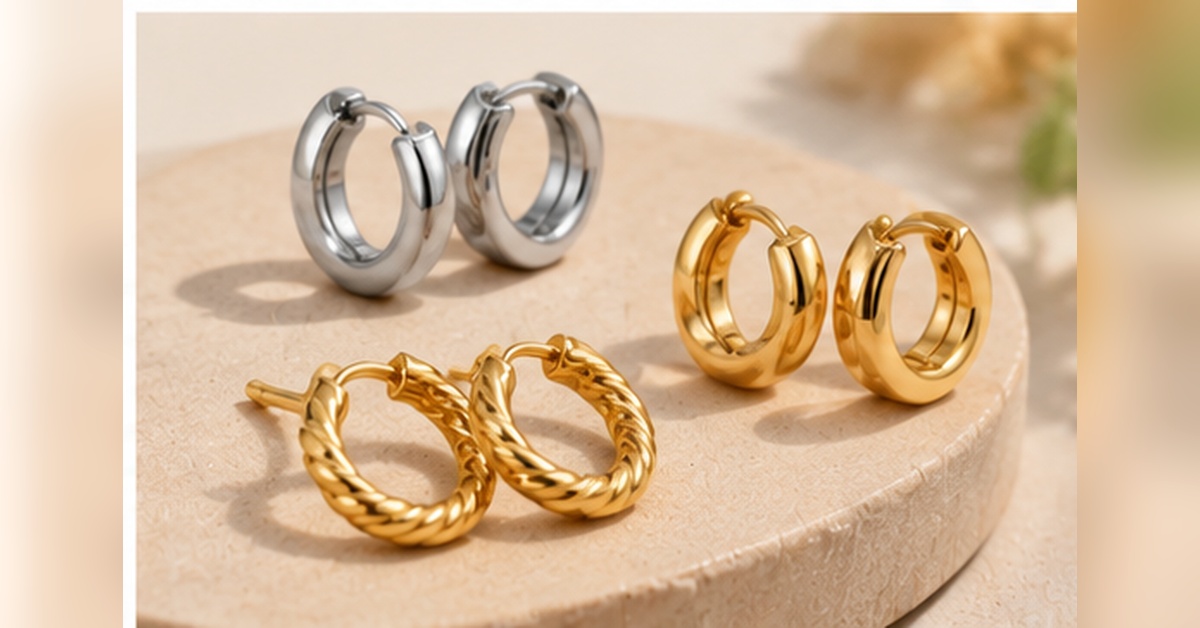
They are available in different sizes, thicknesses, and surface finishes.
Popular variations include:
-
Small everyday hoops.
-
Medium-sized classic hoops.
-
Chunky statement hoops.
-
Twisted hoop earrings.
-
Textured hoops.
-
Colorful enamel hoops.
LONCEEN offers different stainless steel earring styles, including gold-plated braided hoops and colorful enamel designs.
These products provide opportunities to combine fashion variety with clearly documented material specifications.
3. Huggie Earrings
Huggie earrings are small hoops designed to sit relatively close to the earlobe.
Their compact appearance makes them suitable for everyday styling and layered ear looks.
Potential styles include:
-
Plain metallic huggies.
-
Crystal huggies.
-
Gold-tone huggies.
-
Textured huggies.
-
Small decorative hoops.
For buyers, the material of the hinge, post, and closure should be reviewed along with the visible decorative surface.
4. Flat-Back Piercing Jewelry
Flat-back jewelry is an important category for retailers serving customers interested in multiple ear piercings.
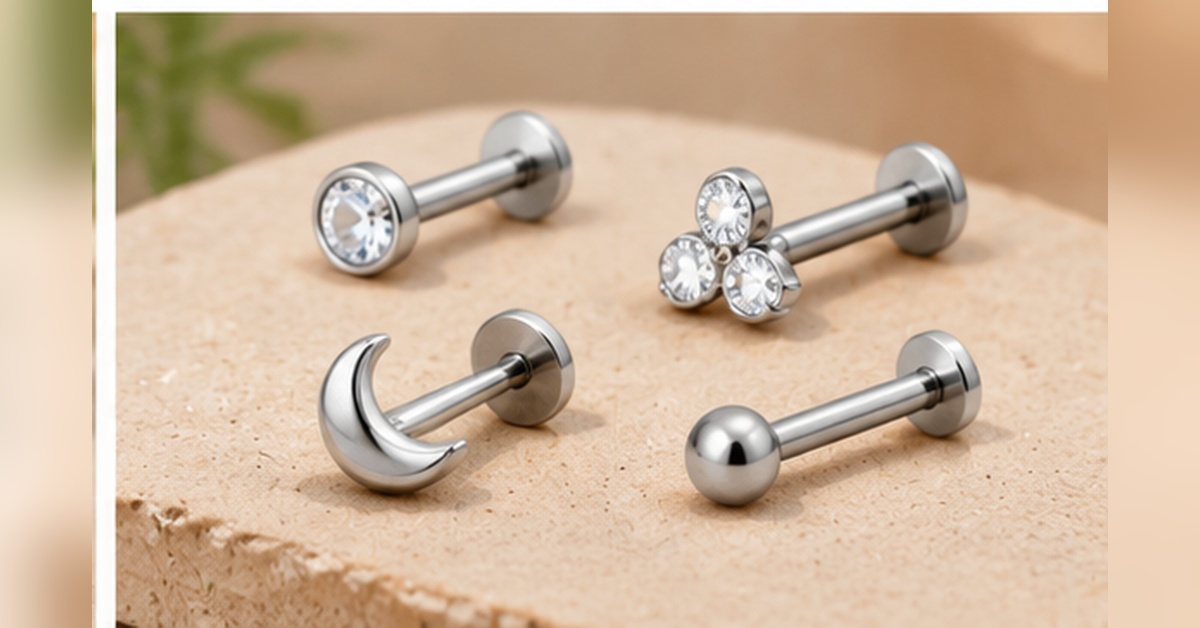
These designs generally use a flat backing rather than a traditional butterfly back.
Potential styles include:
-
Flat-back studs.
-
Decorative piercing tops.
-
Small gemstone designs.
-
Minimalist metallic pieces.
-
Specialized cartilage jewelry.
This category is particularly relevant to professional piercing studios and body jewelry wholesalers.
The exact post material, dimensions, threading system, and product grade should be confirmed before purchase.
5. Decorative Drop Earrings
Customers who prefer more noticeable accessories may choose drop earrings.
These designs can include decorative shapes, crystals, enamel details, and different metal finishes.
Retailers can offer sensitive-ear options without restricting their collections to minimalist designs.
However, buyers should pay attention to product weight and the material of the hooks or posts.
A decorative front made from one material may use a different metal component where it connects to the ear.
5. Which Customers Should Retailers Target?
Understanding the different customer groups helps retailers select products with more precise positioning.
Customers with Sensitive Ears
This group actively looks for earrings with clearly identified materials.
They may prefer titanium, selected stainless steel products with supporting test results, or verified precious-metal options.
Clear product specifications are particularly important when marketing to these shoppers.
Professional Piercing Studios
Piercing studios have more specialized purchasing requirements than general jewelry stores.
They may look for:
-
Clearly specified titanium grades.
-
Verified material documentation.
-
Appropriate post dimensions.
-
Consistent threading systems.
-
Reliable product specifications.
-
Designs suitable for different piercing locations.
For this customer group, appearance is only one part of the purchasing decision.
Material traceability and technical accuracy are equally important.
Fashion Boutiques
Fashion boutiques may want sensitive-ear options that fit their existing collections.
They can combine:
-
Minimalist studs.
-
Colorful hoops.
-
Gold-tone stainless steel earrings.
-
Decorative drop earrings.
-
Small everyday piercing styles.
This allows them to serve customers with different style preferences.
Online Jewelry Stores
Online retailers need product descriptions that answer material-related questions before customers place orders.
Useful information includes:
-
Exact base metal.
-
Post material.
-
Backing material.
-
Plating information.
-
Product dimensions.
-
Available documentation.
Clear product information can help reduce confusion and improve the shopping experience.
Jewelry Distributors and Wholesale Buyers
Distributors often need products that can be sold across several retail channels.
A collection combining titanium piercing jewelry and stainless steel fashion earrings can provide different product positions for different customer groups.
However, each product should have its own accurate specifications.
6. What Should International Buyers Know About Nickel Regulations?
For international jewelry businesses, material selection is also connected to product compliance.
Different markets may have different requirements, and buyers should understand the regulations applicable to their intended sales destinations.
European Union: REACH Nickel Restrictions
The European Union's REACH Regulation includes specific restrictions on nickel release.
For post assemblies inserted into pierced ears and other pierced body parts, the nickel-release rate must be below:
0.2 μg/cm²/week.
For articles intended to come into direct and prolonged contact with the skin, including earrings, the applicable limit is:
0.5 μg/cm²/week.
For coated articles, the coating must maintain the required nickel-release limit for at least two years of normal use.
These requirements are particularly important for businesses importing earrings into EU markets.
Retailers should ask suppliers for relevant test reports rather than assuming that a material name alone proves compliance.
United Kingdom
Businesses selling into the UK should also verify the applicable nickel restrictions and current product compliance requirements.
Do not assume that a product description written for one market automatically satisfies every destination's requirements.
United States
For the US market, retailers should focus on accurate material descriptions and avoid unsupported safety claims.
If a product is advertised as nickel-free, titanium, or suitable for sensitive ears, the supplier should be able to support that statement with appropriate product information.
For businesses selling internationally, maintaining clear material records is a practical way to support different customer and market requirements.
7. How Should Retailers Present Hypoallergenic Earrings Online?
Product presentation can make a significant difference when customers are comparing earrings.
A good product page should explain both the design and the material information.
Show the Earring Post Clearly
Customers often focus on the front of an earring, but the post is an important part of the purchasing decision.
Where appropriate, product photography should include a close-up of the post and backing.
This is particularly useful for piercing jewelry and stud earrings.
Separate Material and Plating Information
Avoid describing every gold-tone product as gold jewelry.
Instead, use clear descriptions such as:
-
316L stainless steel with gold plating.
-
304 stainless steel.
-
ASTM F136 titanium, where verified.
-
925 sterling silver.
The description should reflect the actual product specification.
Create a Dedicated Sensitive-Ear Collection
Online stores can make product discovery easier by creating a separate collection for earrings with documented material information.
Possible categories include:
-
Titanium Earrings.
-
Stainless Steel Earrings.
-
Sensitive-Ear Studs.
-
Hypoallergenic Hoop Earrings.
-
Titanium Piercing Jewelry.
Only products with appropriate supporting documentation should be included in collections that make specific low-allergy or compliance claims.
Include Material Information in Product Filters
Useful filters include:
-
Base Material.
-
Post Material.
-
Metal Finish.
-
Earring Style.
-
Piercing Type.
These details help customers find suitable products without relying entirely on broad marketing terms.
8. What Should Wholesale Buyers Ask Before Ordering?
Before adding hypoallergenic earrings to a retail collection, buyers should ask suppliers several specific questions.
1. What Is the Exact Material?
Request the full material specification instead of accepting general descriptions such as premium steel or medical metal.
2. What Material Is Used for the Post?
The decorative front and the post may use different materials.
Confirm the composition of both.
3. Is Nickel-Release Testing Available?
For relevant markets, ask for test reports showing whether the finished product meets applicable nickel-release requirements.
4. Is the Product Coated?
If the earring uses gold plating or another coating, ask about the underlying material and the coating's relevant performance information.
5. Is There a Material Certificate?
For titanium products, ask whether the supplier can provide documentation identifying the exact grade.
Do not use terms such as implant-grade or ASTM F136 unless the supporting documentation is available.
6. Can Different Earring Styles Be Combined?
Retailers often need several styles to create a complete collection.
Confirm the available designs, product variations, stock information, and purchasing arrangements.
By asking these questions before ordering, wholesale buyers can make more informed decisions and prepare more accurate product listings.
Frequently Asked Questions
1. What are hypoallergenic earrings?
Hypoallergenic earrings are marketed as being less likely to cause allergic reactions. The term alone does not guarantee that a product will be suitable for every customer. Actual material composition and nickel-release performance are important considerations.
2. What is the best material for sensitive ears?
Titanium, certain stainless steel products with verified nickel-release performance, and suitable precious-metal alloys are common options to investigate. The best choice depends on the exact material, product construction, and individual sensitivity.
3. Are 316L stainless steel earrings nickel-free?
No. 316L stainless steel contains nickel as part of its alloy composition. Its suitability for a particular market or customer depends on the finished product and relevant nickel-release testing.
4. Are titanium earrings suitable for sensitive ears?
Titanium is widely used in specialized body jewelry and is often selected by customers looking for sensitive-ear options. Buyers should confirm the exact titanium grade and supporting documentation.
5. What is the difference between titanium earrings and stainless steel earrings?
Titanium and stainless steel have different alloy compositions, weights, and product applications. Titanium is commonly used in specialized piercing jewelry, while stainless steel is widely used in fashion earrings and everyday accessories.
6. What are nickel-free earrings?
Nickel-free earrings are products that are claimed to contain no nickel. Buyers should request evidence supporting this claim and should not confuse it with compliance based on a nickel-release limit.
7. Can gold-plated earrings be hypoallergenic?
The answer depends on the base metal, the post and backing materials, the coating, and the finished product's nickel-release performance. Gold plating alone does not establish that an earring is suitable for sensitive ears.
8. What should retailers look for when buying hypoallergenic earrings wholesale?
Retailers should check the base material, post and backing composition, plating, nickel-release testing, product dimensions, and relevant market requirements. Clear documentation is particularly important when selling into international markets.
Conclusion: Choose Earrings with Clear Material Specifications
Hypoallergenic earrings represent an important opportunity for retailers who want to serve customers with different material preferences and purchasing requirements.
From titanium piercing jewelry and stainless steel studs to classic hoops, huggies, and decorative drop earrings, there are many ways to build a versatile collection.
However, the most important factor is not simply whether a product carries a hypoallergenic label.
Wholesale buyers should understand the actual material composition, identify the parts that come into direct contact with the skin, and request relevant documentation before making specific product claims.
At LONCEEN, our jewelry range includes stainless steel earrings, titanium-related piercing jewelry, and different fashion accessory designs for international wholesale customers.
Explore our Stainless Steel Earring Collection and Wholesale Jewelry Catalog to discover more styles for your retail assortment.
Choose attractive designs, understand the materials, and give customers more confidence when selecting their everyday earrings.