

A sterling silver jewelry manufacturer works with a metal that behaves very differently from stainless steel or tungsten. Silver is soft, takes a high polish, carries a genuine precious-metal value, and—critically—tarnishes. That last property is not a defect; it is a characteristic that shapes how silver is specified, finished, sold, and cared for. A manufacturer that understands tarnish control and plating is worth far more than one that only quotes a price per gram.
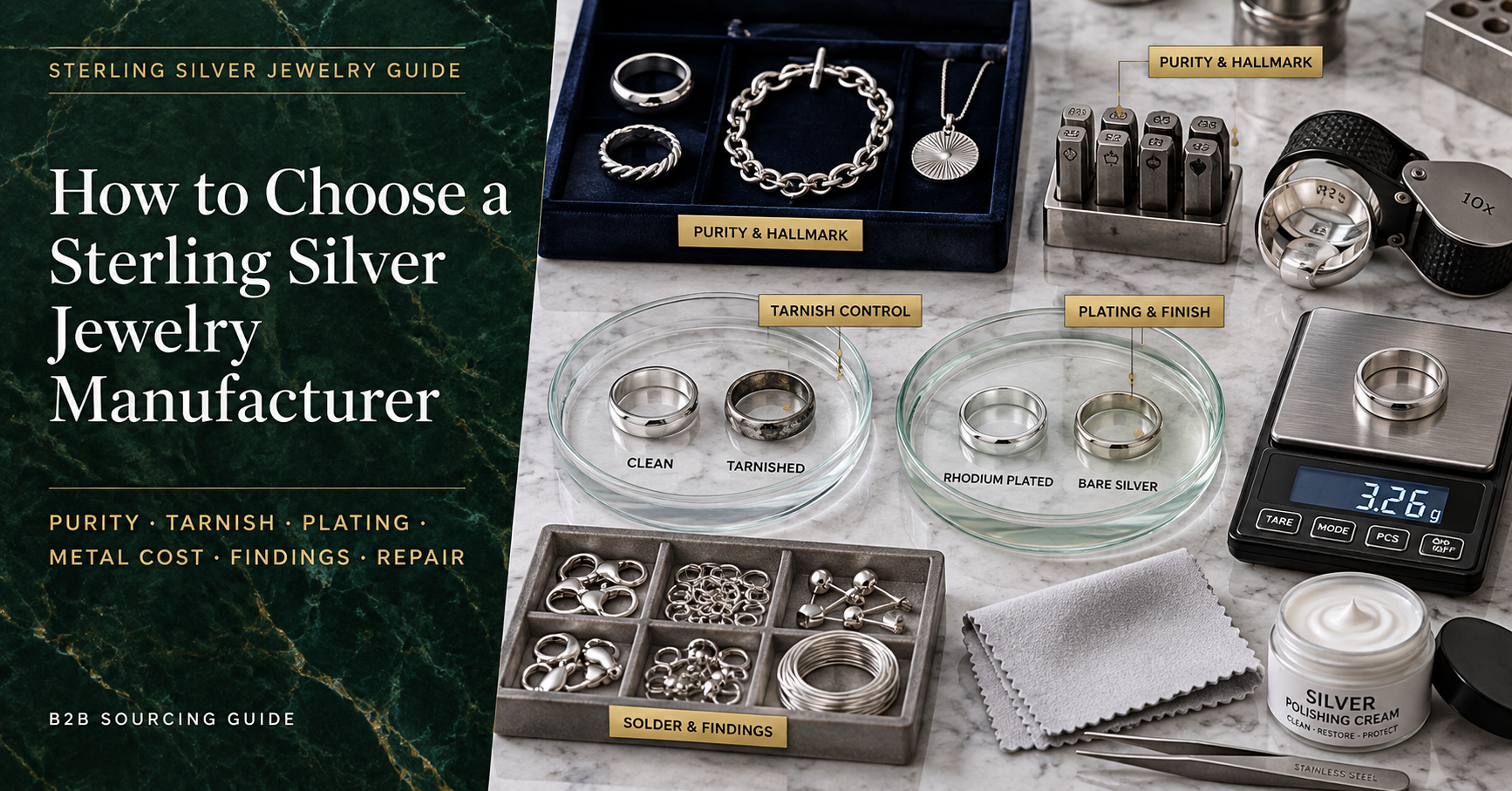
This guide focuses on the metal itself: how purity and hallmarking should be confirmed, why tarnish happens and how it is managed, how plating and anti-tarnish treatments work, how metal cost affects pricing, and what to check in solder and findings. It does not cover supplier screening, fulfillment, or brand packaging; those belong to other sourcing discussions.
What Makes Sterling Silver Different
Silver is a precious metal, and that single fact drives most of its sourcing considerations.
- it is softer than steel or tungsten and more prone to scratching and denting
- it tarnishes over time, especially with sulfur, humidity, and skin chemistry
- it carries a metal value that fluctuates with the market
- it can be re-polished, re-plated, and restored, unlike harder modern materials
- finish and plating determine how long it stays bright
- it is often sold on the strength of its precious-metal identity
These traits mean silver sourcing is a question of purity, finish control, and expectation-setting rather than raw hardness. A beautiful sample tells you little about how the item will look after six months on a customer's dresser.
1. Confirm Purity and Hallmarking
Purity is the foundation of every claim about silver.
Establish:
- whether the metal is sterling silver (92.5% silver) or another standard
- how purity is verified and documented
- whether the item is hallmarked or stamped, and to what standard
- what marking is required in your destination market
- whether the stated purity matches what is actually produced
Hallmarking rules differ significantly by market, and some destinations require independent assay for certain items. A manufacturer that can state its standard clearly and mark consistently is far easier to hold to account than one that simply says "real silver."
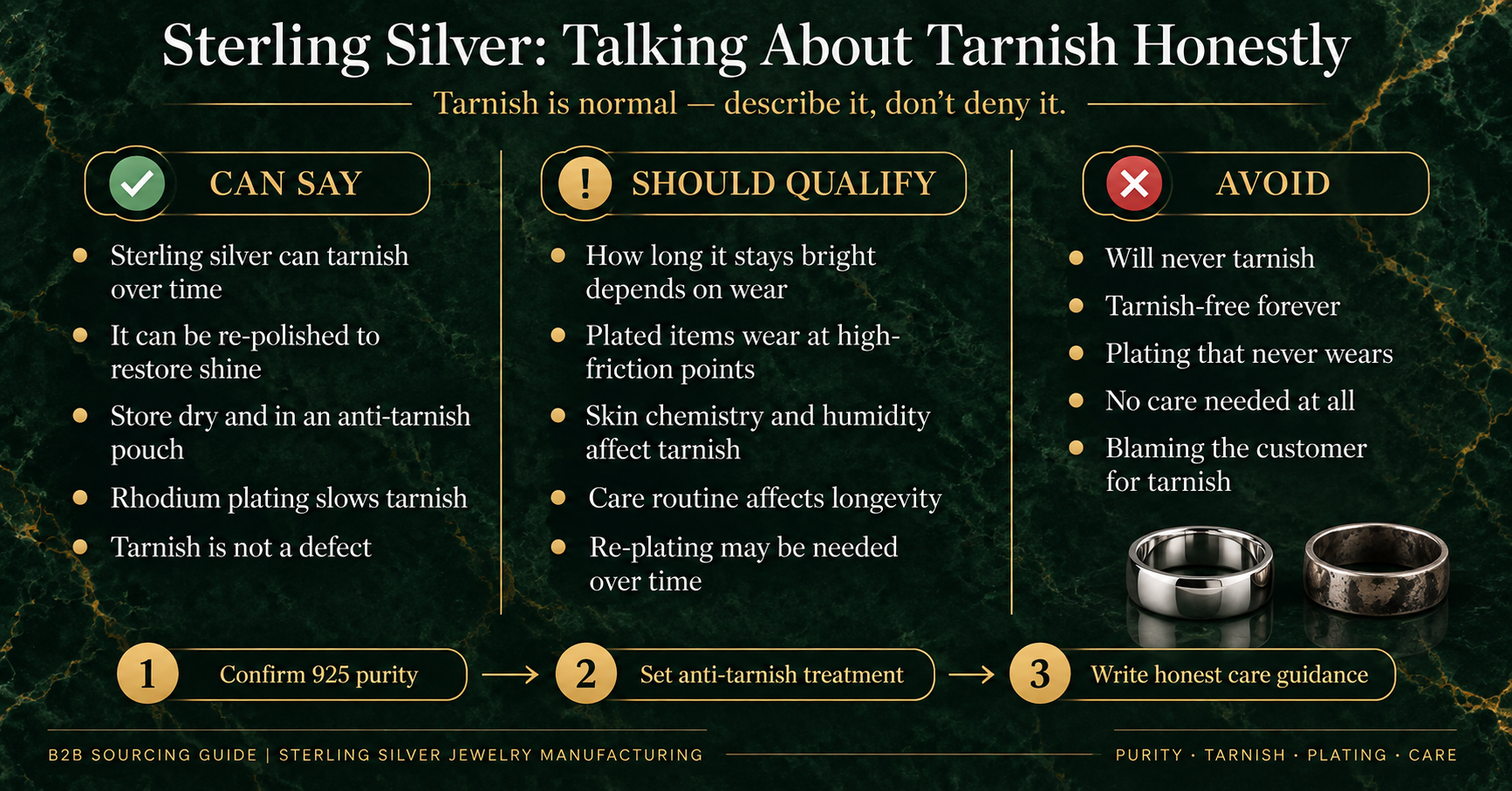
2. Understand Tarnish and Anti-Tarnish Treatment
Tarnish is the defining characteristic of silver, and how a manufacturer handles it directly affects the customer experience.
Clarify:
- how the manufacturer controls tarnish before shipping
- whether an anti-tarnish treatment or coating is applied
- how the item is packaged to slow tarnish in transit and storage
- what the manufacturer's guidance is for tarnish prevention
- how quickly the item is expected to tarnish under normal conditions
Tarnish is not a reason to avoid silver, but it is a reason to set expectations. A supplier who treats anti-tarnish protection as part of the product, rather than an afterthought, reduces complaints significantly.
 3. Verify Rhodium and Other Plating
Many sterling silver items are plated—most commonly with rhodium for a bright white finish, or with gold for a two-tone look. Plating changes both appearance and care needs.
Confirm:
- whether the item is plated, and with what
- how thick the plating is expected to be
- how the plating is expected to wear over time
- whether the plating is decorative or protective
- how re-plating would be handled later
Plating is often the part that fails first on a silver item, so the process matters as much as the color. Rhodium gives a bright, tarnish-resistant surface but wears with friction; gold plating on silver adds warmth but introduces its own wear characteristics. Positioning should reflect the actual finish, not just the look on arrival.
4. Understand Metal Cost and Pricing Structure
Silver pricing is different from stainless or tungsten because the raw metal has a market value that moves. Understanding how a manufacturer prices helps you compare quotes fairly.
Ask:
- whether pricing is based on weight plus labor, or a flat piece price
- how the manufacturer handles metal price fluctuation
- what the weight of the item is expected to be
- whether the quoted price reflects current metal cost
- how a price change would be communicated for repeat orders
Two quotes that look similar may rest on very different weight assumptions or metal-cost bases. A manufacturer that explains its pricing structure is easier to compare and less likely to surprise you when metal prices move.
5. Check Solder and Findings Quality
On silver jewelry, the small components—solder joints, clasps, jump rings, posts—are frequent failure points, and their quality is easy to overlook.
Confirm:
- what solder is used, and whether it matches the metal standard
- how joints are finished and checked
- what findings are used for clasps, posts, and connectors
- whether findings are the same standard as the main body
- how finished pieces are checked for security and strength
A piece can be sterling silver in the body and still fail at a weak solder joint or a cheap clasp. Findings quality is where many silver returns begin.
6. Confirm Weight and Feel
Silver is sold partly on the strength of its precious-metal identity, and weight is part of how customers perceive value.
Establish:
- the expected weight range for the item
- whether weight is consistent between pieces and between orders
- how hollow or lightweight construction is handled, if used
- whether the weight suits the price positioning
- how the manufacturer controls weight in production
An unexpectedly light piece can feel "cheap" to a customer who expected the heft of precious metal. Weight consistency is part of quality in this category, not a minor detail.
7. Value the Repairability Silver Offers
One genuine advantage of silver is that it can be restored. Unlike tungsten, which cannot be resized or re-polished, silver can be re-polished, re-plated, and in many cases repaired. This is a selling point worth building into your service model.
Consider:
- whether the manufacturer offers re-polishing or re-plating services
- how repairs or resizing would be handled
- whether the item can be restored rather than replaced
- how you would present this longevity to customers
- what the cost and turnaround of restoration would be
For customers who want a piece they can keep and maintain, this restorability is a real differentiator—and it is something stainless and tungsten cannot offer in the same way.
8. Watch for Silver-Specific Risk Signals
Some concerns are particular to sterling silver.
Watch for:
- vague purity claims without marking or documentation
- no anti-tarnish treatment or packaging
- plating with no information on thickness or wear
- pricing that ignores metal weight or market cost
- cheap findings or inconsistent solder
- pieces noticeably lighter than expected
- care guidance that does not mention tarnish
Each of these signals deserves direct clarification before an order is placed.
A Sterling Silver Manufacturer Evaluation Checklist
Use this to compare manufacturers on purity, finish, and honest care guidance.
A manufacturer that addresses all seven gives you a far more dependable basis for a silver range than one that only shows a bright sample.
Questions Worth Asking a Sterling Silver Manufacturer
- Is this 925 sterling silver, and how is it marked and documented?
- What anti-tarnish treatment and packaging do you use?
- Is the item plated, with what, and how thick?
- How is your pricing structured relative to metal weight and market cost?
- What solder and findings do you use, and how are joints checked?
- What weight should I expect, and how consistent is it between orders?
- Do you offer re-polishing or re-plating after sale?
Specific, documented answers indicate a manufacturer that treats silver as a precious metal with real care requirements, not just a bright material.
Conclusion
Choosing a sterling silver jewelry manufacturer is a decision about purity, finish, and expectation-setting. Silver's precious identity is a genuine advantage, but so is its tendency to tarnish, its softness, and its sensitivity to metal cost.
Focus on purity and hallmarking, tarnish control, plating quality, pricing structure, solder and findings, weight consistency, and the repairability that makes silver distinctive. Confirming these before ordering protects both the customer experience and the claims you make.
If you are building a silver range, settle your purity standard and anti-tarnish approach first, then write care guidance that tells customers honestly how to keep the piece bright. In this category, managing tarnish expectations is worth more than a perfect sample photo.