

Introduction
Consumers today want jewelry that looks beautiful but also fits into their everyday routines. From busy workdays and gym sessions to travel, outdoor activities, and daily commuting, many shoppers prefer accessories that require less maintenance and can handle regular wear.
This is one reason why waterproof jewelry is attracting increasing attention in the fashion accessories market.
According to the Trends Database used in LONCEEN's market research, "Waterproof Jewelry" has a search volume indicator of 60.5K, with growth of 1,550%. Related searches also show growing interest in non-tarnish and hypoallergenic jewelry.
For jewelry retailers, this trend represents more than a new product description. It reflects a change in what customers expect from everyday accessories. They want attractive designs, reliable materials, and clear information about how jewelry performs under different conditions.
However, not every piece of stainless steel jewelry is automatically waterproof, and not every gold-plated design offers the same level of resistance to water, sweat, or daily wear.
In this guide, we explain what waterproof jewelry really means, which materials and finishes retailers should understand, what product details deserve attention, and how to build a more practical everyday jewelry collection.
1. Why Is Waterproof Jewelry Becoming More Important?
Traditional fashion jewelry is often purchased primarily for its appearance. However, everyday consumers are increasingly considering how accessories perform after repeated use.
A beautiful necklace may attract attention in a product photograph, but customers also want to know whether its color will remain attractive after regular wear.
This has created more interest in several related product features.
Demand for Low-Maintenance Jewelry
Customers with busy lifestyles may not want to remove their jewelry every time they wash their hands, exercise, or go outdoors.
They often prefer accessories that require less frequent polishing and careful handling.
This creates opportunities for jewelry made with suitable stainless steel materials and appropriately designed protective finishes.
More Interest in Everyday Durability
Consumers are increasingly looking for products that can transition between different activities.
For example, a customer may wear the same bracelet to work, while shopping, and during a weekend trip.
Rather than purchasing separate accessories for every occasion, some shoppers prefer versatile everyday pieces.
Growing Awareness of Material Performance
Searches for waterproof jewelry, non-tarnish jewelry, and hypoallergenic jewelry reflect different consumer concerns.
Although these terms are related, they describe different product characteristics.
Retailers who understand the differences can create more accurate product descriptions and answer customer questions more confidently.
A Growing International Market
Fortune Business Insights' October 2026 industry report estimates that the global waterproof jewelry market will reach USD 2.12 billion in 2026, with a projected value of USD 4.60 billion by 2034.
Its regional analysis identifies Asia Pacific as the largest market in 2025, while North America and Europe also represent significant market opportunities.
These forecasts suggest that everyday-performance jewelry is a category worth monitoring across international retail markets.
2. What Does Waterproof Jewelry Actually Mean?
One of the most important things retailers should understand is that waterproof, water-resistant, and tarnish-resistant do not mean exactly the same thing.
These terms are sometimes used interchangeably in jewelry marketing, but they describe different expectations.
Waterproof Jewelry
Waterproof jewelry is generally marketed as jewelry designed to tolerate exposure to water under specified conditions.
However, retailers should not assume that every product described as waterproof can withstand unlimited exposure to water, chemicals, heat, or prolonged immersion.
The actual performance depends on the base material, surface treatment, product construction, and the conditions under which the item was tested.
For this reason, a product-level performance claim should be supported by relevant evidence.
Water-Resistant Jewelry
Water-resistant jewelry is designed to tolerate certain levels of water exposure.
Its performance may depend on factors such as:
-
Duration of exposure.
-
Water temperature.
-
Salt content.
-
Surface coating.
-
Product construction.
-
Frequency of use.
A product that tolerates occasional splashes may not necessarily be suitable for swimming or showering.
Retailers should communicate the intended usage conditions rather than making broader promises.
Non-Tarnish Jewelry
Non-tarnish jewelry refers to products designed to resist visible discoloration or surface changes.
The result depends on the material and protective finish.
For example, stainless steel generally offers good corrosion resistance, while a decorative gold-colored surface may have different wear characteristics.
A non-tarnish claim should therefore be evaluated separately from a waterproof claim.
Hypoallergenic Jewelry
Hypoallergenic jewelry is intended to reduce the likelihood of allergic reactions.
However, this characteristic is not automatically guaranteed by a waterproof finish or a stainless steel product description.
The exact alloy composition, metal components, plating, and nickel release can all matter.
Retailers should request appropriate product information before making hypoallergenic claims.
Understanding these distinctions is essential when developing a waterproof jewelry collection that customers can trust.
3. Which Materials Are Commonly Used in Waterproof Jewelry?
Material selection is one of the main factors influencing the performance and positioning of everyday jewelry.
Different metals offer different properties, so retailers should understand the materials used in each product.
Stainless Steel Jewelry
Stainless steel is widely used in fashion jewelry because of its strength, corrosion resistance, and versatility.
It can be used for necklaces, bracelets, rings, earrings, and other accessories.
Common stainless steel jewelry designs include:
-
Minimalist necklaces.
-
Open-ended bangles.
-
Chain bracelets.
-
Everyday rings.
-
Hoop earrings.
-
Pendant necklaces.
Stainless steel also provides a suitable base for different surface finishes, including gold-colored and silver-colored designs.
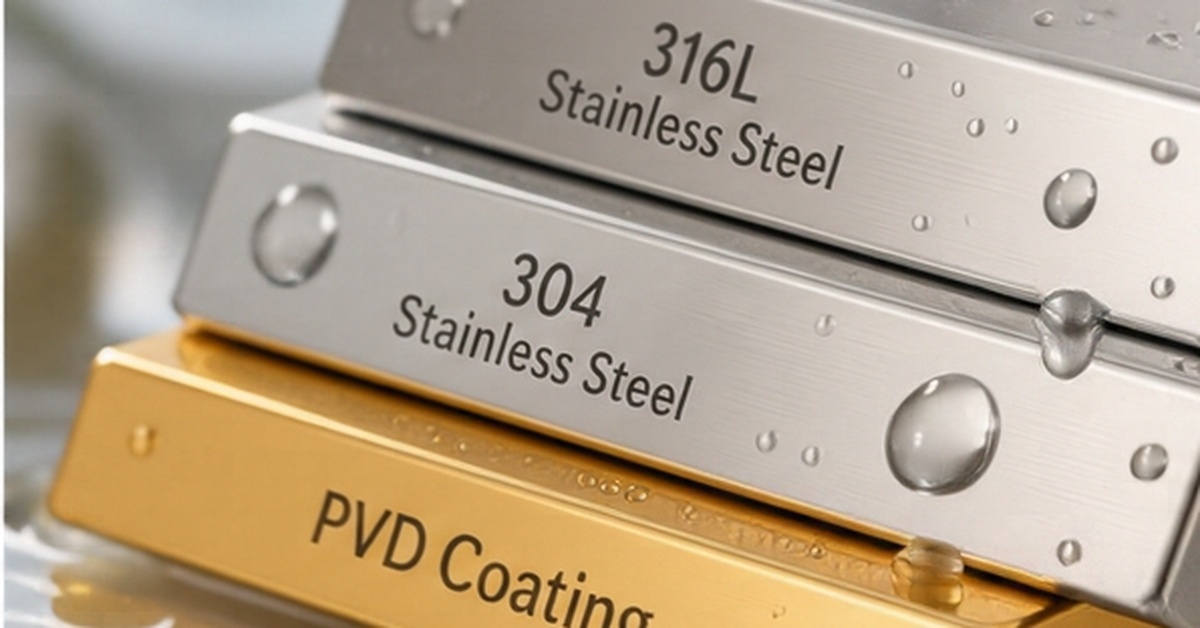
LONCEEN's product range includes 304 stainless steel and selected 316L stainless steel products.
However, buyers should confirm the exact steel grade for each product rather than assuming all stainless steel jewelry uses the same material.
304 Stainless Steel
304 stainless steel is commonly used in jewelry and other consumer products.
It offers useful corrosion resistance and can support a wide range of jewelry designs.
It is suitable for many everyday accessories, although its actual performance depends on the surrounding environment and the complete product construction.
316L Stainless Steel
316L stainless steel is another material used in jewelry applications.
Its composition includes molybdenum, which contributes to corrosion resistance.
Retailers may encounter 316L stainless steel in products positioned for frequent wear.
However, the material grade alone does not guarantee that the complete jewelry item is waterproof or hypoallergenic.
Surface treatments, metal components, and product-specific testing remain important.
Titanium Jewelry
Titanium is another material worth considering for everyday jewelry.
It is valued for its lightweight properties and corrosion resistance.
Some retailers include titanium products in collections targeting customers who prefer lightweight accessories or have concerns about certain metal sensitivities.
The exact grade and component composition should still be verified.
Sterling Silver Jewelry
Sterling silver is a popular jewelry material, but it behaves differently from stainless steel.
It contains 92.5% silver and is commonly marked 925.
Silver can develop tarnish through environmental exposure and chemical reactions, so it should not automatically be marketed as waterproof or tarnish-proof.
For retailers, this makes it important to distinguish between stainless steel and sterling silver when developing product collections.
4. How Does PVD Coating Affect Jewelry Performance?
PVD, or Physical Vapor Deposition, is a surface coating technology used in various jewelry applications.
It can be used to create gold-colored and other decorative finishes on suitable metal surfaces.
Understanding this technology helps retailers evaluate products beyond their appearance.
What Is PVD Coating?
PVD is a coating process in which material is deposited onto a surface under controlled vacuum conditions.
In jewelry, it can create a decorative finish and improve certain surface-performance characteristics.
Its application can be particularly relevant for stainless steel jewelry.
Why Do Retailers Pay Attention to PVD?
PVD-coated jewelry is often considered when retailers want to offer products with attractive surface finishes and improved resistance to everyday wear.
Potential benefits include:
-
Consistent decorative finishes.
-
Different metallic color options.
-
Improved surface durability when properly applied.
-
Compatibility with selected stainless steel designs.
-
Opportunities for gold-tone fashion collections.
However, PVD does not automatically make every product completely waterproof or scratch-proof.
The result depends on the substrate, coating system, application quality, product geometry, and actual usage conditions.
PVD Gold Finish vs. Traditional Gold Plating
Retailers may encounter both PVD-coated and traditionally plated jewelry.
These are different surface-treatment approaches.
Traditional electroplating uses an electrochemical process to deposit a metal layer onto a surface.
PVD uses a physical vapor deposition process.
The two approaches should not be described as identical, and neither should be assigned a guaranteed lifespan without supporting product information.
The US Federal Trade Commission explains that gold plating eventually wears away depending on how jewelry is worn and the thickness of the gold layer.
For this reason, retailers should request clear information about the finish rather than relying only on a product's gold-colored appearance.
5. What Parts of Waterproof Jewelry Should Buyers Pay Attention To?
A jewelry product is more than its main metal material.
Its overall performance can also depend on smaller components and connection points.
This is particularly important for necklaces, bracelets, rings, and earrings that customers wear frequently.
Clasps and Closures
Clasps are frequently handled and may experience repeated friction.
For necklaces and bracelets, buyers should examine:
-
Clasp material.
-
Spring mechanism.
-
Connecting rings.
-
Surface finish.
-
Ease of opening and closing.
A durable main chain does not automatically mean that every component has the same performance.
Soldered and Connected Areas
Connection points can experience repeated movement and mechanical stress.
These areas deserve attention when evaluating everyday jewelry.
Retailers should check whether the product structure is appropriate for its intended use.
Stone Settings and Decorative Elements
Some jewelry products contain crystals, zircon, pearls, enamel, or other decorative components.
The performance of these elements may differ from the metal base.
For example, adhesive-based decorative elements may require different care from mechanically secured stones.
A stainless steel setting should not be treated as proof that every decorative component is suitable for prolonged water exposure.
Hinges and Adjustable Structures
Open-ended bangles, adjustable rings, and hinged jewelry contain moving or flexible sections.
These designs should be assessed according to their construction and intended usage.
A well-finished outer surface alone does not establish the performance of the complete product.
6. How Can Retailers Verify Waterproof Jewelry Claims?
This is one of the most important considerations for B2B buyers.
A product description may use terms such as waterproof, non-tarnish, or sweat-resistant, but retailers need to understand what those claims actually mean.
The following checks can help make product evaluation more reliable.
Confirm the Exact Material
Ask for the precise base material and grade.
For example:
-
304 stainless steel.
-
316L stainless steel.
-
Titanium.
-
925 sterling silver.
-
Other metal alloys.
Do not rely on a general description such as stainless steel if the exact material specification is important to your market.
Confirm the Surface Finish
For gold-colored jewelry, identify whether the finish is PVD-coated, electroplated, or produced through another process.
Also clarify which parts of the product receive the treatment.
A decorative finish applied to the main body does not necessarily mean every component has identical surface protection.
Request Product-Specific Test Information
For buyers considering waterproof jewelry for their retail collections, useful questions include:
-
Has the product undergone water exposure testing?
-
Has artificial sweat testing been performed?
-
Is there salt-spray or corrosion-resistance information?
-
Has the coating been evaluated for abrasion?
-
Are the test results linked to the exact product or material system?
-
What conditions and duration were used during testing?
Different tests measure different characteristics.
A salt-spray result, for example, should not automatically be interpreted as proof that a product can be worn while swimming.
Check Skin-Contact Compliance
For retailers selling in Europe, nickel release is particularly important.
Under the EU REACH Regulation, nickel release is restricted for jewelry components that come into direct and prolonged contact with the skin.
The regulation specifies a lower release limit for piercing posts and a separate limit for other prolonged skin-contact items such as necklaces, bracelets, and rings.
Retailers should request suitable compliance documentation rather than assuming that a product is compliant simply because it is made from stainless steel.
Evaluate Real Product Samples
Product photographs cannot demonstrate all aspects of performance.
Retailers should examine actual samples and assess:
-
Surface appearance.
-
Clasp function.
-
Component connections.
-
Coating consistency.
-
Comfort during wear.
-
Changes after the recommended exposure conditions.
This helps retailers understand the actual product rather than relying exclusively on marketing descriptions.
7. Which Customers Are Most Interested in Waterproof Jewelry?
Waterproof jewelry can serve different customer groups because the demand is related to lifestyle as well as appearance.
Understanding these groups helps retailers choose more relevant product categories.
Everyday Jewelry Customers
These customers prefer accessories that fit into their normal routines.
They may look for:
-
Minimalist necklaces.
-
Simple bangles.
-
Everyday rings.
-
Small hoop earrings.
-
Versatile chain bracelets.
The main appeal is the combination of attractive styling and lower-maintenance care.
Active Lifestyle Customers
Customers who exercise, commute, or spend considerable time outdoors may be interested in jewelry designed for frequent wear.
Suitable product directions can include:
-
Simple stainless steel bracelets.
-
Minimalist necklaces.
-
Lightweight earrings.
-
Uncomplicated rings.
Retailers should clearly explain the tested usage conditions instead of promising unlimited water exposure.
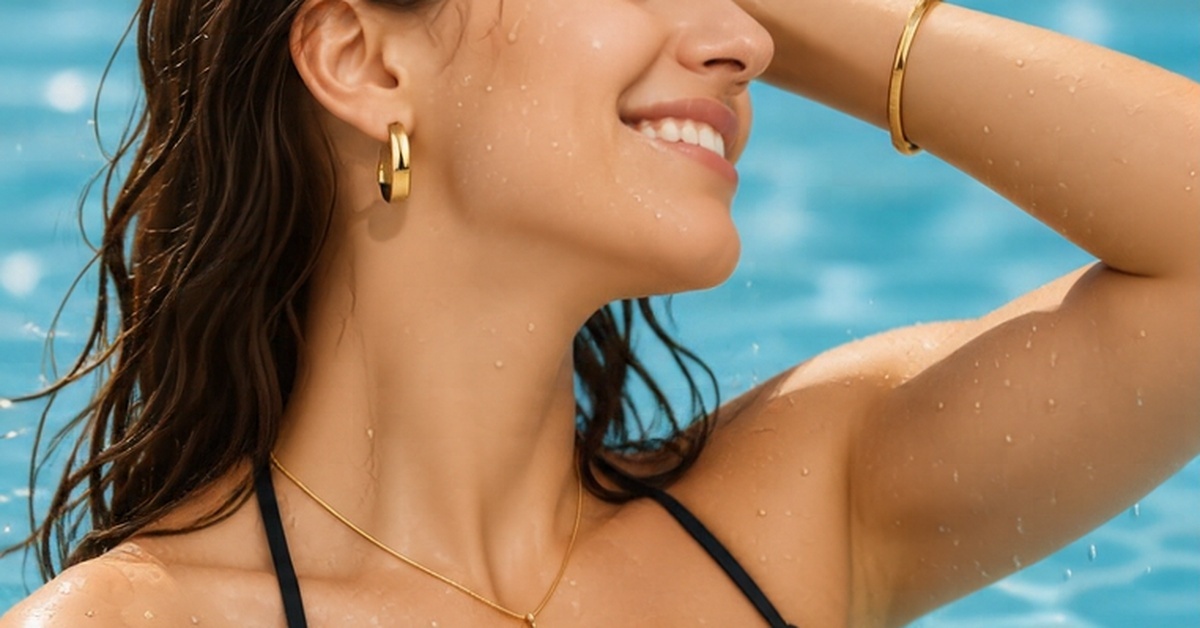
Travel and Resort Customers
Travelers often prefer versatile accessories that can be combined with different outfits.
Potential products include:
-
Gold-tone stainless steel necklaces.
-
Stackable bangles.
-
Simple pendant necklaces.
-
Everyday earrings.
These products can complement travel wardrobes and resort fashion collections.
Minimalist Fashion Customers
Minimalist customers often prefer jewelry that can be worn across multiple occasions.
Their preferred designs may include:
-
Simple geometric pendants.
-
Smooth stainless steel bangles.
-
Fine chain necklaces.
-
Minimalist open rings.
This customer group can be a good fit for collections emphasizing clean design and practical everyday use.
Men's and Unisex Jewelry Customers
Stainless steel jewelry also offers opportunities in men's and unisex collections.
Potential styles include:
-
Minimalist chain necklaces.
-
Plain metal bangles.
-
Simple rings.
-
Geometric pendants.
Retailers can create a more balanced collection by including products with different proportions and finishes.
8. Which Waterproof Jewelry Products Should Retailers Consider?
Rather than building an entire collection around one type of jewelry, retailers can explore several product categories.
The most suitable assortment depends on the store's customers and existing product range.
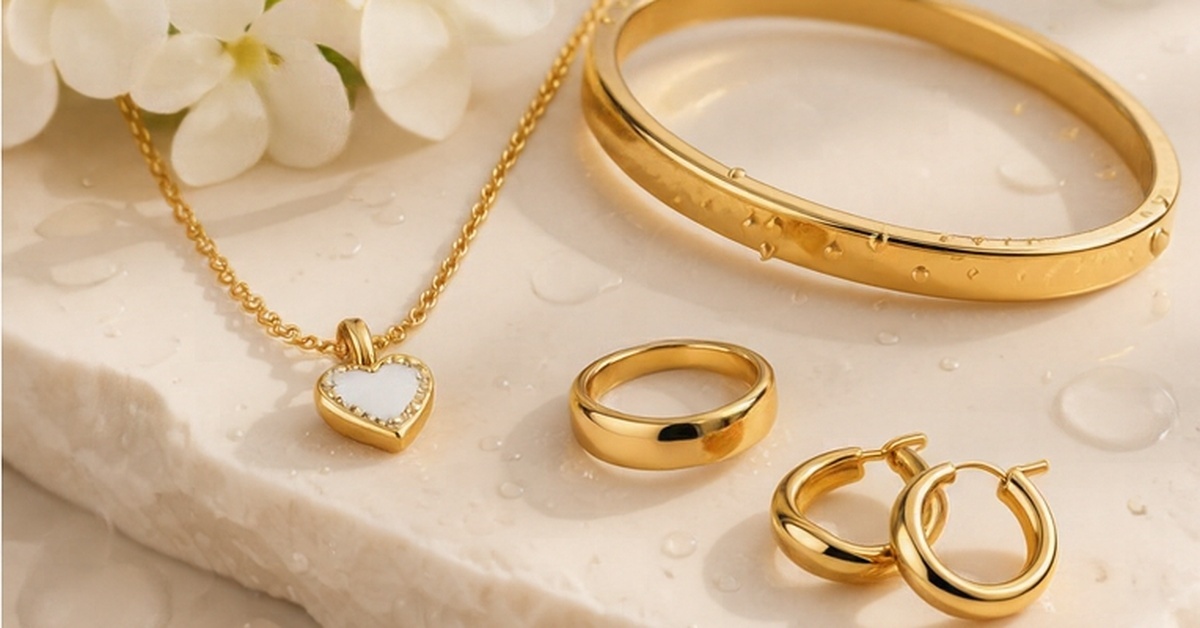
Stainless Steel Necklaces
Necklaces are useful everyday products because they can be worn individually or layered.
Retailers can consider:
-
Minimalist chain necklaces.
-
Heart pendant necklaces.
-
Floral pendant necklaces.
-
Geometric necklaces.
-
Pearl-accent stainless steel necklaces.
LONCEEN's stainless steel necklace category includes several of these design directions.
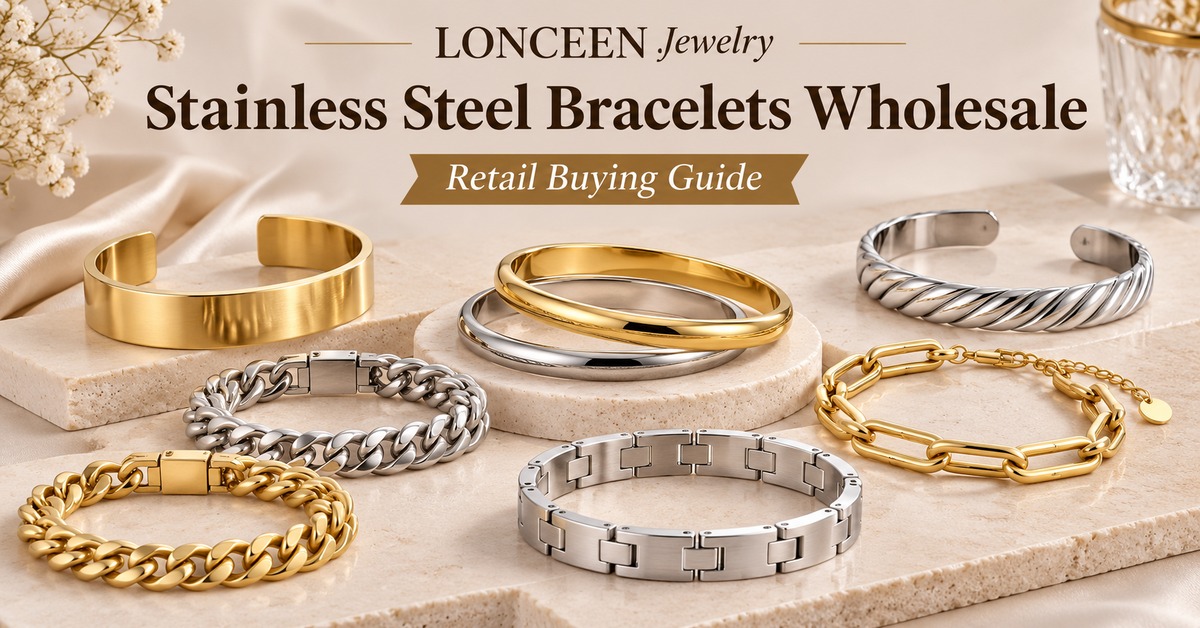
Stainless Steel Bracelets and Bangles
Bracelets and bangles are particularly suitable for customers who enjoy stacking accessories.
Potential styles include:
-
Open-ended bangles.
-
Minimalist solid-color bracelets.
-
Gold-tone stainless steel bracelets.
-
Silver-tone bangles.
-
Decorative charm bracelets.
LONCEEN's stainless steel bangle product is specifically listed with stainless steel material, 18K gold, silver and rose-gold plated options, and waterproof and non-tarnish product features.
Retailers should still confirm the relevant product specifications and testing conditions before using these claims in their own marketing.
Stainless Steel Rings
Rings are suitable for customers who want small everyday accessories.
Retailers can explore:
-
Adjustable rings.
-
Minimalist bands.
-
Open-ended designs.
-
Floral rings.
-
Geometric styles.
Ring sizing and comfort should be considered alongside material and finish.
Stainless Steel Earrings
Earrings provide another way to develop an everyday jewelry category.
Potential styles include:
-
Classic hoops.
-
Minimalist studs.
-
Small geometric earrings.
-
Decorative drop earrings.
-
Gold-tone stainless steel earrings.
For earrings, the composition of posts and other skin-contact components should be confirmed, especially when making hypoallergenic claims.
9. How Should Retailers Describe Waterproof Jewelry Online?
Accurate product descriptions can help customers understand what they are buying.
They can also help reduce misunderstandings about material performance.
Avoid Making Unlimited Waterproof Promises
A statement such as "Never changes color under any conditions" is difficult to justify without extensive supporting evidence.
Instead, retailers should explain the tested product characteristics and recommended usage conditions.
Separate Material Claims from Performance Claims
For example, these descriptions communicate different information:
-
316L stainless steel: identifies a material grade.
-
18K gold plated: describes a surface finish.
-
PVD coated: identifies a coating technology.
-
Water-resistant: describes a performance characteristic under specified conditions.
-
Non-tarnish: describes resistance to visible discoloration.
They should not be treated as interchangeable product specifications.
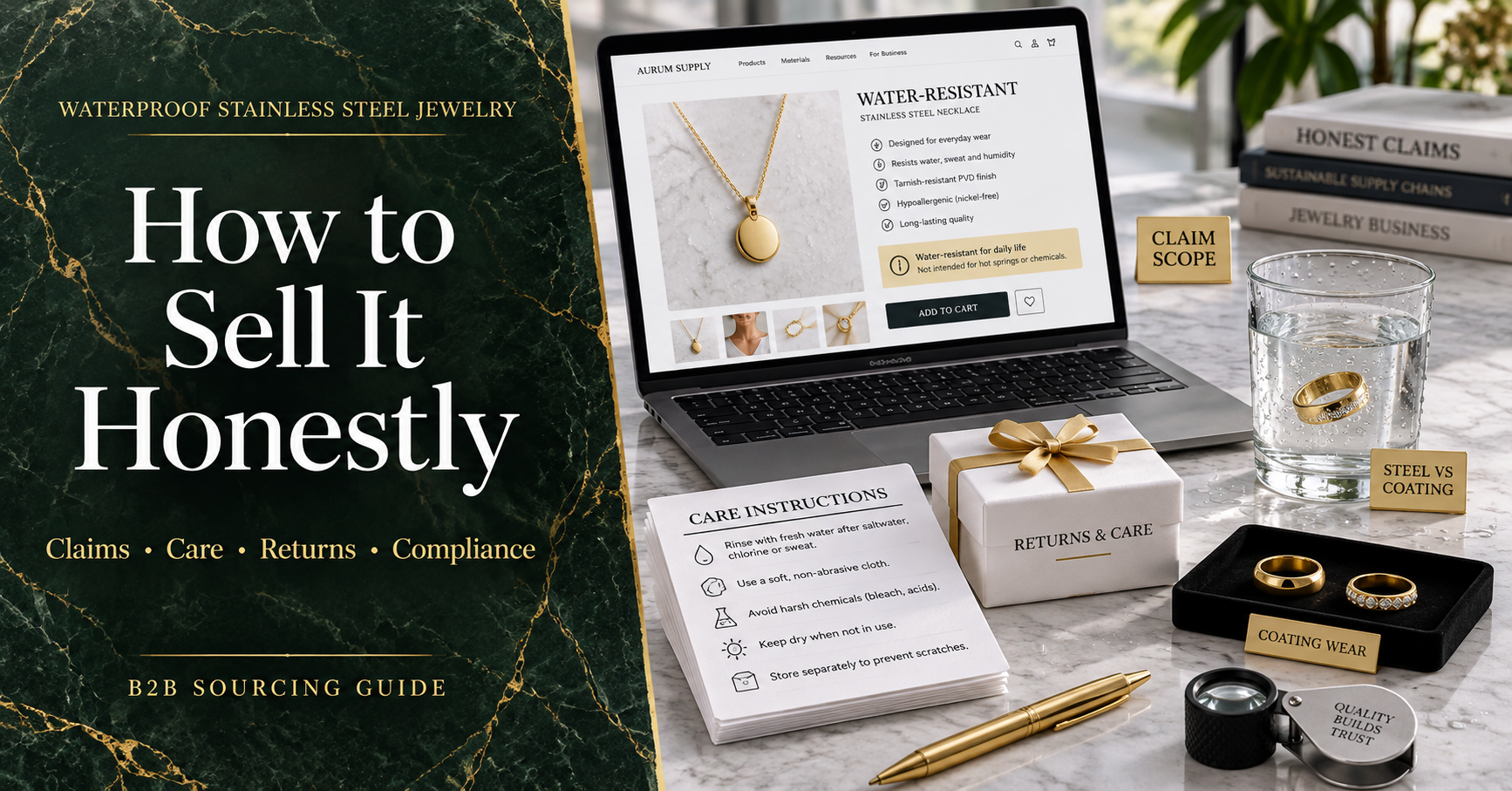
Provide Clear Care Instructions
Even when a product has water-resistant characteristics, retailers can provide practical care guidance.
For example:
-
Rinse off saltwater or chlorine exposure when appropriate.
-
Avoid prolonged contact with strong chemicals.
-
Dry jewelry after exposure to water.
-
Store pieces separately to reduce scratching.
-
Follow product-specific care instructions.
These recommendations help customers understand how to maintain their jewelry.
Use Product Photography to Support the Description
Online buyers cannot physically examine jewelry before purchasing.
Product photographs should therefore show:
-
The overall design.
-
Surface finish.
-
Clasp and connection details.
-
Product proportions.
-
The appearance when worn.
Clear photography combined with accurate specifications creates a more useful shopping experience.
Frequently Asked Questions
1. What is waterproof jewelry?
Waterproof jewelry refers to jewelry marketed for its ability to tolerate water exposure under specified conditions. Actual performance depends on the material, coating, product construction, and testing conditions.
2. Is all stainless steel jewelry waterproof?
No. Stainless steel generally offers good corrosion resistance, but the complete product may contain coatings, clasps, decorative components, or other materials with different performance characteristics.
3. Is 18K gold-plated stainless steel waterproof?
Not automatically. The stainless steel base and the gold-colored surface finish have different properties. The actual performance depends on the coating process, application, product construction, and relevant testing.
4. What is the difference between waterproof and non-tarnish jewelry?
Waterproof refers to resistance to water exposure under specified conditions. Non-tarnish describes resistance to visible discoloration or surface changes. A product may offer one characteristic without providing the same level of the other.
5. Is PVD-coated jewelry suitable for everyday wear?
PVD coating is used to create decorative surfaces and improve certain performance characteristics. Its suitability depends on the substrate, coating system, application, and intended usage.
6. Is hypoallergenic jewelry always waterproof?
No. Hypoallergenic and waterproof describe different product characteristics. Skin compatibility depends on material composition and metal release, while water resistance depends on the complete product and its surface treatment.
7. Can waterproof jewelry be worn in the shower or swimming pool?
That depends on the specific product and its verified performance. Retailers should not assume that a general waterproof description guarantees suitability for prolonged immersion, chlorine, or saltwater exposure.
8. What should jewelry retailers check before buying waterproof jewelry wholesale?
Retailers should verify the exact base material, coating method, component construction, product-specific test information, nickel-release documentation where relevant, and recommended care conditions.
Conclusion: Choose Everyday Jewelry with Performance in Mind
Waterproof jewelry is becoming an important product direction for businesses that want to offer attractive accessories suited to modern lifestyles.
From stainless steel necklaces and bangles to minimalist rings and everyday earrings, this category provides opportunities to serve customers who value both appearance and practical performance.
However, the most important consideration is understanding what each product can genuinely offer.
Retailers should look beyond marketing terms and examine the exact material, surface finish, product structure, and available test information before making performance claims.
At LONCEEN, our product range includes stainless steel necklaces, bangles, rings, and other fashion jewelry designs, with selected products featuring PVD coating and water-resistant product characteristics.
Explore the LONCEEN Stainless Steel Jewelry Collection to discover everyday jewelry options for your retail business.
Choose jewelry that combines thoughtful design, suitable materials, and performance information your customers can trust.