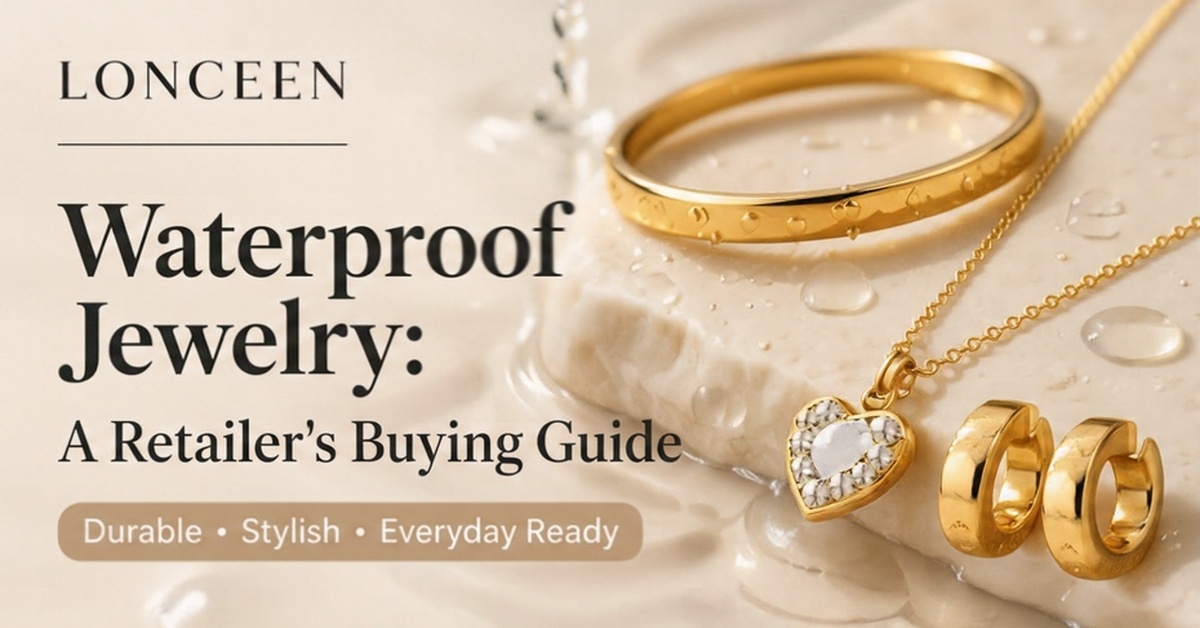


aterproof stainless steel jewelry is one of the easiest categories to sell and one of the easiest to get wrong. The metal itself resists corrosion, which makes a durability story natural. But the word “waterproof” is a strong claim, and in many markets it is regulated. The gap between a true material property and an unverified marketing phrase is where returns, complaints, and compliance problems begin.
This guide is about selling, not manufacturing. It explains what “waterproof” can and cannot mean for stainless jewelry, how to phrase claims you can support, how to present the category on a product page, and how to handle care and returns honestly. It assumes you already have a supplier and a grade confirmed; material-side verification belongs to a separate manufacturing discussion.
Why the Category Sells
Stainless steel earns its place in a jewelry range for reasons that are easy for customers to understand:
- it resists rust and corrosion in normal wear
- it needs little maintenance compared with sterling silver
- it suits daily-wear items such as chains, bracelets, and rings
- it supports an accessible price point
- “won’t tarnish, can get wet” is a simple, appealing message
These are genuine advantages. The problem is not the category; it is the shortcut of compressing a nuanced material property into a single absolute word.
1. Separate the Steel from the Coating
The most important distinction in this category is between the base metal and its finish. Buyers and sellers both confuse them, and that confusion causes most disputes.
Establish clearly:
- whether the item is bare stainless steel or coated
- what the coating is—gold plating, PVD, rose gold, black finish
- whether the water claim applies to the steel, the coating, or both
- how the coating is expected to behave with repeated water contact
An uncoated stainless item and a gold-plated stainless item are not the same product from a water standpoint. The steel may resist corrosion while the coating wears, fades, or peels. Any claim must say which part it describes.
2. Understand What “Waterproof” Should Mean
For jewelry, “waterproof” is rarely a formal rating the way it is for a watch. It is usually a marketing description of water resistance. That difference matters for how you use the word.
Clarify internally:
- whether you mean splash resistance, brief immersion, or prolonged contact
- whether the claim covers fresh water, salt water, and chlorinated water
- whether the claim is about the metal only or the whole finished item
- what level of exposure you are willing to stand behind in a returns scenario
The safer approach is to describe what the item can handle rather than to make an absolute promise. “Suitable for everyday wear, including handwashing” is a supportable statement; “waterproof forever” is not, especially for coated pieces.
3. Write Claims You Can Actually Support
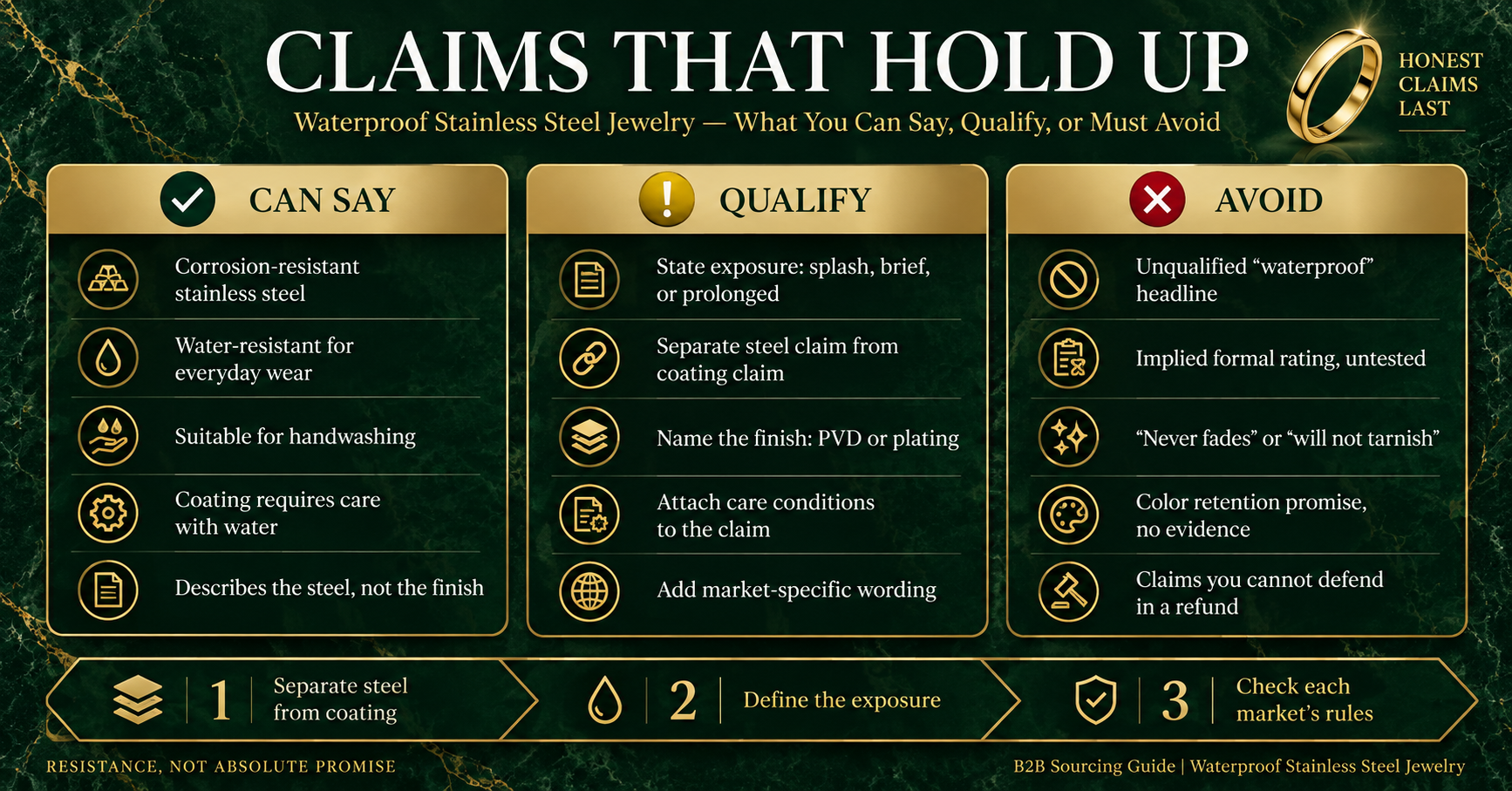
Listing language is where a durability story either holds up or collapses. Write claims that match what you can defend.
Prefer:
- describing resistance rather than absolute protection
- naming the material property being claimed
- distinguishing coated from uncoated items
- stating care conditions alongside the claim
- avoiding guarantees about indefinite performance
Avoid:
- “waterproof” as an unqualified headline for coated items
- implying a formal rating that has not been tested
- promising color retention under water without evidence
- absolute terms such as “never fades” or “will not tarnish”
- claims that would be hard to explain in a refund conversation
The test is simple: if a customer returns an item after months of water exposure, could you point to your listing and show that you described the limits honestly?
4. Handle Gold-Plated and PVD-Finished Pieces Separately
Coated stainless is where water claims most often fail. The base metal holds up; the finish is the variable.
For coated items:
- state that the steel is corrosion-resistant but the coating requires care
- advise removing before swimming, showering with harsh soaps, or prolonged soaking
- avoid claiming the color is waterproof if only the steel is
- set realistic expectations about long-term finish wear
- keep care guidance consistent with the coating process you actually use
PVD finishes generally offer better wear resistance than conventional plating, but “better” is not “immune.” Positioning should reflect the finish you genuinely have, not the most optimistic version of it.
5. Build Trust with Clear Care Instructions
Care guidance is not a disclaimer tacked onto the end. For this category, it is part of the product's value, because it tells the customer how to keep the item looking good.
Include:
- what the item can safely be exposed to
- what to avoid—harsh chemicals, abrasives, prolonged soaking
- how to clean and dry the item
- how to store it to protect the finish
- what normal wear over time may look like
Clear care instructions reduce returns and complaints, and they demonstrate that you understand your own product. A customer who knows the limits is less likely to feel misled.
6. Align Returns and Warranty Language with the Claim
Your returns and warranty wording must be consistent with your marketing. A bold water claim paired with a narrow warranty is a contradiction customers notice.
Confirm:
- what the returns policy says about water-related damage
- whether coating wear is treated as normal wear or a defect
- how you handle a claim that the item “should have been waterproof”
- what proof you would ask for in a dispute
- how the warranty language matches the listing language
The strongest position is one where the listing, the care guide, and the returns policy all tell the same story. When they diverge, the customer sides with their own interpretation.
7. Keep Listing Language Market-Compliant
Claims about durability, materials, and performance are regulated in many markets, and the rules differ by destination. This is a compliance question, not only a copywriting one.
Check:
- whether “waterproof” requires qualification or substantiation where you sell
- what the consumer-protection rules say about durability claims
- whether material and performance claims need evidence on file
- how the rules differ across the markets you ship to
- who reviews listing copy before publication
It is worth having listing claims reviewed against the applicable rules for each destination market rather than assuming a single global standard. A claim that is acceptable in one market may need adjustment in another.
8. Watch for Selling-Side Risk Signals
Some risks are specific to how this category is marketed.
Watch for:
- “waterproof” used as an unqualified headline
- no distinction between steel and coating in product copy
- color-retention promises without evidence
- care instructions that contradict the claim
- returns terms that exclude exactly what the marketing promised
- identical copy across markets with different rules
- reviews complaining about fading that the listing did not anticipate
Each of these is a sign that the claim has outrun what the product and policy can support.
A Waterproof Claim Checklist
Use this before publishing any water-related claim on a stainless jewelry listing.
A listing that addresses all seven is far more durable than one built on a single strong word.
Questions Worth Settling Before Launch
- Is this item bare steel or coated, and does the claim reflect that?
- What water exposure are we actually willing to stand behind?
- Is “waterproof” the right word here, or is “water-resistant” more accurate?
- Do our care instructions match the finish we use?
- Does our returns policy contradict our marketing?
- Have these claims been checked against the rules of each market we sell into?
- Who signs off on listing language before it goes live?
Clear internal answers here prevent the most common and most expensive problems in this category.
Conclusion
Waterproof stainless steel jewelry is a strong category, but its strength depends on honest framing. The metal's corrosion resistance is real; the word “waterproof” applied carelessly is where sellers get into trouble.
Separate the steel from the coating, define what exposure you can support, write claims you could defend in a refund conversation, give clear care guidance, align returns with marketing, and check the wording against each market's rules. Doing this lets you keep the category's appeal without inheriting its risks.
If you are preparing to launch or revise a stainless range, rewrite your claims around what the product genuinely does, and make the care guide and returns policy agree with it. That consistency is what turns a trending keyword into a durable product line.