Creating a successful jewelry collection requires more than a beautiful idea.
Behind every successful jewelry brand is a complete jewelry design and manufacturing process that combines creativity, engineering, material knowledge, craftsmanship, and quality management.
For jewelry brands, retailers, and online businesses, choosing the right manufacturing partner can determine:
- Product quality
- Development speed
- Production cost
- Market competitiveness
A professional jewelry manufacturer does not only produce finished products. They help transform concepts into commercially successful jewelry collections through design development, prototype creation, manufacturing, and quality control.
This guide explains how jewelry design and manufacturing works, what technologies are involved, and how brands can choose the right production partner.
1. What Is Jewelry Design and Manufacturing?
Jewelry design and manufacturing refers to the complete process of developing jewelry products from concept creation to final production.
The process includes:
- Concept development
- Design sketching
- CAD modeling
- Material selection
- Prototype production
- Manufacturing
- Surface finishing
- Quality inspection
- Packaging and delivery
For brands, professional jewelry design and manufacturing provides the ability to create:
- Unique collections
- Private label products
- Customized jewelry
- Market-specific designs
without investing in their own production facilities.
2. Who Needs Jewelry Design and Manufacturing Services?
Jewelry Brands
Established brands usually require:
- New collection development
- Consistent quality
- Exclusive designs
- Reliable supply chains
A professional manufacturing partner helps brands maintain product differentiation.
Startup Jewelry Companies
New brands often face challenges:
- Limited design resources
- Lack of production experience
- Difficulty controlling costs
Jewelry manufacturers provide:
- Design support
- Engineering solutions
- Production guidance
Online Jewelry Sellers
Including:
- Shopify brands
- Amazon sellers
- Etsy stores
- TikTok Shop businesses
Their needs:
- Fast product launches
- Trend-based designs
- Flexible MOQ
- Reliable production
Fashion Retailers and Boutiques
Retail businesses need:
- Multiple jewelry categories
- Seasonal collections
- Competitive wholesale pricing
3. Jewelry Design and Manufacturing Process
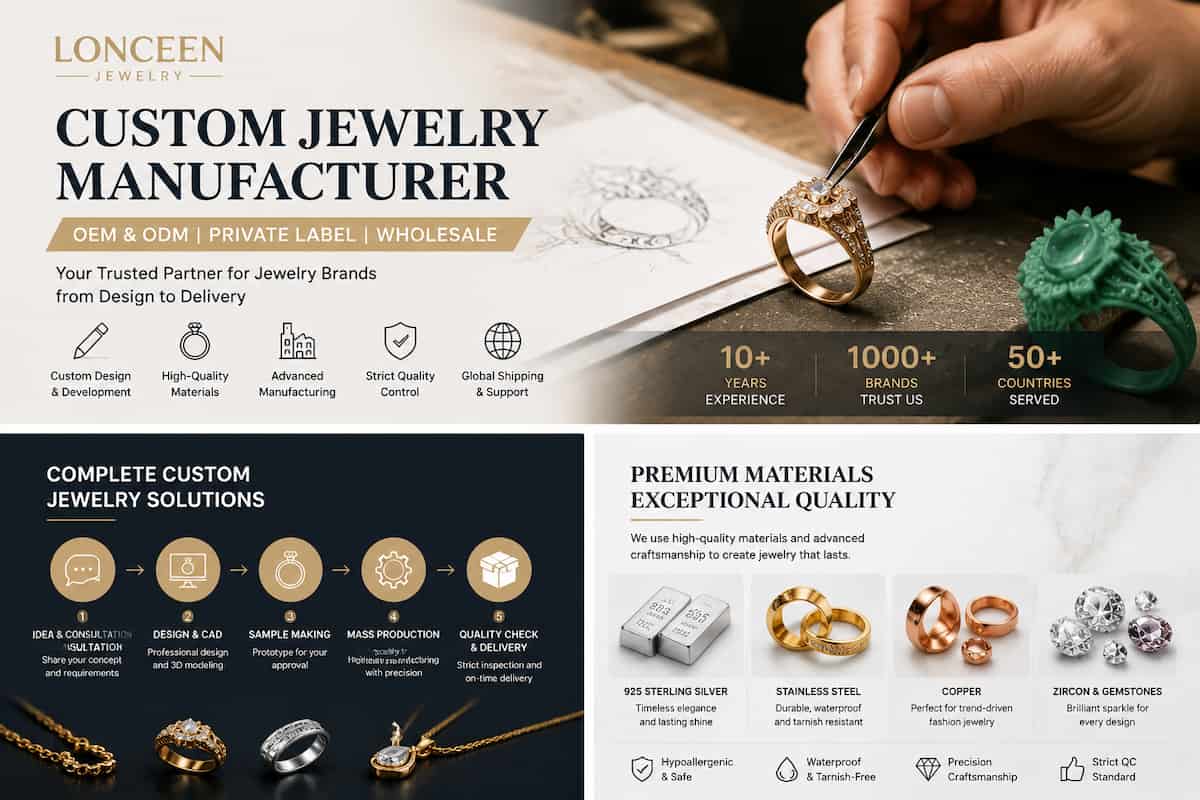
A professional production workflow usually includes five key stages.
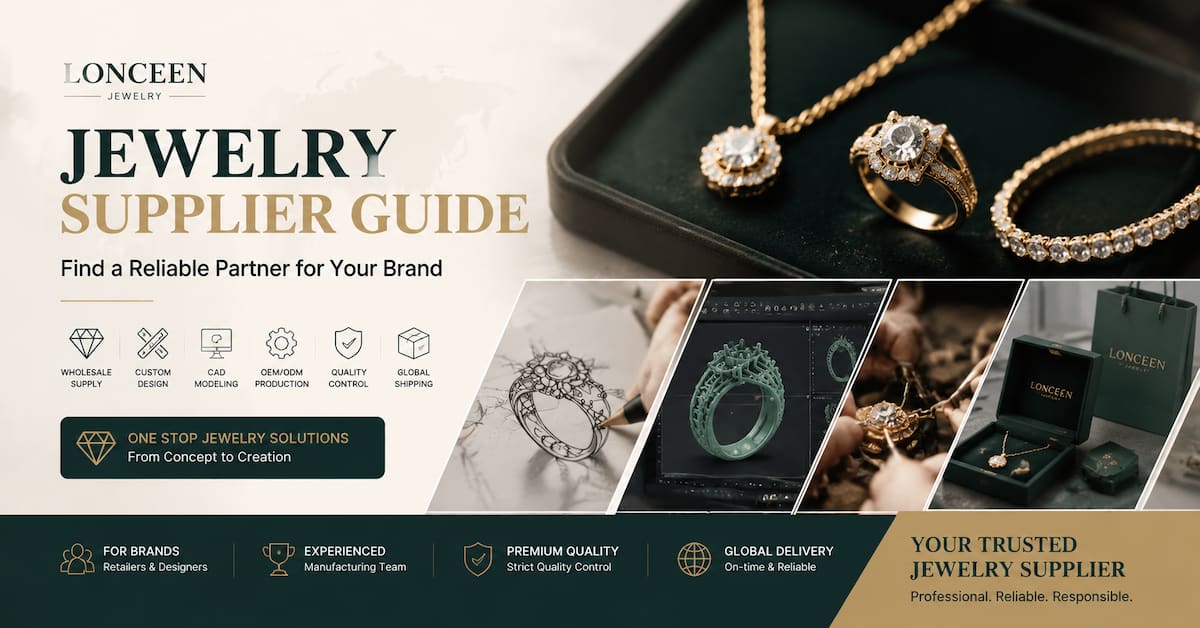
Step 1: Concept Development and Design Consultation
Every jewelry product starts with an idea.
Customers may provide:
- Hand sketches
- Reference images
- Brand concepts
- Existing samples
- Market trends
The manufacturer helps optimize:
- Product structure
- Wearing comfort
- Manufacturing feasibility
- Cost control
Step 2: CAD Design and 3D Modeling
Modern jewelry manufacturing relies heavily on CAD technology.
CAD design helps create:
- Accurate product dimensions
- 3D visualization
- Production-ready models
Benefits:
| Benefit | Value |
|---|---|
| Design preview | Reduce modification risks |
| Accurate measurement | Improve production quality |
| Faster approval | Shorten development cycle |
Step 3: Prototype and Sample Making
Before mass production, samples are created.
Sample evaluation includes:
- Appearance
- Size
- Weight
- Material performance
- Comfort
Sample approval allows brands to verify the product before large investment.
Step 4: Mass Jewelry Production
After confirmation, production begins.
Manufacturing includes:
- Metal forming
- Stone setting
- Polishing
- Plating
- Assembly
Professional factories maintain consistency through standardized production processes.
Step 5: Quality Inspection and Delivery
Before shipment, jewelry products should be inspected.
Quality checks include:
- Material verification
- Surface inspection
- Plating quality
- Stone placement
- Packaging
4. Materials Used in Jewelry Manufacturing
Material selection affects:
- Product positioning
- Customer experience
- Price strategy
- Durability
Stainless Steel Jewelry
Advantages:
- Durable
- Water resistant
- Tarnish resistant
- Cost effective
Applications:
- Fashion jewelry
- Men's jewelry
- Daily wear collections
925 Sterling Silver Jewelry
Advantages:
- Premium appearance
- Suitable for detailed designs
- High perceived value
Applications:
- Luxury collections
- Personalized jewelry
- Fine jewelry styles
Copper Jewelry
Advantages:
- Flexible design possibilities
- Competitive cost
- Suitable for fashion products
Zircon and Gemstones
Used for:
- Premium appearance
- Decorative effects
- Luxury-inspired designs
5. Jewelry Manufacturing Technologies
CAD Jewelry Design
CAD allows manufacturers to transform ideas into accurate production models.
Laser Engraving
Used for:
- Logo customization
- Names
- Initials
- Special messages
Applications:
- Personalized gifts
- Couple jewelry
- Corporate jewelry
Electroplating
Common finishes:
- Gold plating
- Rose gold plating
- Rhodium plating
- Black plating
Benefits:
- Enhanced appearance
- More design options
- Improved market positioning
6. Custom Jewelry Design and OEM/ODM Manufacturing
Professional jewelry manufacturers usually provide two cooperation models.
OEM Jewelry Manufacturing
Customers provide:
- Product ideas
- Designs
- Brand requirements
Factory provides:
- Production
- Quality control
- Delivery
ODM Jewelry Manufacturing
ODM includes:
- Original design development
- Trend research
- Product improvement
- Collection planning
Suitable for brands without internal design teams.
7. Quality Control in Jewelry Manufacturing
Quality control is essential for long-term brand success.
A professional QC system includes:
Incoming Material Inspection
Checking:
- Metal quality
- Stones
- Components
Production Inspection
Monitoring:
- Manufacturing accuracy
- Surface finishing
- Assembly quality
Final Inspection
Checking:
- Appearance
- Function
- Packaging
8. Jewelry Manufacturing Capacity and Lead Time
Production time depends on:
| Factor | Impact |
|---|---|
| Design complexity | More details require longer development |
| Material choice | Different processes affect timeline |
| Order quantity | Large orders require planning |
| Customization | Special requirements increase development time |
Professional manufacturers help brands create realistic production schedules.
9. Jewelry Design vs Jewelry Manufacturing
| Aspect | Jewelry Design | Jewelry Manufacturing |
|---|---|---|
| Main Focus | Creative concept | Production execution |
| Output | Design ideas | Finished products |
| Key Skills | Creativity, CAD | Craftsmanship, QC |
| Business Value | Product differentiation | Scalable production |
Successful jewelry brands need both.
10. Cost Factors and Risk Management
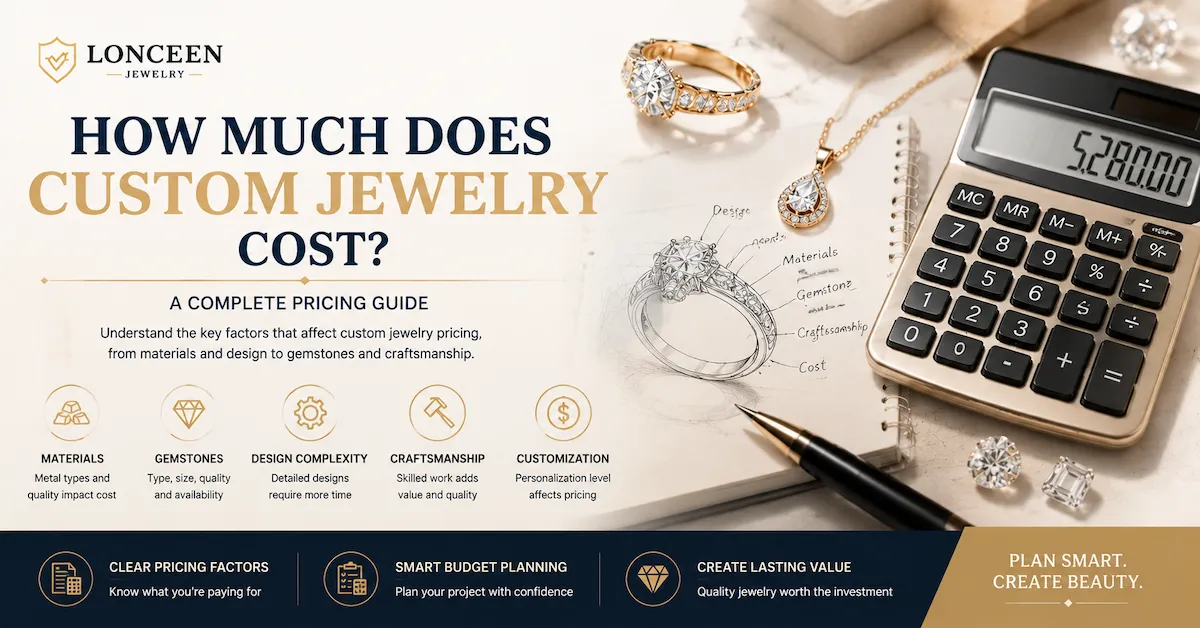
Jewelry production cost depends on:
- Material selection
- Design complexity
- Quantity
- Finishing process
- Custom requirements
Common risks include:
Poor Quality Control
Solution:
Choose manufacturers with inspection systems.
Communication Problems
Solution:
Work with suppliers experienced in international projects.
Production Delays
Solution:
Confirm:
- Samples
- Production timeline
- Quality standards
11. Why Choose a Professional Jewelry Design and Manufacturing Partner?
A reliable partner provides:
✔ Design expertise
✔ Manufacturing capability
✔ Material solutions
✔ Quality management
✔ Flexible customization
✔ Global supply support
For brands, the right partner becomes part of their product development team.
12. Work With Lonceen Jewelry
Lonceen Jewelry provides professional jewelry design and manufacturing services for global brands, retailers, and online businesses.
Our capabilities include:
- Custom jewelry design
- CAD development
- OEM/ODM manufacturing
- Private label jewelry production
- Wholesale jewelry supply
- Quality inspection
From initial concept to final delivery, we help brands create jewelry collections with reliable quality and efficient production.
Contact Lonceen Jewelry to start your custom jewelry project.
13. FAQ
1. What is jewelry design and manufacturing?
Jewelry design and manufacturing is the complete process of creating jewelry products from concept development to final production.
2. How does custom jewelry manufacturing work?
The process usually includes design consultation, CAD modeling, sample production, mass manufacturing, and quality inspection.
3. Can jewelry manufacturers create custom designs?
Yes. Professional manufacturers can develop products based on sketches, images, concepts, or brand requirements.
4. What is the difference between OEM and ODM jewelry manufacturing?
OEM focuses on producing customer designs, while ODM includes design development and product creation support.
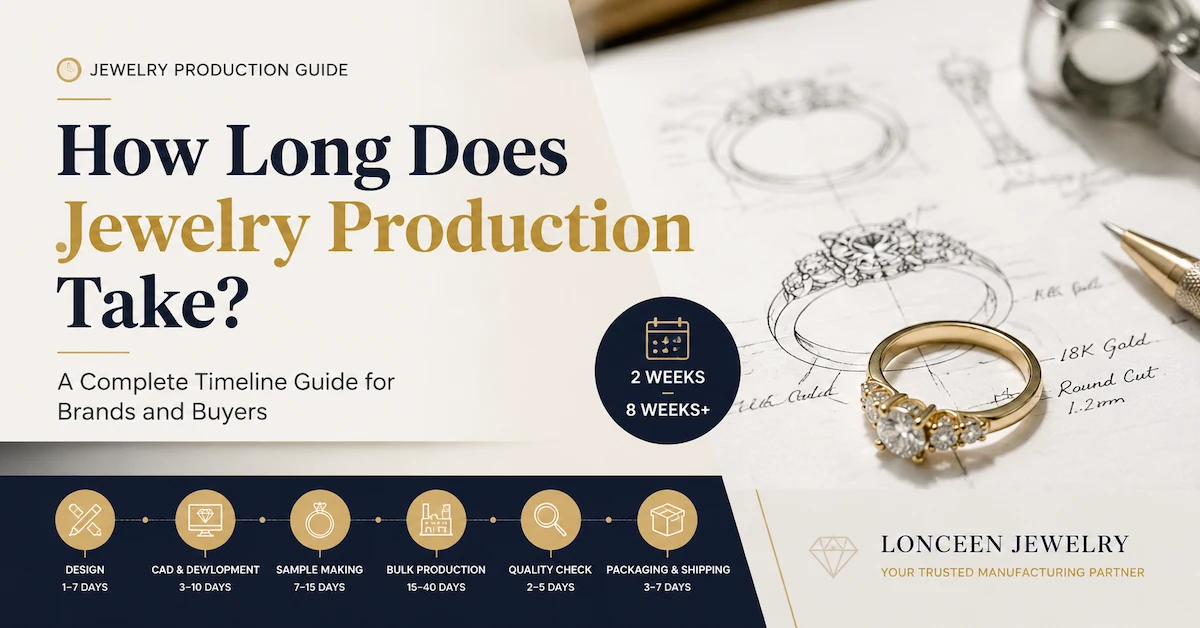
5. How long does jewelry production take?
The timeline depends on design complexity, materials, customization requirements, and order quantity.
6. What materials are commonly used in jewelry manufacturing?
Common materials include stainless steel, sterling silver, copper, zircon, and gemstones.
7. Can small brands order custom jewelry?
Yes. Many manufacturers support startups through flexible production solutions.
8. Do jewelry manufacturers provide private label services?
Yes. Private label services may include custom products, branding, and packaging.
9. How can I choose a reliable jewelry manufacturer?
Evaluate:
- Manufacturing experience
- Design capability
- Quality control
- Communication
- Production capacity
10. Why work with a jewelry manufacturer instead of buying wholesale?
Manufacturing provides more customization, stronger brand differentiation, and better control over product development.