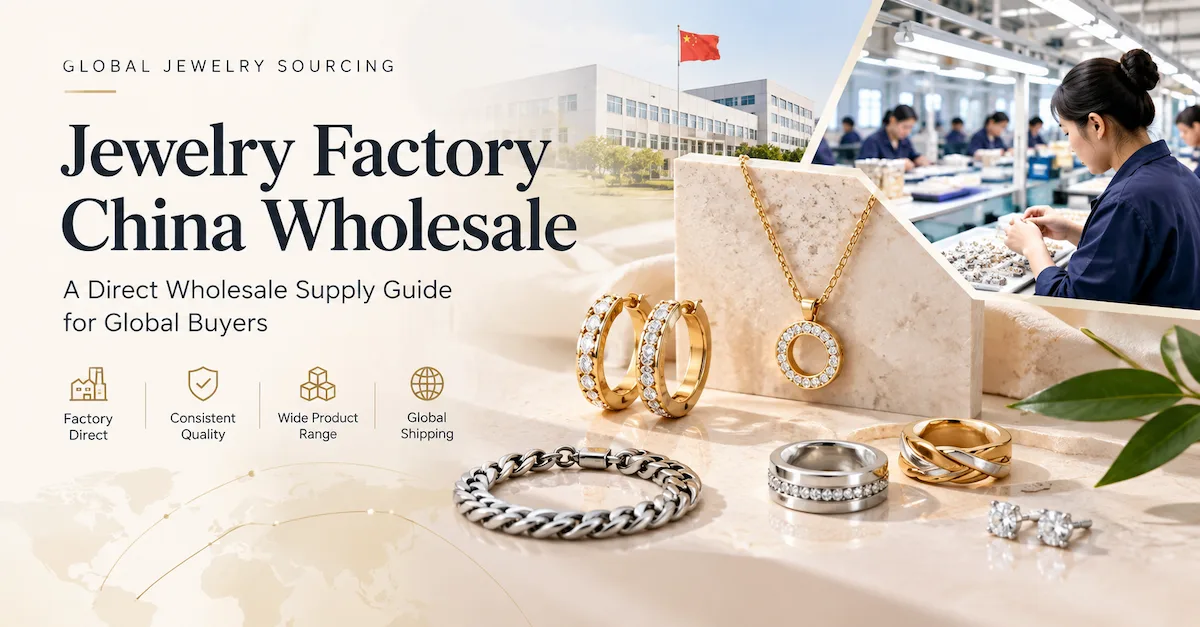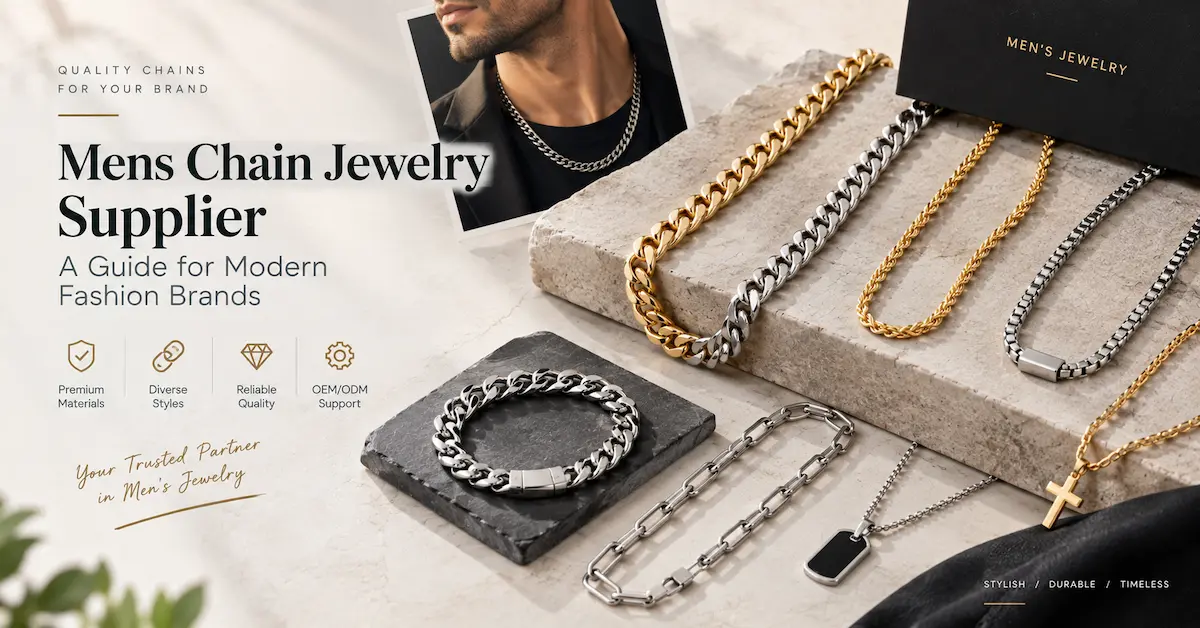


Choosing the right jewelry factory is one of the most important decisions for jewelry brands, retailers, and businesses looking to develop unique collections.
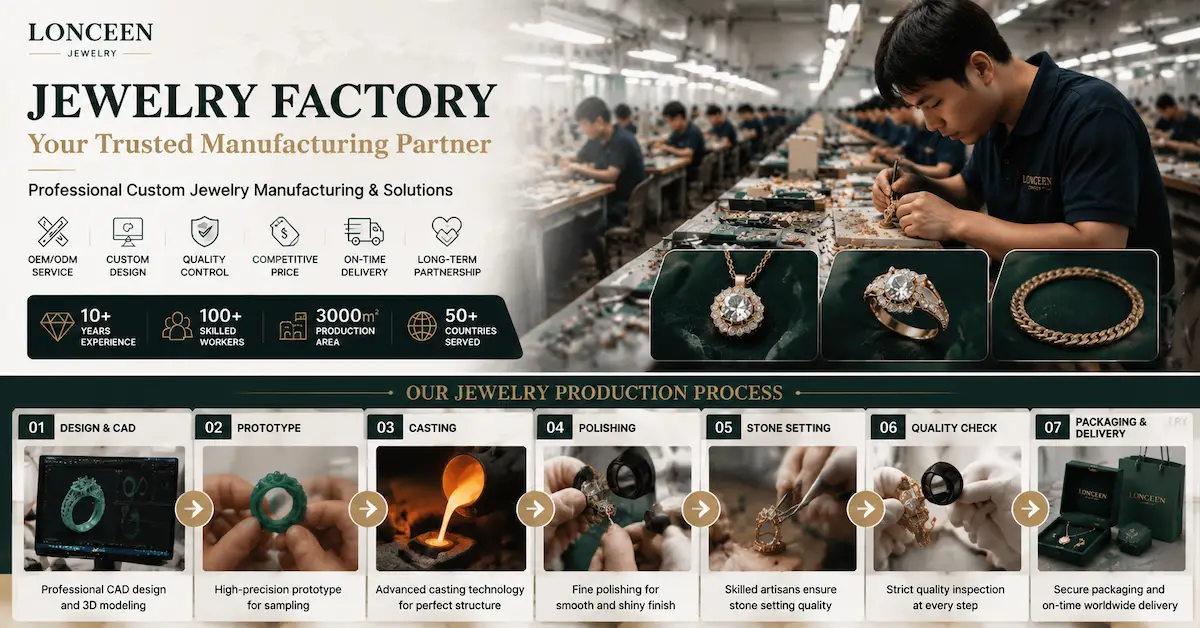
A professional jewelry factory does more than produce finished jewelry. It provides complete manufacturing solutions including:
- Product development
- Material selection
- Custom design support
- Prototype production
- Mass manufacturing
- Quality inspection
- Packaging and delivery
For brands that want to build long-term competitiveness, working with the right factory can help achieve:
- Stable product quality
- Better production efficiency
- More customization options
- Competitive market pricing
A reliable factory works as a complete production partner, helping businesses transform ideas into market-ready collections.
Learn more about how professional manufacturers support brands through custom jewelry manufacturer services.
1. What Is a Jewelry Factory?
A jewelry factory is a professional manufacturing facility specializing in the development and production of jewelry products.
Unlike wholesalers that mainly provide existing products, jewelry factories focus on:
- Manufacturing capability
- Product customization
- Production management
- Quality control
A professional jewelry factory can support businesses from initial concepts to finished jewelry collections.
The complete process usually includes:
Idea
↓
Design Development
↓
Prototype
↓
Production
↓
Quality Inspection
↓
Delivery
For businesses that need complete product development support, a factory with strong jewelry design and manufacturing capabilities provides more advantages.
2. Who Needs a Jewelry Factory?
1. Jewelry Brands
Jewelry brands need factories that can provide:
- Exclusive designs
- Stable production
- Consistent quality
- Long-term cooperation
A reliable jewelry factory becomes an important part of a brand's supply chain.
For brands developing unique collections, choosing a factory with custom jewelry manufacturing capabilities is essential.
A professional custom jewelry manufacturer can help brands complete the journey from concept development to finished products.
2. Private Label Jewelry Businesses
Private label brands require factories that can provide:
- Custom logos
- Brand packaging
- Exclusive products
- Flexible production
A professional private label jewelry factory helps businesses create products that match their brand identity.
3. Online Jewelry Businesses
Including:
- Shopify stores
- Amazon sellers
- Etsy sellers
- Social commerce brands
Their requirements include:
- Fast product development
- Competitive pricing
- Low MOQ options
- Reliable delivery
Online businesses often work with factories that can provide both manufacturing capability and flexible customization.
4. Jewelry Designers
Designers often need factory support for:
- Technical suggestions
- Material selection
- Sample production
- Manufacturing feasibility
A factory with strong development capability helps designers turn creative ideas into commercial products.
3. Jewelry Factory vs Jewelry Supplier
Many buyers confuse jewelry factories and suppliers.
| Jewelry Factory | Jewelry Supplier | |
|---|---|---|
| Main Role | Production | Product supply |
| Customization | High | Medium |
| OEM Capability | Strong | Limited |
| Design Support | Professional | Depends |
| Best For | Brands | Retail purchasing |
A supplier can provide products, while a factory controls the manufacturing process.
For buyers comparing different sourcing models, understanding the difference between a factory and a jewelry supplier helps make better purchasing decisions.
4. What Services Does a Professional Jewelry Factory Provide?
Custom Jewelry Development
Professional factories support:
- Product concepts
- Design optimization
- Engineering solutions
- Prototype creation
This allows brands to create differentiated products instead of selling common market designs.
OEM Jewelry Manufacturing
OEM means the factory produces jewelry according to customer requirements.
The process includes:
Customer design
↓
Factory production
↓
Quality inspection
↓
Shipment
Advantages:
- Brand ownership
- Production expertise
- Cost control
OEM manufacturing is widely used by brands that require customized collections and stable production.
ODM Jewelry Manufacturing
ODM provides additional support:
- Product design
- Market trend suggestions
- Product improvement
Suitable for brands that need manufacturing and design assistance.
Private Label Jewelry Production
Professional factories can provide:
- Custom branding
- Logo engraving
- Packaging solutions
- Product customization
Private label production allows businesses to create unique collections without establishing their own factory.
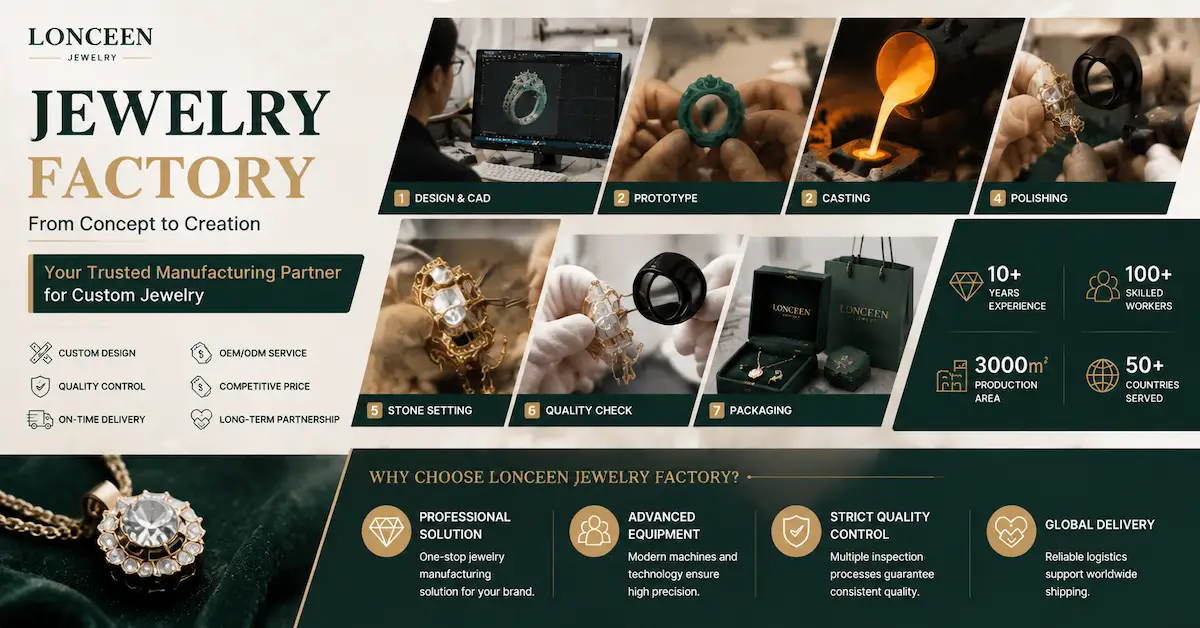
5. Jewelry Factory Production Process
A reliable jewelry factory follows a structured manufacturing workflow.
Step 1: Design Review and Development
Customers provide:
- Sketches
- Images
- Product ideas
- Existing samples
The factory evaluates:
- Production feasibility
- Material options
- Cost optimization
Professional factories often work closely with brands during early development stages to reduce production risks.
Step 2: CAD Design and Prototyping
Modern jewelry factories use CAD technology to create accurate models.
Benefits:
- Visual product confirmation
- Precise dimensions
- Reduced production errors
Prototype production allows brands to test:
- Appearance
- Size
- Comfort
- Function
CAD development is an important part of professional jewelry design and manufacturing solutions.
Step 3: Material Preparation
Materials are selected based on:
- Product positioning
- Customer requirements
- Target market
Common materials include:
Stainless Steel Jewelry
Advantages:
- Durable
- Corrosion resistant
- Easy maintenance
- Competitive cost
Applications:
- Fashion jewelry
- Men's jewelry
- Everyday accessories
Sterling Silver Jewelry
Advantages:
- Premium appearance
- High value perception
- Suitable for detailed craftsmanship
Applications:
- Fine jewelry
- Personalized collections
Copper Jewelry
Advantages:
- Flexible design
- Cost efficient
- Suitable for fashion products
Step 4: Manufacturing and Craftsmanship
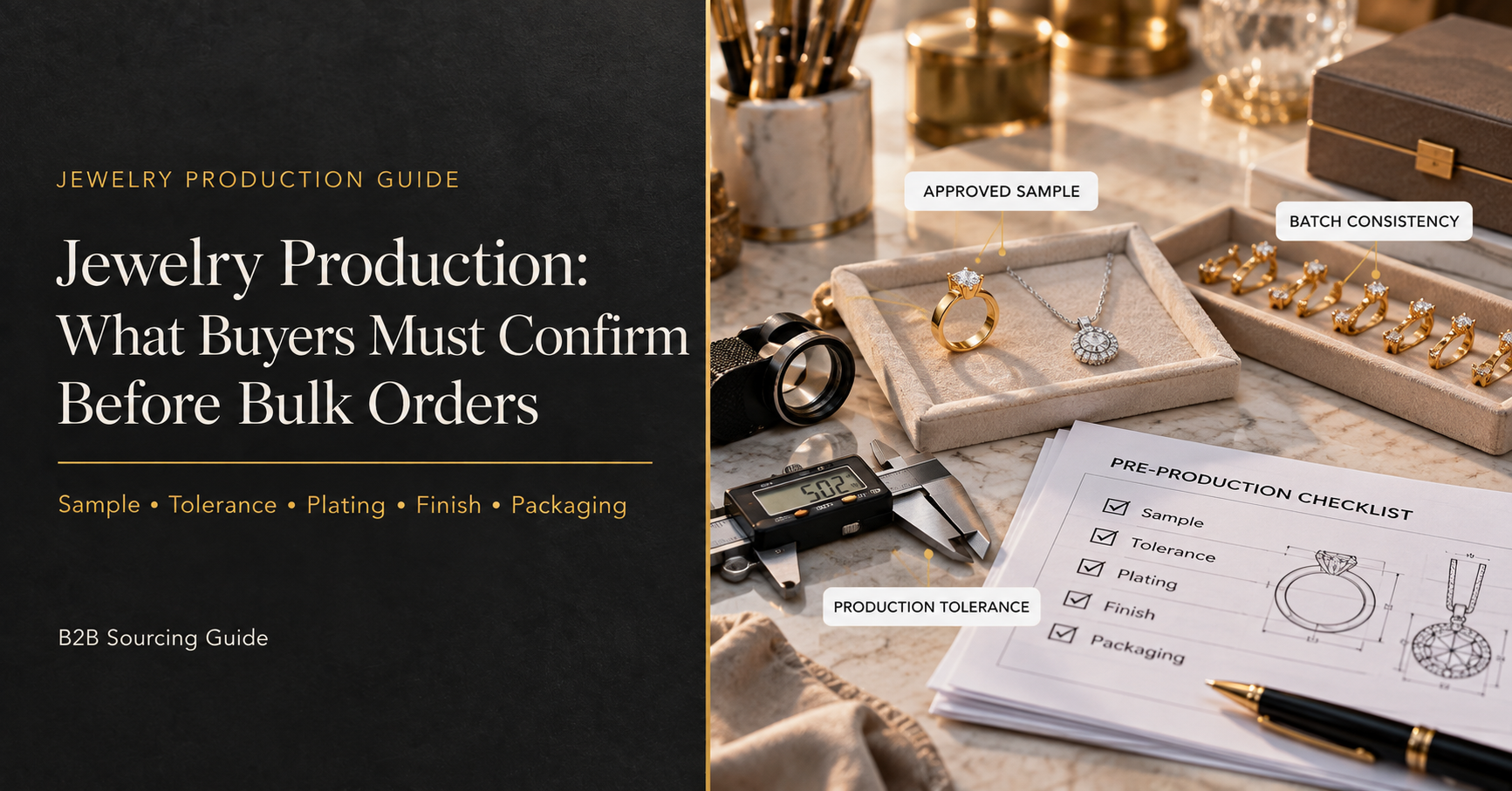
After material preparation and prototype approval, the jewelry factory begins mass production.
Professional jewelry manufacturing requires experienced craftsmanship and strict production control.
Common manufacturing processes include:
- Casting
- Polishing
- Electroplating
- Stone setting
- Assembly
- Surface treatment
Different techniques determine the final appearance, durability, and market value of jewelry products.
Casting
Casting is commonly used for creating detailed jewelry structures.
Advantages:
- Suitable for complex designs
- Ensures consistent production
- Supports customized shapes
This process allows factories to produce unique designs based on brand requirements.
Polishing
Polishing improves:
- Surface smoothness
- Product appearance
- Wearing comfort
A professional jewelry factory uses skilled technicians to ensure consistent finishing quality.
Electroplating
Electroplating provides different surface finishes, including:
- Gold plating
- Rose gold plating
- Rhodium plating
- Black plating
Benefits:
- Enhanced appearance
- Increased product variety
- Better market positioning
Laser Engraving
Laser engraving is commonly used for:
- Brand logos
- Names
- Initials
- Personalized messages
It is widely applied in:
- Custom jewelry
- Gift jewelry
- Private label collections
Step 5: Quality Control in a Jewelry Factory
Quality control is one of the most important factors when selecting a jewelry manufacturing partner.
A reliable jewelry factory should have a complete inspection system covering every production stage.
Material Inspection
Before production begins, factories check:
- Metal quality
- Components
- Stones
- Accessories
This ensures raw materials meet customer requirements.
Production Inspection
During manufacturing, quality teams monitor:
- Product dimensions
- Surface finishing
- Assembly accuracy
- Craftsmanship details
Early inspection helps prevent large-scale production problems.
Final Product Inspection
Before shipment, finished jewelry should be checked for:
- Appearance
- Function
- Durability
- Packaging
A professional quality system helps brands maintain consistent customer satisfaction.
For businesses looking for a complete sourcing solution, choosing an experienced jewelry supplier with strong QC capability reduces supply chain risks.
6. Advantages of Working With a Professional Jewelry Factory
Working directly with a professional jewelry factory provides several advantages.
Better Product Control
Factories provide:
- Direct communication
- Manufacturing transparency
- Technical support
- Production updates
Brands can better control:
- Product quality
- Design details
- Production standards
More Customization Options
A capable jewelry factory can support:
- Custom designs
- Different materials
- Surface finishes
- Logo customization
- Packaging solutions
This allows brands to create unique collections instead of competing with standard products.
Stable Supply Chain
Professional factories provide:
- Production planning
- Consistent quality
- Reliable delivery schedules
Long-term factory partnerships help brands maintain stable inventory and market growth.
Better Cost Management
Working directly with a factory can help businesses:
- Reduce unnecessary middle costs
- Improve production efficiency
- Optimize product pricing
This is especially important for:
- Retailers
- Online stores
- Growing jewelry brands
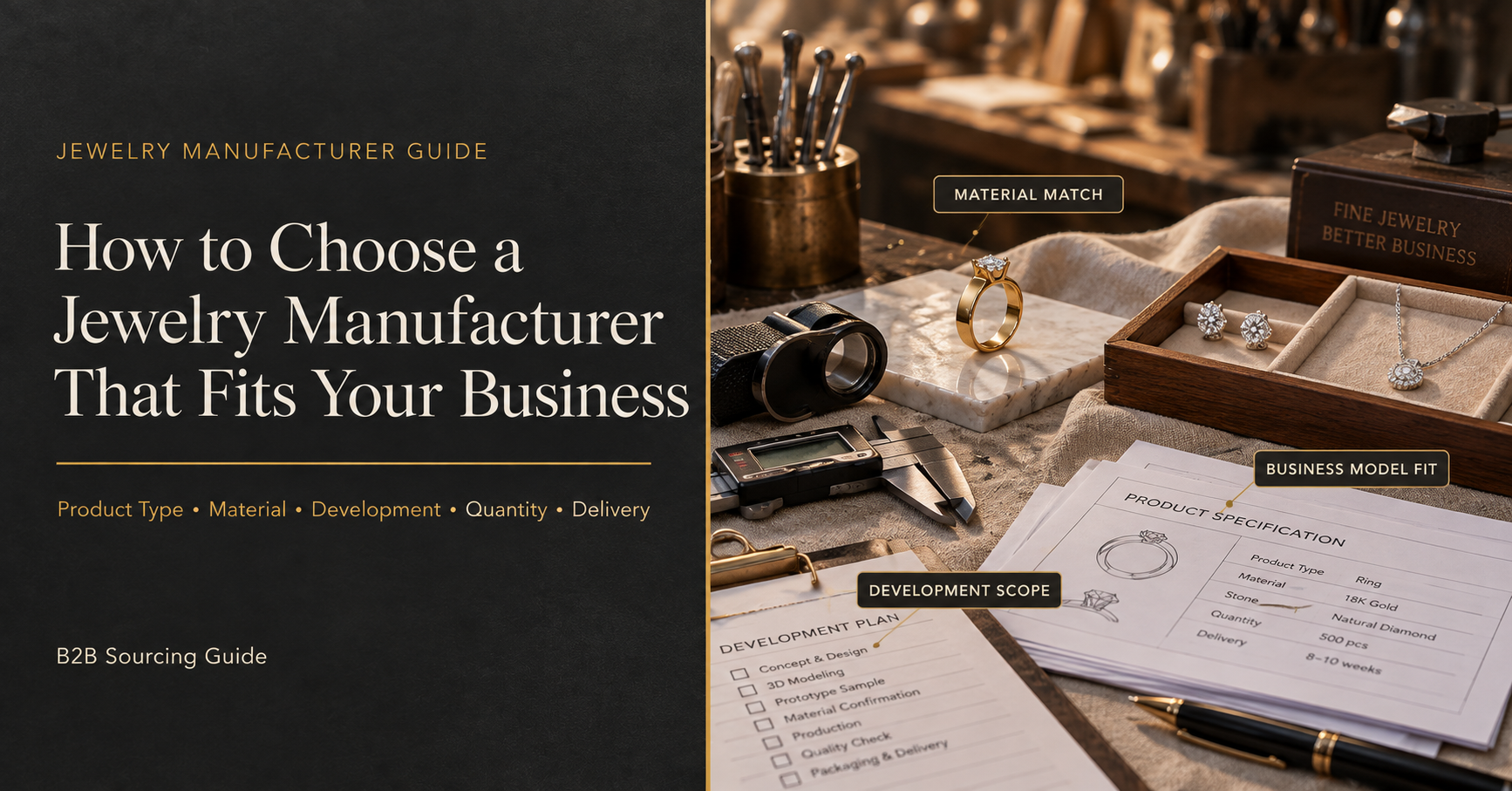
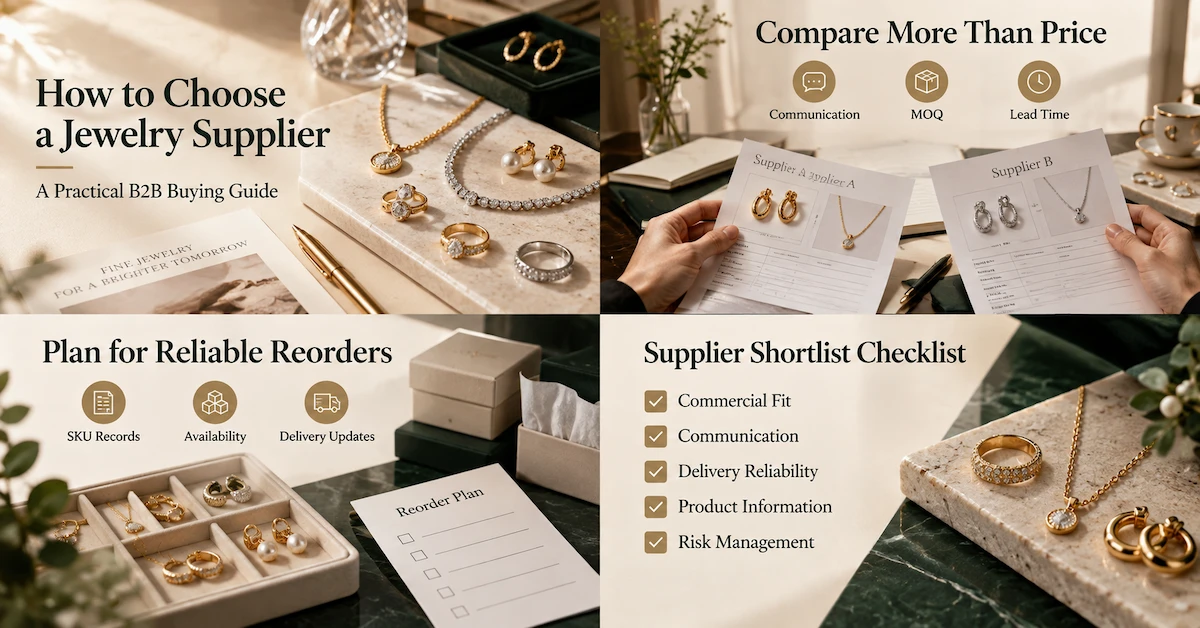
7. How to Choose the Right Jewelry Factory?
Before cooperation, buyers should evaluate several important factors.
1. Manufacturing Experience
Check:
- Years of industry experience
- Product categories
- International cooperation experience
- Previous customer projects
Experienced factories usually understand production challenges better.
2. Production Capability
Evaluate:
- Manufacturing equipment
- Skilled workers
- Production processes
- Quality systems
A factory should have the ability to support both small development projects and larger production requirements.
3. Customization Ability
A professional factory should support:
- OEM production
- ODM development
- Private label services
- Custom jewelry projects
For brands that need full customization, a factory with complete custom jewelry manufacturer capabilities provides greater flexibility.
4. Communication Ability
International jewelry production requires effective communication.
A reliable factory should provide:
- Clear project updates
- Technical recommendations
- Fast response
- Professional support
Good communication reduces mistakes during product development.
8. Jewelry Factory Production Capacity and Lead Time
Production timelines depend on several factors:
| Factor | Impact |
|---|---|
| Design complexity | Detailed designs require more development time |
| Material selection | Different materials require different processes |
| Order quantity | Large orders require production planning |
| Customization requirements | Special requests may increase lead time |
A professional jewelry factory should provide realistic schedules for:
- Sample development
- Production
- Quality inspection
- Shipment
9. Common Challenges When Choosing a Jewelry Factory
Challenge 1: Inconsistent Product Quality
Some businesses experience quality problems when working with unreliable factories.
Solution:
Choose factories with:
- Standard production processes
- Quality inspection systems
- Experienced technicians
Challenge 2: Limited Customization
Some suppliers only provide existing products.
Solution:
Work with factories that offer:
- Custom design
- CAD development
- Prototype production
Challenge 3: Communication Problems
Poor communication can cause:
- Production mistakes
- Delayed delivery
- Incorrect specifications
Solution:
Choose manufacturers with international project experience.
10. Why Choose Lonceen Jewelry as Your Jewelry Factory?
Lonceen Jewelry provides professional jewelry manufacturing solutions for global brands, retailers, and businesses.
Our capabilities include:
- Custom jewelry development
- OEM/ODM production
- Private label jewelry
- Wholesale jewelry manufacturing
- Product customization
- Quality inspection
From the first concept to final delivery, we support brands through every stage:
Design concept
↓
Product development
↓
Prototype creation
↓
Mass production
↓
Quality inspection
↓
Global delivery
Learn more about our company experience and manufacturing capabilities through our About Lonceen Jewelry page.
11. Explore Jewelry Products and Solutions
A professional jewelry factory should provide diverse product capabilities.
Lonceen Jewelry supports different jewelry categories, including:
- Fashion jewelry
- Custom jewelry
- Stainless steel jewelry
- Personalized jewelry
- Wholesale jewelry collections
Explore our complete product range through our jewelry products collection.
FAQ About Jewelry Factories
What is a jewelry factory?
A jewelry factory is a professional manufacturing facility that develops and produces jewelry products for brands, retailers, and businesses.
What services does a jewelry factory provide?
Professional factories may provide:
- Product design support
- CAD modeling
- Prototype development
- OEM manufacturing
- Quality inspection
- Packaging solutions
Why work directly with a jewelry factory?
Direct factory cooperation provides:
- Better customization
- More production control
- Faster communication
- Competitive manufacturing solutions
Can a jewelry factory produce private label jewelry?
Yes.
Many professional factories provide:
- Custom logos
- Brand packaging
- Exclusive jewelry collections
What is MOQ for jewelry factories?
MOQ depends on:
- Product design
- Materials
- Production requirements
- Customization level
How long does jewelry production take?
Production time depends on:
- Design complexity
- Materials
- Order quantity
- Manufacturing process
Can small brands work with jewelry factories?
Yes.
Many factories support startup brands with:
- Flexible production options
- Small batch development
- Custom solutions
What materials can jewelry factories produce?
Common materials include:
- Stainless steel
- Sterling silver
- Copper
- Zircon
- Gemstones
Conclusion
Choosing the right jewelry factory is essential for brands that want reliable products and long-term business growth.
A professional jewelry factory provides:
✔ Manufacturing expertise
✔ Custom development capability
✔ Stable quality control
✔ Flexible production solutions
✔ Long-term partnership support
The best manufacturing partner is not only a supplier but also a strategic partner that helps brands create competitive jewelry collections.
For businesses looking to develop customized jewelry products, working with an experienced factory can improve product quality, reduce risks, and accelerate market growth.
Work With Lonceen Jewelry
Lonceen Jewelry is a professional jewelry factory offering:
- Custom jewelry manufacturing
- OEM/ODM production
- Private label jewelry solutions
- Wholesale jewelry production
Start your next jewelry project with Lonceen Jewelry and build unique collections for your customers.
For common questions about customization, production, materials, and cooperation, visit our Jewelry FAQ page.