

A pendant can be one of the most recognizable elements in a jewelry collection. It can communicate a brand story, personal meaning, fashion statement or symbolic concept.
For jewelry brands, retailers and gift businesses, choosing the right pendant jewelry manufacturer means more than finding a company that produces necklaces. The manufacturer should understand pendant structure, materials, finishing, personalization and how the pendant works with its chain.
1. What Does a Pendant Jewelry Manufacturer Produce?
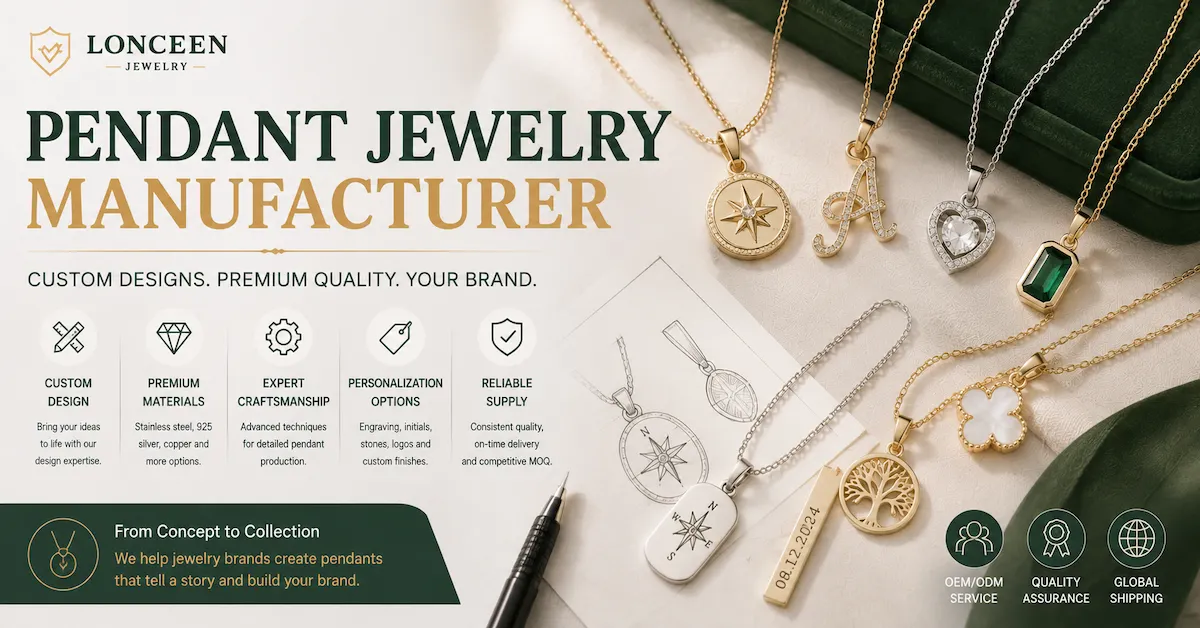
A pendant jewelry manufacturer can develop and produce different types of pendant products, including:
- Pendant necklaces
- Initial pendants
- Name and engraved pendants
- Gemstone pendants
- Symbolic pendants
- Statement pendants
- Logo pendants
- Personalized pendants
The pendant is usually the main visual element, so its size, shape, weight and connection structure directly affect the finished product.
For a broader range of jewelry products, explore the Lonceen Jewelry product collection.
2. Popular Pendant Styles for Different Markets
Different markets require different pendant concepts.
| Market | Suitable Pendant Styles |
|---|---|
| Fashion brands | Geometric, statement and trend-led designs |
| Gift businesses | Initial, heart and symbolic pendants |
| Premium brands | Gemstone and refined designs |
| Lifestyle brands | Nature, celestial and minimalist styles |
| Personalized brands | Name, initial and engraved pendants |
| Men's jewelry | Dog tags, crosses and geometric designs |
The most effective approach is to select styles according to the target customer instead of simply following every jewelry trend.
3. Pendant Structure Matters
Pendant jewelry has specific structural requirements that should be considered during development.
Bail
The bail connects the pendant to the chain. Its size and position need to match the intended chain.
Pendant Weight
Large or detailed pendants can become uncomfortable if the weight is not properly controlled.
Pendant Thickness
Thickness affects durability, weight and visual depth.
Chain Compatibility
A pendant should be developed together with the chain whenever possible. A delicate pendant may require a fine chain, while a larger statement pendant may need a stronger and more substantial chain.
These details can have a significant impact on both appearance and wearing comfort.
4. Materials and Finishing Options
The material should match the product's target market and price positioning.
Common options include:
- Stainless steel
- 316L stainless steel
- 925 sterling silver
- Copper
Surface treatments can include:
- Gold plating
- Silver-tone finishes
- Rose gold
- Polished surfaces
- Matte finishes
- Textured surfaces
For example, a minimalist pendant may work well with a polished surface, while a fashion-oriented design could use a combination of texture and contrasting finishes.
5. Customization for Pendant Jewelry
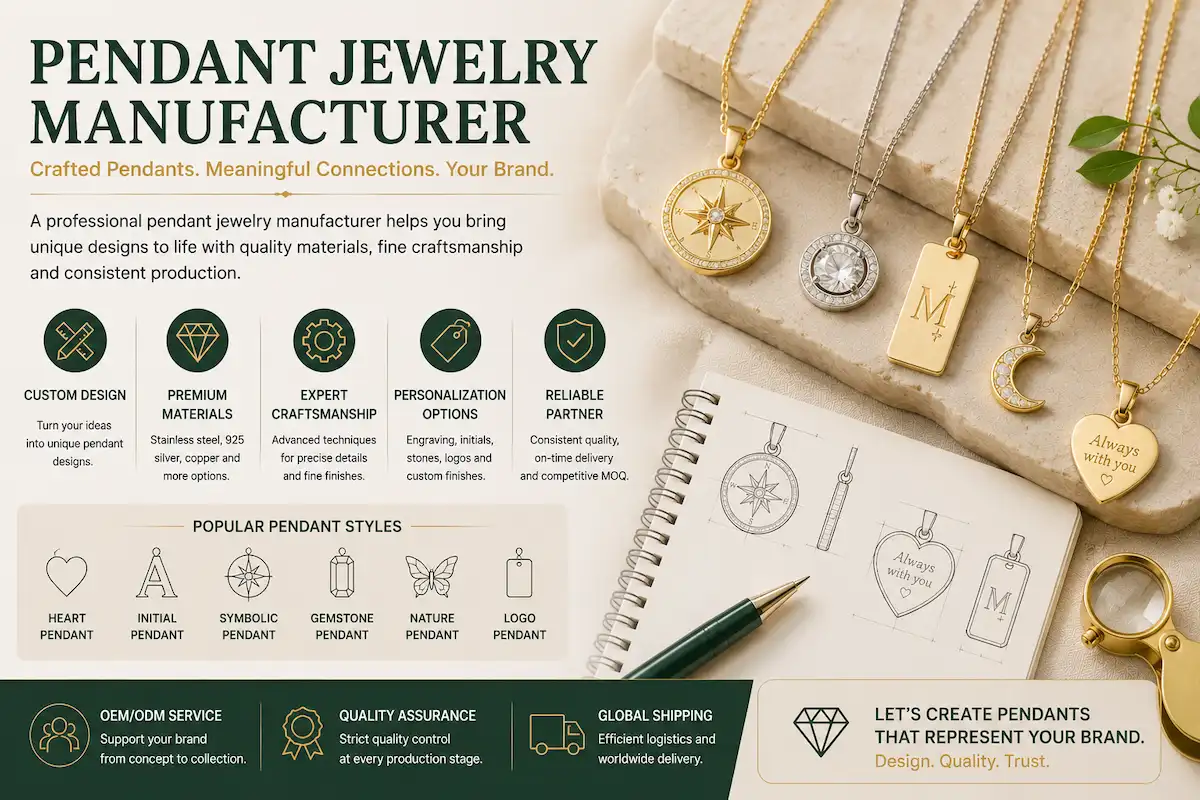
Custom pendants allow brands to create products that are more closely connected to their identity.
Common customization options include:
- Custom shapes
- Initials
- Names
- Dates
- Logos
- Engraving
- Birthstones
- Custom symbols
- Different plating finishes
Personalized pendants can be particularly suitable for gift brands, lifestyle businesses and fashion collections.
For brands that require specific customization, you can also review custom jewelry solutions.
6. Developing a Pendant Collection
For jewelry brands, developing a collection is often more effective than creating isolated products.
For example:
Celestial Collection
- Sun pendant
- Moon pendant
- Star pendant
- Zodiac pendant
Personalized Collection
- Initial pendant
- Name pendant
- Birthstone pendant
- Engraved pendant
Nature Collection
- Butterfly pendant
- Flower pendant
- Leaf pendant
- Shell pendant
Using a consistent design language helps different products work together and creates stronger brand recognition.
7. How to Choose a Pendant Jewelry Manufacturer
Before selecting a manufacturer, evaluate several pendant-specific capabilities:
Design capability
Can the manufacturer work with sketches, references, logos or custom concepts?
Material selection
Can it provide the materials required for your target market?
Finishing options
Are plating, polishing, texturing and stone-setting options available?
Structural development
Can the manufacturer control pendant thickness, weight, bail structure and chain compatibility?
Collection consistency
Can multiple pendant designs maintain the same visual language?
A manufacturer that understands these details can help turn a pendant concept into a more practical commercial product.
8. Common Pendant Development Mistakes
Several issues can affect the final result:
- Designing the pendant without considering the chain
- Making the pendant unnecessarily heavy
- Using a bail that is too small
- Adding excessive detail to a small surface
- Ignoring edge finishing
- Mixing unrelated finishes
- Creating individual products without a consistent collection concept
The goal is to balance appearance, durability, comfort and brand positioning.
9. Why Pendant Design Can Strengthen a Jewelry Brand
A successful pendant concept can become the foundation of a larger collection.
For example:
Butterfly Pendant
→ Butterfly Earrings
→ Butterfly Ring
→ Butterfly Bracelet
This allows brands to extend one recognizable design concept across multiple jewelry categories while maintaining a consistent visual identity.
For more information about the company and its jewelry capabilities, visit Lonceen About Us.
FAQ
What types of pendants can a manufacturer produce?
Common options include initial, engraved, gemstone, symbolic, statement, logo and personalized pendants.
Can pendant jewelry be customized?
Yes. Customization may include shape, material, plating, engraving, stones, dimensions and attachment structures.
What materials are commonly used?
Stainless steel, 316L stainless steel, 925 sterling silver and copper are common choices, depending on the product positioning.
What should I consider when choosing a pendant manufacturer?
Focus on pendant-specific design capabilities, materials, finishing, structural development, customization and the ability to maintain collection consistency.
Can a manufacturer develop a complete pendant collection?
Yes. A collection can be built around themes such as personalization, nature, celestial symbols or geometric design.
Conclusion
Choosing the right pendant jewelry manufacturer is about more than production capacity.
The manufacturer should understand:
- Pendant structure
- Chain compatibility
- Materials
- Surface finishing
- Personalization
- Product proportions
- Collection consistency
For jewelry brands, the strongest pendant products combine distinctive design, comfortable wearability and a clear market position.