

For jewelry brands, creating a unique identity is becoming increasingly important.
Customers are no longer only looking for jewelry products. They are looking for designs, stories and brands that represent a specific style and lifestyle.
This is why many emerging and established jewelry companies work with a private label jewelry manufacturer.
A private label partner allows brands to develop jewelry collections under their own brand identity without managing every part of product development independently.
The focus is not simply purchasing jewelry products, but creating a collection that belongs to a specific brand vision.
1. What Is a Private Label Jewelry Manufacturer?
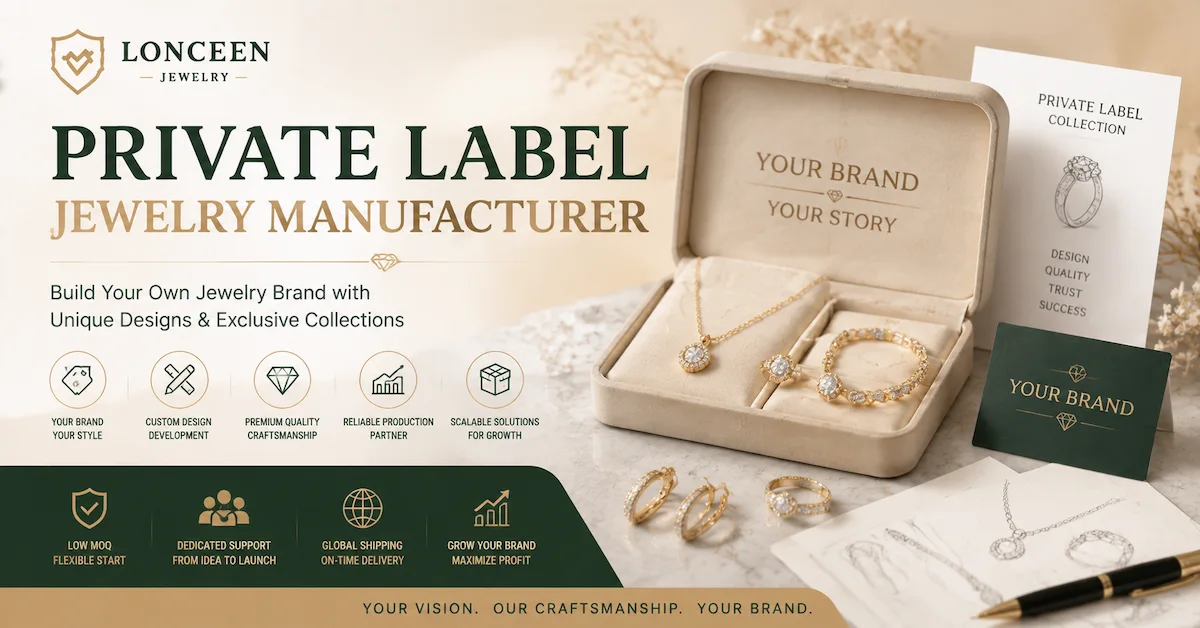
A private label jewelry manufacturer is a manufacturing partner that helps brands create jewelry products sold under their own brand name.
Unlike traditional wholesale purchasing, private label jewelry focuses on:
- Brand-specific collections
- Custom product concepts
- Unique design directions
- Exclusive product positioning
- Brand-owned customer experience
The manufacturer provides the production capability, while the brand controls:
- Product style
- Collection direction
- Branding
- Marketing approach
- Customer positioning
This model allows brands to build stronger differentiation in competitive jewelry markets.
2. Private Label Jewelry vs Wholesale Jewelry
Many jewelry businesses start with wholesale products because they are easier to launch.
However, private label jewelry provides more opportunities for brand development.
| Wholesale Jewelry | Private Label Jewelry |
|---|---|
| Ready-made products | Brand-specific collections |
| Shared designs with other buyers | More unique product identity |
| Focus on product availability | Focus on brand positioning |
| Limited differentiation | Stronger brand recognition |
| Suitable for testing markets | Suitable for long-term growth |
Wholesale can help brands enter the market quickly.
Private label helps brands create a stronger relationship between products and customers.
3. Why Brands Choose Private Label Jewelry
Create a Unique Brand Identity
One of the biggest advantages of private label jewelry is differentiation.
Instead of selling common designs available from multiple suppliers, brands can create collections based on their own:
- Design language
- Customer group
- Brand story
- Market positioning
This helps customers remember the brand rather than only the product.
Build Consistent Collections
A strong jewelry brand usually needs more than individual products.
Private label development allows brands to create connected collections.
For example:
Minimalist Collection
- Everyday necklaces
- Simple rings
- Lightweight earrings
Personalized Collection
- Initial jewelry
- Meaningful symbols
- Custom details
Fashion Collection
- Statement pieces
- Seasonal designs
- Trend-based jewelry
A collection approach creates a more complete shopping experience.
Improve Brand Value
When customers purchase private label jewelry, they are buying:
- Product design
- Brand identity
- Emotional connection
- Lifestyle positioning
This gives brands more opportunities to build long-term customer relationships.
4. What Can a Private Label Jewelry Manufacturer Help Brands Develop?
A private label partner can support different jewelry categories, including:
- Rings
- Necklaces
- Earrings
- Bracelets
- Pendants
- Personalized jewelry
- Fashion jewelry collections
Different categories allow brands to create broader collections instead of relying on one product type.
You can explore different jewelry categories through Lonceen Jewelry Products.
5. Private Label Jewelry Development Process
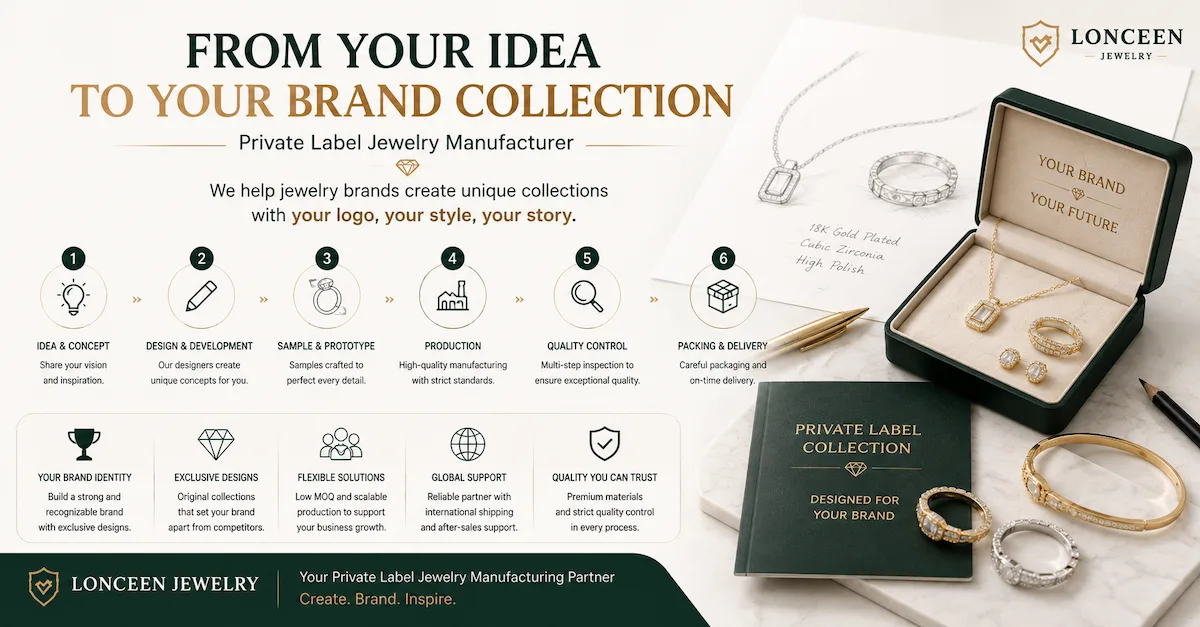
A successful private label collection usually begins with a clear brand direction.
Brand Concept
The first step is defining:
- Target customers
- Product positioning
- Style direction
- Collection theme
Design Direction
Brands need to establish:
- Visual style
- Product inspiration
- Signature elements
- Differentiating features
For example:
A minimalist brand may focus on clean lines and everyday wear.
A fashion brand may focus on seasonal trends and statement designs.
Product Collection Planning
Instead of developing random products, brands should consider:
- Hero products
- Supporting products
- Matching accessories
- Collection consistency
This helps create a stronger product structure.
6. Personalization in Private Label Jewelry
Personalization is an important way for private label brands to create stronger customer connections.
Common customization directions include:
- Initials
- Names
- Symbols
- Dates
- Birthstones
- Engraving
- Special motifs
Personalized details allow brands to create products with emotional value rather than simple accessories.
For brands interested in customization options, Lonceen Jewelry customization service provides additional reference.
7. How Private Label Jewelry Helps Brand Growth
Private label jewelry provides strategic advantages beyond product creation.
Stronger Market Position
Unique collections help brands avoid competing only through price.
Better Customer Recognition
Consistent design language makes brands easier to identify.
More Marketing Opportunities
Exclusive collections provide stronger content opportunities:
- Product storytelling
- Social media campaigns
- Seasonal launches
- Brand campaigns
Long-Term Product Expansion
A successful private label collection can expand into:
- New designs
- New categories
- Limited collections
- Seasonal products
This creates opportunities for continuous brand development.
8. Choosing the Right Private Label Jewelry Manufacturer
The right partner should understand both manufacturing and brand development.
Important factors include:
Design Understanding
The manufacturer should understand your brand vision instead of only producing existing products.
Product Development Ability
A good private label partner should help transform ideas into practical jewelry products.
Category Experience
Different jewelry categories require different expertise.
A suitable partner should understand:
- Rings
- Necklaces
- Earrings
- Bracelets
- Personalized products
Brand Cooperation Experience
Private label projects require close cooperation between brands and manufacturers.
The manufacturer should understand:
- Brand positioning
- Collection planning
- Product consistency
- Long-term cooperation
Learn more about Lonceen Jewelry's background and capabilities through Lonceen Jewelry About Us.
9. Common Mistakes When Building Private Label Jewelry
Choosing Products Without Brand Positioning
A collection should match the target customer instead of following random trends.
Focusing Only on Individual Products
Strong brands usually build collections rather than selling isolated items.
Ignoring Product Story
A unique story can help customers understand why a product exists.
Copying Existing Market Designs
Private label success depends on differentiation.
Brands need their own visual identity.
Treating Jewelry as Only a Commodity
The value of private label jewelry comes from combining:
Product + Brand + Story + Customer Experience
10. Private Label Jewelry for Different Brand Types
Startup Jewelry Brands
Private label helps new brands create professional collections without building their own production system.
Fashion Brands
They can develop jewelry lines that match their clothing or lifestyle positioning.
Boutique Brands
Private label allows smaller brands to offer exclusive products.
Online Jewelry Brands
Unique collections help online brands create stronger differentiation.
11. Building a Successful Private Label Jewelry Collection
A strong private label strategy usually follows:
Brand Positioning
↓
Customer Understanding
↓
Collection Concept
↓
Product Development
↓
Brand Story
↓
Market Launch
The manufacturer plays an important role in transforming the brand idea into physical products.
FAQ
What is a private label jewelry manufacturer?
A private label jewelry manufacturer helps brands create jewelry products sold under their own brand identity.
What is the difference between private label and wholesale jewelry?
Wholesale focuses on ready-made products, while private label focuses on developing collections with stronger brand identity.
Can private label jewelry be customized?
Yes. Brands can customize designs, symbols, engraving, materials and product details depending on their requirements.
Is private label jewelry suitable for startups?
Yes. It allows startups to build branded collections without creating their own manufacturing facilities.
What products can private label jewelry manufacturers produce?
Common products include rings, necklaces, earrings, bracelets, pendants and personalized jewelry.
How do brands choose a private label jewelry manufacturer?
Brands should evaluate design understanding, product development ability, category experience and long-term cooperation capability.
Conclusion
A private label jewelry manufacturer helps brands move beyond selling ordinary jewelry products and build collections with their own identity.
The strongest private label partnerships combine:
- Brand positioning
- Product design
- Collection planning
- Personalization
- Consistent product identity
- Long-term development
For jewelry brands that want to create recognizable collections, private label manufacturing provides a path from product ideas to brand growth.
Explore Lonceen Jewelry Products or learn more about Lonceen Jewelry through Lonceen Jewelry About Us.